
The Advanced Landscape of Medical Aesthetics and Hair Restoration in Navi Mumbai: 2026 Guide
For years, the residents of Navi Mumbai looked westward—toward Bandra or South Mumbai—for premium healthcare. If you wanted a celebrity-grade hair transplant or a high-end laser facial, you crossed the bridge. But as we settle into 2026, the map has changed.
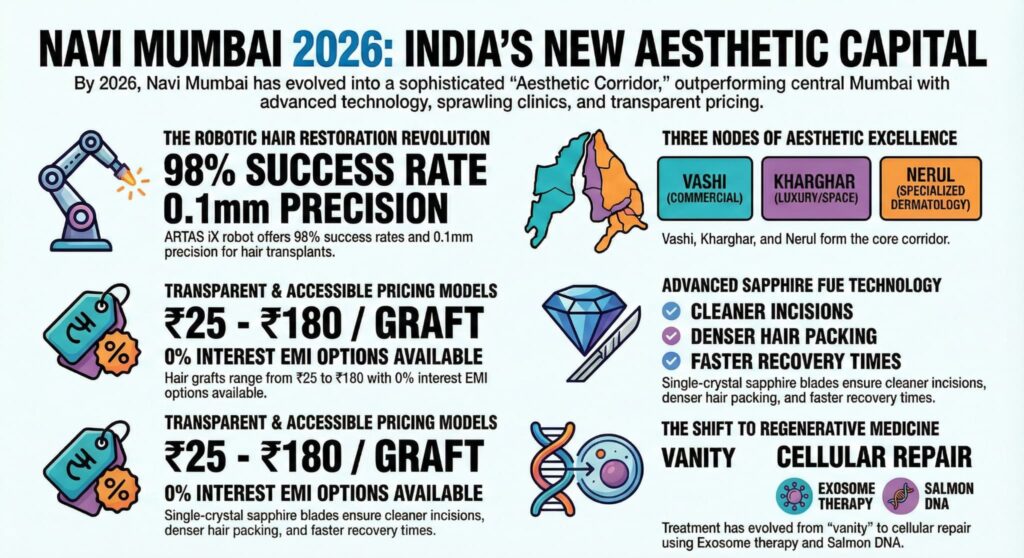
Navi Mumbai has transformed from a quiet satellite city into a sophisticated “Aesthetic Corridor.” Driven by the expansion of the Sion-Panvel Highway and the efficiency of the Metro, nodes like Vashi, Kharghar, and Nerul have emerged as the new capitals of clinical excellence. Today, the region doesn’t just replicate the standards of Mumbai; in many ways, it surpasses them—offering state-of-the-art robotic platforms, sprawling clinic spaces, and transparent pricing models that the cramped centers of South Mumbai struggle to match.
Whether you are considering a life-changing hair restoration procedure or looking for advanced age-management therapies, this guide analyzes the clinical, economic, and technological reality of Navi Mumbai’s medical aesthetic sector in 2026.
Quick Snapshot: The State of Aesthetics in Navi Mumbai (2026)
- Hubs: Vashi (Commercial Anchor), Kharghar (Luxury/Space), Nerul (Specialized Dermatology).
- Top Tech: ARTAS iX Robotic Hair Restoration, Sapphire FUE, AI-driven diagnostics.
- Avg. Hair Transplant Cost: ₹25 – ₹180 per graft (depending on technique).
- Key Trend: A shift from “Vanity” to “Regenerative Medicine” (Exosomes, DNA Repair).
- Accessibility: High availability of 24-hour facilities and 0% EMI financing.
1. The Geographic Shift: Why Navi Mumbai is the New Aesthetic Node
The rise of Navi Mumbai is not accidental. It is the result of decades of planning by CIDCO, which prioritized land allocation for super-specialty healthcare. By 2026, this vision has matured into a thriving ecosystem.
Practitioners who once operated exclusively in South Mumbai have established primary centers here to tap into a demographic that values convenience and clinical quality.
- Kharghar: Known for its expansive real estate, this node hosts multi-specialty giants like Clinique Internationale and Seraphic Aesthetics. These clinics offer luxuries rare in central Mumbai, such as 24-hour accessibility and massive dedicated procedure suites.
- Vashi: Remaining the commercial heart, Vashi hosts boutique institutions like BodySkulpt Aesthetics and New Roots, focusing on high-density restoration and laser dermatology.
This decentralization has created a “medical tourism micro-climate.” Patients from Thane, Pune, and even international markets are flocking to Navi Mumbai. They are drawn by specialized technologies—like the ARTAS iX robot—offered at price points often lower than global metropolitan averages.
2. Hair Restoration in 2026: Robots, Sapphires, and AI
Gone are the days when a hair transplant meant a massive scar on the back of your head. The 2026 standard is defined by extreme precision and “Bio-Integration.” While Follicular Unit Transplantation (FUT) still exists for massive graft counts, the market is dominated by Follicular Unit Extraction (FUE) and its high-tech variants.
The Sapphire FUE Advantage
Standard FUE uses steel blades. However, leading clinics in Navi Mumbai, such as New Roots and La Densitae, have transitioned to Sapphire FUE.
- The Tech: Blades made from single-crystal sapphire are sharper and more durable.
- The Benefit: They create smaller, cleaner incisions. This reduces tissue trauma, accelerates healing, and crucially, allows surgeons to pack more hairs into a square centimeter for a denser look.
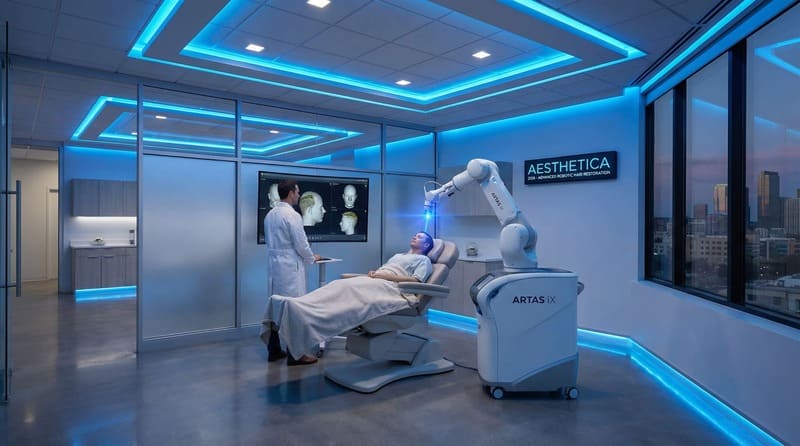
The Robotic Revolution: ARTAS iX & FUEsion X
The pinnacle of technology in 2026 is the removal of human error.
- ARTAS iX: Available at premier centers like Musk Clinic and BodySkulpt Aesthetics (Dr. Arun Panda), this robot analyzes hair follicles 60 times per second using stereoscopic vision. It selects only the healthiest grafts, eliminating fatigue-induced errors.
- FUEsion X: This AI ecosystem assists from 3D hairline design to implantation. Its 50x magnification cameras identify the angle of hair beneath the skin, drastically reducing the “transection rate” (accidental cutting of the hair bulb).
Comparison: Manual vs. Robotic FUE
| Feature | Manual FUE | Robotic FUE (ARTAS iX) |
| Graft Selection | Visual inspection by surgeon | AI-driven health analysis |
| Precision | Variable | 0.1 mm precision |
| Success Rate | 80% – 95% | Up to 98% |
| Recovery | 7–10 Days | 3–5 Days |
3. The Economic Model: What Does it Cost?
One of the strongest advantages of the Navi Mumbai market is transparency. Costs are typically calculated on a “per-graft” basis (one graft = 1 to 4 hairs).
2026 Hair Transplant Price List (Per Graft)
- FUT (Strip Method): ₹20 – ₹30
- Standard FUE: ₹25 – ₹40
- Sapphire / DHI: ₹40 – ₹60
- Premium / Robotic (ARTAS): ₹60 – ₹180
Total Estimated Cost: For a standard procedure of 2,000 grafts, expect to pay between ₹80,000 and ₹2,00,000 at a reputable clinic. This usually includes surgery, anesthesia, and immediate post-op care.
Beyond the Scalp: Beard & Eyebrow Transplants
Driven by grooming trends, facial hair restoration is booming.
- Beard (Cheek/Goatee): ₹30,000 – ₹90,000 (600–900 grafts).
- Eyebrows: ₹5,000 – ₹15,000 (50–100 grafts).
Financial Tip: Many centers, including Smartlook and Looks Studio, offer 0% interest EMI options over 6 to 12 months, making these procedures accessible to young professionals.
4. Clinical Leadership: Who Can You Trust?
The reputation of this “Aesthetic Corridor” is built on specific key opinion leaders and institutions.
- Clinique Internationale (Kharghar): Led by Dr. Bhavesh Gupta, this is a high-volume center with over 1,300 reviews. Known for transparency (₹30-₹50/graft) and dual operation theaters, it caters heavily to international patients.
- BodySkulpt Aesthetics (Vashi): Dr. Arun Panda brings over 20 years of experience. A “first adopter” of robotics, his clinic bridges the gap between facial plastic surgery and restoration. Consultation fees are around ₹500.
- Seraphic Aesthetics (Kharghar): Dr. Lukesh Patil is noted for his “artistic” approach to hairline design. The clinic focuses on natural proportions and also offers laser surgeries.
- Looks Studio: Pioneers of “Bio-Integrated FUE,” they focus on preserving graft life ex-vivo. They are confident enough in their survival rates to offer a 25-year written warranty.
- Dermatology Leaders: Dr. Amit Kerure (Vashi) for complex transplants, Dr. Kiran Godse (Shree Skin Centre, Nerul) for medical dermatology, and Dr. Aniket Bhole (SkinIQ, Kharghar) for pediatric and accessible care.
5. Comprehensive Skin Care: Lasers, Peels & Resurfacing
Dermatology in Navi Mumbai has shifted from “fixing problems” to “routine maintenance.”
Laser Hair Reduction (LHR)
Clinics use Nd:YAG lasers (safest for Indian skin) and 4-wavelength diode systems for painless, rapid treatment.
- Upper Lip/Chin: ₹1,500 – ₹3,000 per session.
- Full Body: ₹22,000 – ₹85,000 per session (Packages range from ₹1.2L to ₹1.8L).
Chemical Peels & Whitening
From “Lunchtime Peels” to deep resurfacing.
- Light Peels (Acne/Glow): ₹1,500 – ₹3,000.
- Deep Peels (Scarring): ₹10,000 – ₹15,000.
- Trend: Combining peels with IV Glutathione injections (₹4k–₹8k) for systemic skin lightening.
Non-Surgical Facelifts (HIFU)
High-Intensity Focused Ultrasound (HIFU) is the go-to for tightening without surgery. Premium clinics use the Ultraformer MPT for faster results.
- Full Face & Neck: ₹45,000 – ₹1,10,000.
- Double Chin Reduction: ₹15,000 – ₹40,000.
6. The Future is Here: Regenerative Aesthetics
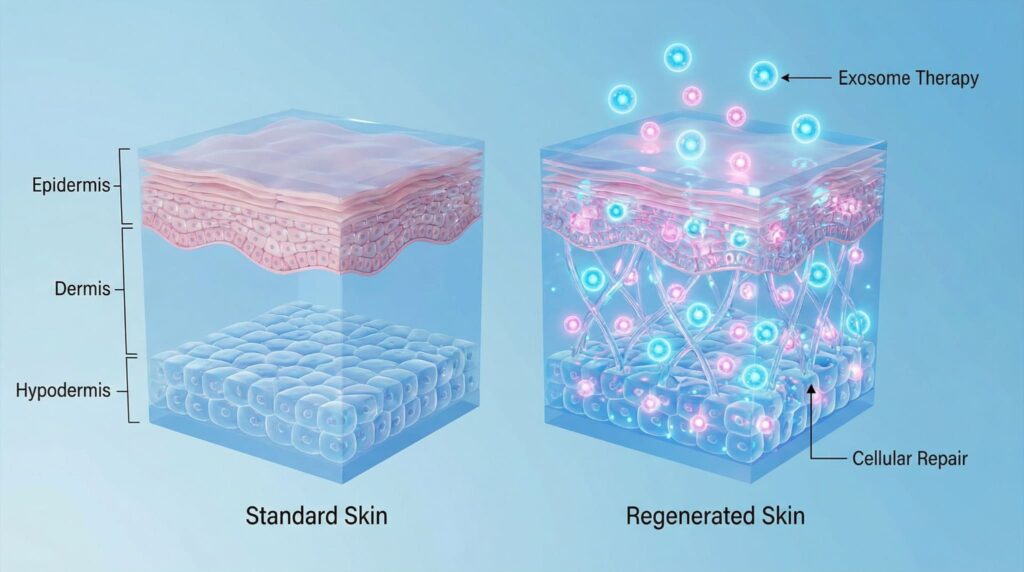
In 2026, the buzzword is “Regeneration.” Patients are moving away from just filling wrinkles to repairing the skin at a cellular level.
- Exosome Therapy: The new gold standard, replacing simple PRP. Exosomes contain 100x the growth factors of PRP. They reduce pore size by ~41% and calm redness.
- Cost: Starts at ₹29,999 per session.
- Salmon DNA (PDRN): An injectable that repairs tissue and boosts collagen. Ideal for acne scarring. (~₹18,000 – ₹24,000).
- Profhilo: A bio-remodeling injectable that hydrates from within. (~₹32,000+).
Value, Quality, and Safety
Navi Mumbai in 2026 has successfully democratized high-end aesthetic medicine. It offers a unique value proposition: access to board-certified surgeons like Dr. Panda and Dr. Gupta, and cutting-edge tech like the ARTAS robot, at a price point that makes sense.
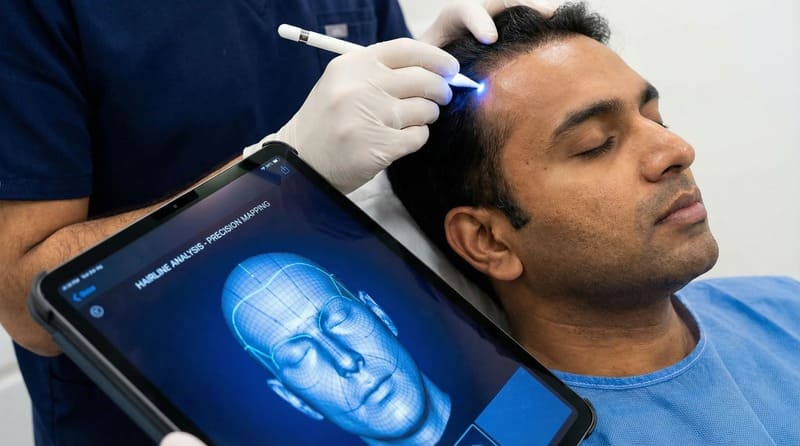
For the patient, the key is due diligence. Look for clinics that offer AI-driven 3D imaging during consultations—a sign of transparency that drastically reduces post-op regret. As this corridor matures, its focus on “bio-integrated” care sets a new benchmark for India’s healthcare sector.
FAQs
Q1: How much does a 2,000 graft hair transplant cost in Navi Mumbai in 2026?
A: For a standard 2,000 graft procedure, the cost typically ranges between ₹80,000 and ₹2,00,000. This variance depends on whether you choose standard FUE (approx ₹40/graft) or advanced Robotic/Sapphire techniques (up to ₹100/graft).
Q2: Which is the best clinic for robotic hair transplants in Vashi or Kharghar?
A: BodySkulpt Aesthetics in Vashi (Dr. Arun Panda) and Musk Clinic are premier centers equipped with the ARTAS iX robotic system. These clinics are recommended for patients seeking high-precision, AI-driven restoration.
Q3: Is Sapphire FUE better than traditional FUE?
A: Yes. Sapphire FUE uses blades made from single-crystal sapphire, which are sharper than steel. This results in smaller incisions, less tissue trauma, faster healing (3-5 days), and allows for higher density graft placement. Clinics like New Roots specialize in this.
Q4: What is the difference between PRP and Exosome therapy for hair loss?
A: While PRP uses your own blood’s growth factors, Exosomes are lab-grown signaling molecules that contain up to 100 times more growth factors. In 2026, Exosomes are considered the superior “regenerative” option, though they are more expensive (starting at ~₹30,000 per session).
Q5: Can I get a hair transplant on EMI in Navi Mumbai?A: Yes, accessibility is a key driver in the region. Clinics like Smartlook and Looks Studio offer 0% interest EMI options, allowing you to spread the cost of the procedure over 6 to 12 months.