

Minimalist Living in India 2026: How to Declutter Your Home, Save Money and Live with Less
Minimalist Living in India 2026: How to Declutter Your Home, Save Money and Live with Less
India is changing. Our cities are growing taller, our apartments are getting smaller, and our expenses are climbing faster than our paychecks. Yet something interesting is happening: more Indians are choosing to own less.
Minimalist living is no longer just a lifestyle trend for Instagram. It has become a practical response to real challenges that Indian families and young professionals face every day. Rising rent, property prices, and the cost of living in metros like Navi Mumbai have pushed many of us to reconsider what we actually need. Social media has exposed the hidden costs of consumerism. And mental health awareness has made us realize that clutter in our homes creates stress in our minds.
This guide will show you how to embrace minimalism in the Indian context. Not as a extreme approach to owning nothing, but as a smart way to keep what matters and let go of everything else. The result: a cleaner home, a lighter wallet, and genuine peace of mind.
What Minimalist Living Actually Means in India
Many of us hear “minimalism” and imagine empty rooms with nothing on the walls. That is not what we are talking about here.
Minimalist living in India means being intentional about what you keep. It means your home contains things that add value to your life. Your wardrobe has clothes you actually wear. Your kitchen has tools you use. Your shelves hold books and objects that matter to you, not things you bought on impulse and forgot about.
For Indian families, this is particularly important. We have a culture of collecting. We hold onto wedding gifts because they came from loved ones. We keep festival decorations because they represent family traditions. We preserve items because throwing them away feels wasteful. Minimalism does not ask you to abandon these values. It asks you to be selective about which items truly deserve space in your home and heart.
Think of it this way: a minimalist home is not empty. It is edited. Every item earns its place.
How to Start Decluttering Your Indian Home
The Room by Room Method
Trying to declutter your entire home at once is overwhelming. The room-by-room approach is faster, easier, and keeps you motivated because you see results quickly.
The Bedroom
Start here. Your bedroom is personal and private, so you can make decisions without worrying about family reactions. Begin with your closet. Pull out every piece of clothing and create four piles: keep, donate, sell, and throw away. Use the simple test: would you buy this item today? If the answer is no, it goes in one of the other piles.
For your bed, shelves, and nightstands, apply the same logic. If you have not used something in a year and it does not make you happy, remove it.
The Kitchen
Kitchens in Indian homes are often packed with appliances, utensils, and serving dishes we use once a year. Start with your cabinets. Look for duplicate items: how many rolling pins do you need? How many serving spoons? Keep the best versions and let go of the rest.
Those specialty appliances you bought for a specific recipe? If you have not used them in six months, donate them. The kitchen is where intentionality saves the most space and money.
The Wardrobe
Indian wardrobes often contain multiple ethnic outfits for different occasions, layers for different seasons, and clothes we keep “just in case.” Declutter by season first. Keep summer and current-season clothes accessible. Store off-season items in a specific space.
For occasion wear, be honest: do you actually attend that many formal events? If you have not worn something in two years, it is taking up valuable space. Sell good-quality ethnic wear on platforms like Facebook Marketplace or OLX. Someone else can actually use it.
The Living Room
This is where family sentiment often takes over. Your living room may contain furniture from your parents, decorative items you do not love, and showpiece collections. Ask yourself: does this furniture serve a purpose? Does this decoration bring me joy? If the answer is no, it can go.
The coffee table piled with magazines, the corner with stacked photo frames, the shelves with decorative pieces you dust once a month: these are clutter zones. Keep a few meaningful items. Remove the rest.
What to Keep, Donate, Sell, Throw Away
As you go through each room, sort items into four clear categories:
Keep: Items you use regularly, wear often, or that bring genuine joy. Items that support your current lifestyle and goals.
Donate: Clothes, books, kitchenware, and home goods in good condition that you do not use. Local NGOs, temples, schools, and community centers always need donations. The act of giving creates meaning.
Sell: Electronics, jewelry, designer items, good-quality furniture, and occasion wear can be sold on OLX, Facebook Marketplace, or specialized platforms like Swappa. This money can offset the cost of your decluttering effort.
Throw Away: Broken items, old electronics, worn-out clothes, expired products, and things no one would want. Be decisive here. Do not let throwaway items sit in your home for months.
The numbers above are conservative estimates for an urban Indian family. Your actual savings will depend on your current spending habits. The point is clear: minimalism is not about deprivation. It is about redirecting money from things you do not need to things that matter: savings, investments, experiences, and financial security.
In a city like Navi Mumbai where living costs are rising, these savings become even more important. The money you save by living minimally can go toward a down payment on a home or a child’s education.
Minimalist Home Setup on a Budget
What does a minimalist Indian home actually look like? Not empty. Not bare. Thoughtfully curated. Here is a room-by-room breakdown:
The Bedroom
One bed with quality bedding. One nightstand. One lamp. A small bookshelf for a few favorite books. Clothes in the closet, organized and visible. No items under the bed. Walls can have 1 to 2 meaningful pieces of art. The bedroom is a place for rest, not storage. Total investment: reasonable, as you are buying quality basics, not decorative pieces.
The Living Room
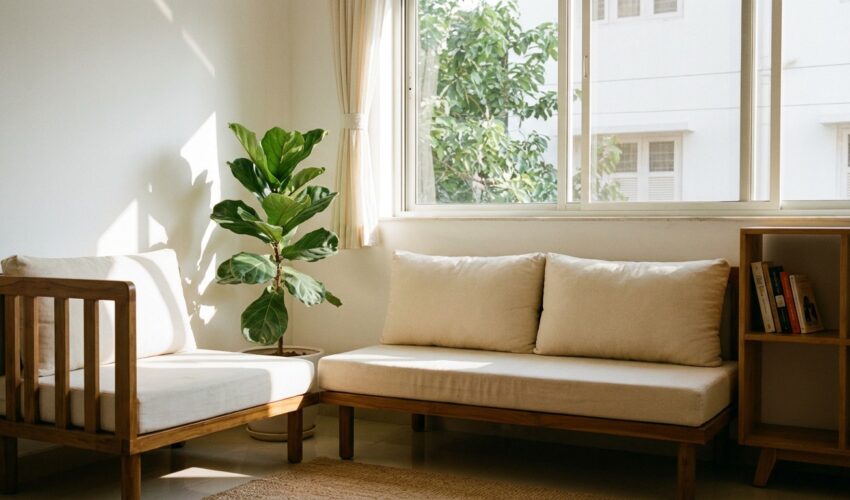
A good sofa. One side table. Minimal wall decor. A few books or decorative items that spark joy. No coffee table piled with magazines. No shelves crammed with showpieces. The space feels open and breathable. A single area rug can define the space without clutter.
The Kitchen
Essential cooking tools: a knife, a cutting board, a few cooking spoons, a spatula. One set of cookware. Plates, bowls, and glasses for daily use, plus a few serving pieces. No specialty gadgets. No duplicate utensils. Everything fits in your cabinets neatly. Your kitchen serves its purpose: cooking food, not storing items.
The Bathroom
Essentials only: toiletries, towels, and cleaning supplies. No decorative bottles or jars. Nothing on the counter except what you use daily. The bathroom is functional, clean, and clutter-free.
Storage Spaces
One cupboard for seasonal items. One shelf for off-season clothes. That is it. You do not need separate storage rooms. If your off-season items do not fit in one closet section, you have too much. The goal is to fit everything in your home without renting external storage.
A minimalist home on a budget is possible because you are not spending on decoration, organization systems, or storage furniture. You are spending on quality basics that last.
The Real Challenges of Minimalist Living in India
Minimalism looks good in theory. In practice, India presents specific challenges. Here is how to handle them:
Social Pressure and Status
Indian culture associates abundance with success. Having a full house, multiple gadgets, and lots of stuff signals prosperity. Choosing minimalism can feel like admitting failure, especially to older family members. Solution: frame minimalism as smart living, not deprivation. Talk about savings, mental clarity, and time efficiency. Once your family sees results, they will understand.
Family Expectations
Your parents may have gifted you things. Your aunts may judge your bare walls. Your in-laws may expect showpieces. Solution: be respectful but firm. You are not asking them to change their homes. You are making a choice for your own life. Many families respect this eventually.
Festival Season
Diwali, Holi, Christmas, and other festivals bring decorations. These are meaningful traditions. Solution: have a curated collection of decorations you love. Rotate them year to year. Use temporary decorations that do not need permanent storage. You celebrate fully with less.
Weddings and Family Events
Weddings mean gifts. You may receive duplicate items or things you do not need. Solution: accept graciously, then donate or sell items you will not use. The relationship is with the person, not the thing they gave you. They would prefer their gift to be useful to someone else than to sit in your closet.
The Cost of Minimalism
Minimalism requires investment upfront: storage bins, organizers, perhaps some quality replacements. You may also spend money selling items on OLX or donating to NGOs. Solution: yes, there is a small cost. But the long-term savings far outweigh this investment. Think of it as an investment in your future.
Frequently Asked Questions
Should I throw away gifts I do not like?
Yes. You are not obligated to keep gifts. Take a photo, then donate or sell the item. The memory of the person and their thoughtfulness is what matters. The object is just a vessel, and it does not have to take up space in your home. Many people who give gifts would prefer you use and love something rather than feel guilty about keeping something you hate.
Is minimalism more expensive than keeping everything?
No. Minimalism is cheaper long-term. Yes, you may buy better quality items initially, but you spend much less on impulse purchases, duplicate items, and storage. Over a year, minimalists spend less and have more peace of mind.
How can I convince my family to go minimalist?
Start with your own space. Do not force minimalism on family members. When they see your home cleaner, your life less stressful, and your savings growing, they will be curious. Share the benefits without preaching. Many families gradually adopt minimalism when they see it working.
What if I need space for guests?
Minimalism does not mean no guest room. It means a functional guest room without clutter. One bed, fresh bedding, clean floors, and space to move around. Your guests care about comfort and cleanliness, not decorative items or extra furniture.
Can minimalism work in a joint family setup?
Yes, but it is harder. You control only your personal space. For shared spaces, talk with family members about what items everyone uses and what can go. You may not achieve complete minimalism, but you can reduce clutter significantly in your personal rooms.
Is minimalism sustainable long-term?
Yes, if you follow the one-in-one-out rule and continue saying no to unnecessary items. Minimalism is not a project you complete once. It is a lifestyle where you regularly assess what you own and keep only what serves you. After the initial decluttering, maintenance is easy.
Final Thoughts: Start Small, Think Big
Minimalist living is not a drastic change. You do not have to empty your entire home in a weekend. Start with one room. Declutter your bedroom. Feel the difference. Then move to your kitchen, then your wardrobe. Before you know it, your entire home will be minimal.
The benefits will become clear quickly. Your home will feel larger. Your mind will feel lighter. Your savings will grow. You will have more time because you are not shopping, organizing, or cleaning clutter. You will have more money for what actually matters.
For those living in expensive cities like Navi Mumbai, minimalism is not a choice. It is an economic strategy. When comparing the cost of living in Navi Mumbai with other metros, every rupee saved through minimalism counts. The less you need, the more secure your financial future becomes.
Minimalism in India is not about being extreme or rejecting your culture. It is about being smart. It is about keeping what matters and letting go of everything else. It is about building a home and life that actually serves you.
Your home should be a place of peace, not stress. Your stuff should serve you, not the other way around. Your money should go toward your goals, not your closets. That is minimalist living in 2026, and it is available to you today.
Start now. Pick one room. Declutter. Feel the difference. Then tell us your story.