
Quick answer: As of 30 September 2026, Squareyards displayed Rs 15,450 per sq ft for Panvel overall, dated to June 2026 on that page, while its separate Old Panvel and New Panvel pages, checked the same day, both showed Rs 14,100 per sq ft with opposite year-over-year directions. These are locality-level figures from one portal, not registered-transaction averages, and shouldn’t be used on their own to value a specific flat. Compare rates only when the quoted price and area use the same basis, and check the checklists below before relying on any number, including ours.
NaviMumbai.com is an independent information website and is not affiliated with any real estate portal, developer, or government body. Prices change; verify current figures directly before making a decision.
What Squareyards Displayed for Panvel
On Squareyards’ Panvel property-rates page, checked directly on 30 September 2026, the site displayed an average asking price of Rs 15,450 per sq ft, dated by the page itself to June 2026, with a stated quarterly progression: Rs 11,450 (September 2025), Rs 14,800 (December 2025), Rs 15,050 (March 2026), and Rs 15,450 (June 2026). This is the figure displayed by Squareyards for this locality; we have not independently established its sample size, weighting, or calculation method, so “locality-level figure” is the accurate description rather than a broader claim about the whole market. Advertised prices like this show sellers’ expectations within the source’s own sample; they do not establish completed sale prices, transaction volume, or future appreciation.
One further caution on this same page: it states the March-to-June change as +2.45%, but its own quarterly figures (Rs 15,050 to Rs 15,450) work out to approximately 2.66% by our own calculation. We’re not silently substituting our number for the source’s; we’re flagging that the two don’t reconcile, which could reflect a different underlying series or calculation on the portal’s side that we can’t see.
| Segment | Rate shown | Portal-reported change |
|---|---|---|
| Overall (dated June 2026) | Rs 15,450/sq ft | +2.45% quarter-on-quarter, per the portal (see reconciliation note above) |
| Ready to Move | Rs 11,650/sq ft | +10.45%, per the portal |
| Under Construction | Rs 12,500/sq ft | +17.27%, per the portal |
Both subgroup averages above are lower than the overall Panvel figure; we could not establish from the source page whether Ready to Move and Under Construction are meant to exhaust the same dataset as the overall figure, cover a different sample, or use a different period or method, so don’t treat the three rows as a reconciled breakdown of one another. A reported change like +17.27% is also a portal-reported change in a displayed statistic, not a measured return on any specific property; it doesn’t establish that every unit in that segment appreciated similarly, what caused the change, or that the same pace will continue.
Old Panvel and New Panvel: Compare the Underlying Properties
Squareyards also runs separate rates pages for Old Panvel and New Panvel specifically. Both pages, checked directly on 30 September 2026, display an identical average of Rs 14,100 per sq ft, alongside different annual changes: Old Panvel up 9.99%, New Panvel down 2.5%. These figures aren’t inherently contradictory, since each locality can have a different prior-year starting point that produces the same current figure with a different percentage change; we’re not treating the match as a data error. It also doesn’t mean comparable homes in the two areas actually cost the same. Check the specific locality, building, area measurement, condition, and quotation rather than relying on either headline figure. Separately, accessed 30 September 2026; both page titles show “Sep 2026,” but the underlying reporting period is not consistently established from what we captured, so treat the page title as the access date, not a confirmed data period.
Separately, don’t assume Old Panvel and New Panvel line up with Panvel Municipal Corporation’s actual jurisdiction, or with each other, based on the name alone; confirm using your property documents. See our Panvel Property Tax guide if you need to check which civic authority actually covers a specific address.
Asking Price, Transaction Price, and Ready-Reckoner Value Are Different Things
Squareyards’ main Panvel page also displays a figure it labels a “Government Registration Rate” of Rs 11,750 per sq ft. Asking prices, registered-transaction information, and official stamp-duty valuations are different measures, and a locality-level figure displayed by a property portal does not establish the official valuation applicable to a particular flat or transaction; we have not verified the relevant valuation zone, property classification, assessment year, or applicable valuation instructions behind this portal figure. Do not use it, or any other single number from this guide, to calculate your stamp duty.
| Figure | What it represents | What it does not establish |
|---|---|---|
| Advertised asking price | A seller’s or developer’s quoted amount | The final negotiated transaction price |
| Portal locality indicator (like the figures above) | A portal’s reported statistic for an area | The valuation of a particular flat |
| Registered transaction consideration | The amount recorded in a specific registered transaction | A directly comparable price without checking that property and its terms |
| Ready-reckoner / Annual Statement of Rates (ASR) value | The government valuation reference used for stamp duty under applicable rules | A seller’s asking price or a universal market-clearing price |
Check the applicable valuation and charges for your specific property directly through Maharashtra’s Department of Registration and Stamps, which publishes the governing stamp legislation, valuation rules, and an online e-ASR (Annual Statement of Rates) service; that department’s own materials should underpin your stamp-duty planning, not a portal’s label. See our Index II guide for how registered-transaction records work and their limits.
Rental Rates and Yield
Squareyards’ Panvel page also states a rental rate and a rental yield of 2.64%, but does not establish the rental period (for example, monthly or annual) behind its rental figure clearly enough for us to reproduce it accurately here, so we’re not restating that number. A locality-level rental figure and a locality-level sale figure may also describe different samples of properties, so don’t treat the two as necessarily describing the same buildings.
If you want to estimate a yield for a specific property yourself: illustrative gross yield = annual rent ÷ purchase price × 100. This excludes vacancy periods, maintenance the owner bears, repairs, letting costs, taxes, and any financing costs, so it’s a starting reference, not an achievable net return. If you use total acquisition cost instead of just the purchase price as your denominator, label that change clearly, since it will produce a different number.
A Flat-Comparison Worksheet
This gives you more to work with than a single area average. Fill in the same fields for every flat you’re actually comparing:
| Comparison field | Property A | Property B | Property C |
|---|---|---|---|
| Building, sector, and exact address | |||
| New sale or resale | |||
| Construction/occupancy status | |||
| Documented carpet area and its source | |||
| Base quoted consideration | |||
| Additional charges and inclusions | |||
| Floor, condition, and fit-out | |||
| Parking entitlement and documentation | |||
| Maintenance and other recurring charges | |||
| Quote date and source |
A comparable base rate is base quoted consideration divided by documented carpet area, only when the numerator includes the same cost components for every property compared. Don’t divide an all-inclusive quote for one flat by its carpet area and compare that to another flat’s base-only rate.
Purchase-Cost Checklist Beyond the Quoted Price
- Quoted consideration
- Stamp duty and registration charges applicable to the transaction
- GST, where applicable
- Brokerage and professional verification costs
- Documented developer or society charges, where applicable
- Repairs, interiors, and moving costs
- Recurring maintenance and property tax
- Refundable deposits, listed separately from non-refundable charges
Ask for an itemised written quotation covering these components rather than a single headline number.
RERA Registration: What It Actually Means
Check whether the specific project is required to be registered; where applicable, verify the correct project or phase and its current status directly with MahaRERA rather than taking a developer’s “RERA approved” claim at face value. The Real Estate (Regulation and Development) Act, 2016 includes specific registration exemptions, so an absent registration number does not automatically mean an older or resale property is unlawful; if a seller claims an exemption applies, ask for the basis. MahaRERA’s own site provides registered-project search and status information at maharera.maharashtra.gov.in; we were not able to load this site directly during this review, so we’re citing it as the correct official destination rather than describing its current interface. If you need to raise a dispute about a registered project, see our MahaRERA Complaint guide.
Panvel vs Kharghar vs Taloja
If you’re comparing Panvel against neighbouring nodes, see our dedicated Panvel vs Kharghar vs Taloja guide, and our Kharghar Property Rates guide, Vashi Property Rates guide, and Nerul Property Rates guide, and CBD Belapur Property Rates guide, and Airoli Property Rates guide, and Dronagiri Property Rates guide for current figures on those nodes.
Land Records: What an Apartment Buyer Actually Needs to Check
Identify the underlying land parcel and its applicable land records, and review the documents linking the building, society, and your specific apartment to that land. Don’t assume an individual flat will have its own separate 7/12 extract or Property Card; the land record typically covers the parcel the building sits on, held at the society or building level, not one record per flat. See our 7/12 Extract guide and Property Card guide to understand what these records actually cover. Similarly, don’t assume every resale needs the same revenue-mutation procedure; society records, municipal tax records, lease records, and revenue records are separate checks, and which ones apply depends on the specific property. See our Property Mutation guide for how mutation actually works, and work through our full Flat Buying Checklist for Navi Mumbai for the complete legal-document list.
Check Your Actual Commute Before Comparing Prices
Panvel is a broad label covering areas with real differences in transport access, including proximity to Panvel Junction and to Navi Mumbai International Airport. Test the journey from the actual building to your workplace, railway station, and any airport terminal you expect to use, and compare access arrangements and recurring travel costs, not just a locality’s position on a map. Check the actual building-to-station access, any interchanges required, last-mile arrangements at both ends, and a journey check at the weekday time you’d actually be travelling. We’re not stating a connectivity-driven price premium or an appreciation forecast. See our How to Reach Navi Mumbai Airport guide for a breakdown of bus, train, metro and cab options, including which railway stations actually serve NMIA.
Sources & Verification Date
Overall Panvel pricing sourced from Squareyards’ Panvel property-rates page, checked directly on 30 September 2026; the page’s own figures are dated to June 2026. Old Panvel and New Panvel figures are from Squareyards’ separate Old Panvel and New Panvel pages, accessed 30 September 2026; page titles show “Sep 2026,” but the underlying reporting period is not consistently established. Price figures are attributed to Squareyards and are not independently verified transaction valuations; reporting periods and area measurements may differ between figures, and we have not cross-verified them against a second portal or against registered-transaction data. RERA registration information reflects the Real Estate (Regulation and Development) Act, 2016 generally, not a review of a specific project’s documents, and the stamp-duty guidance above reflects the Department of Registration and Stamps’ role generally, not a specific property’s assessed valuation.
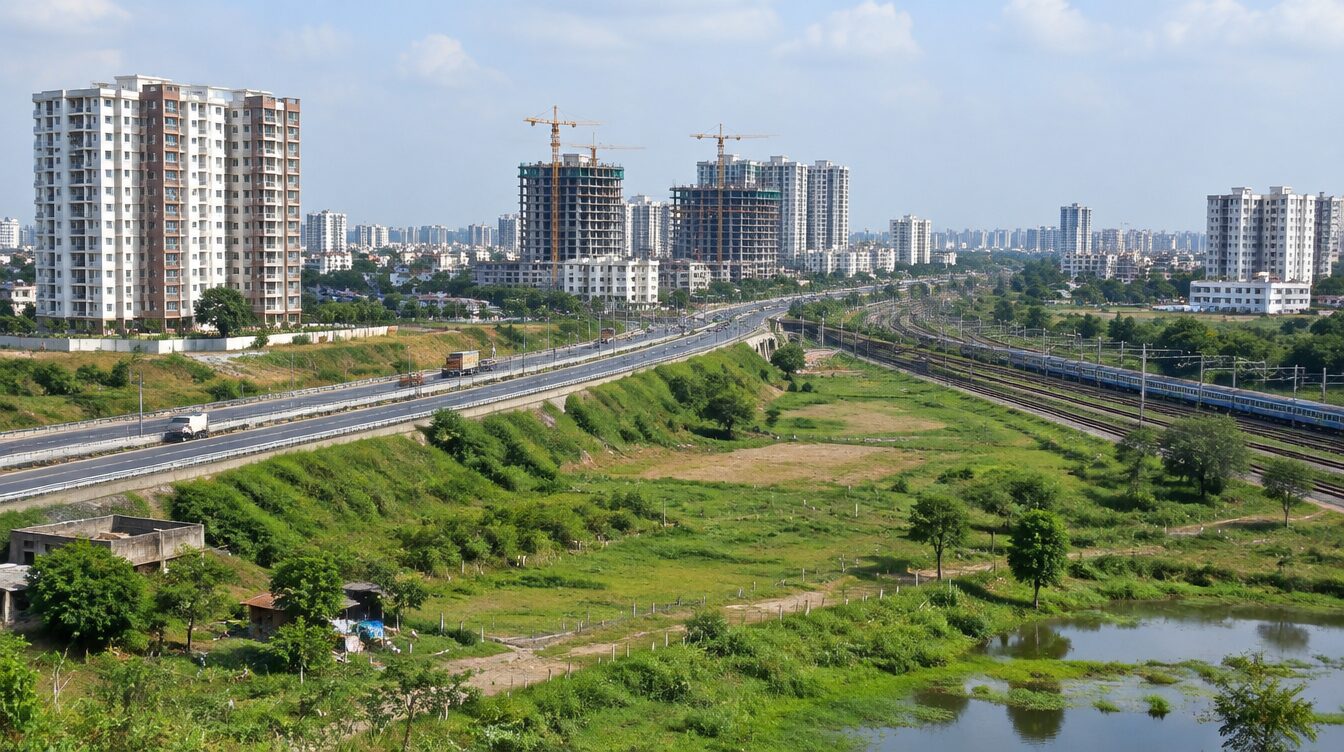
Illustrative AI-generated image. This does not depict an actual Panvel location, building, or project.
Frequently Asked Questions
What do Panvel property asking prices tell me?
They describe advertised prices within Squareyards’ own sample, dated June 2026 on the page we checked. They do not establish the price of a particular flat, completed sale prices, or future appreciation. Check the reporting period, locality, property type, and area measurement before relying on any figure.
Are Old Panvel and New Panvel prices the same?
An identical portal average doesn’t mean comparable homes cost the same. The underlying samples can differ, and identical current averages can have different annual changes if their prior-year starting points differed. Compare actual properties and written quotations rather than the two headline figures alone.
Can I calculate my stamp duty from a property portal’s registration-rate figure?
No. Don’t use a locality-level portal figure as the valuation for your transaction. Check the applicable official valuation and charges for the specific property directly through Maharashtra’s Department of Registration and Stamps.
Why does the area measurement behind a per-sq-ft rate matter?
A rate based on carpet area isn’t directly comparable with one based on built-up or another area measure. Confirm the area and its documentary basis before comparing quotations, and don’t convert a portal rate into a specific BHK budget using an assumed area.
Does MahaRERA registration guarantee a good investment?
No. Registration isn’t a guarantee of construction quality, completion, or returns. Where registration is required, check the exact project and phase, its current status, and its relevant disclosures directly with MahaRERA; registration exemptions also exist under the Act, so an absent number isn’t automatic proof of a problem.
What should I budget beyond the advertised property price?
Stamp duty and registration charges confirmed through the Department of Registration and Stamps, applicable taxes, brokerage and professional checks, documented deposits, and any repairs or fit-out, with recurring costs and refundable amounts kept separate rather than folded into one number.