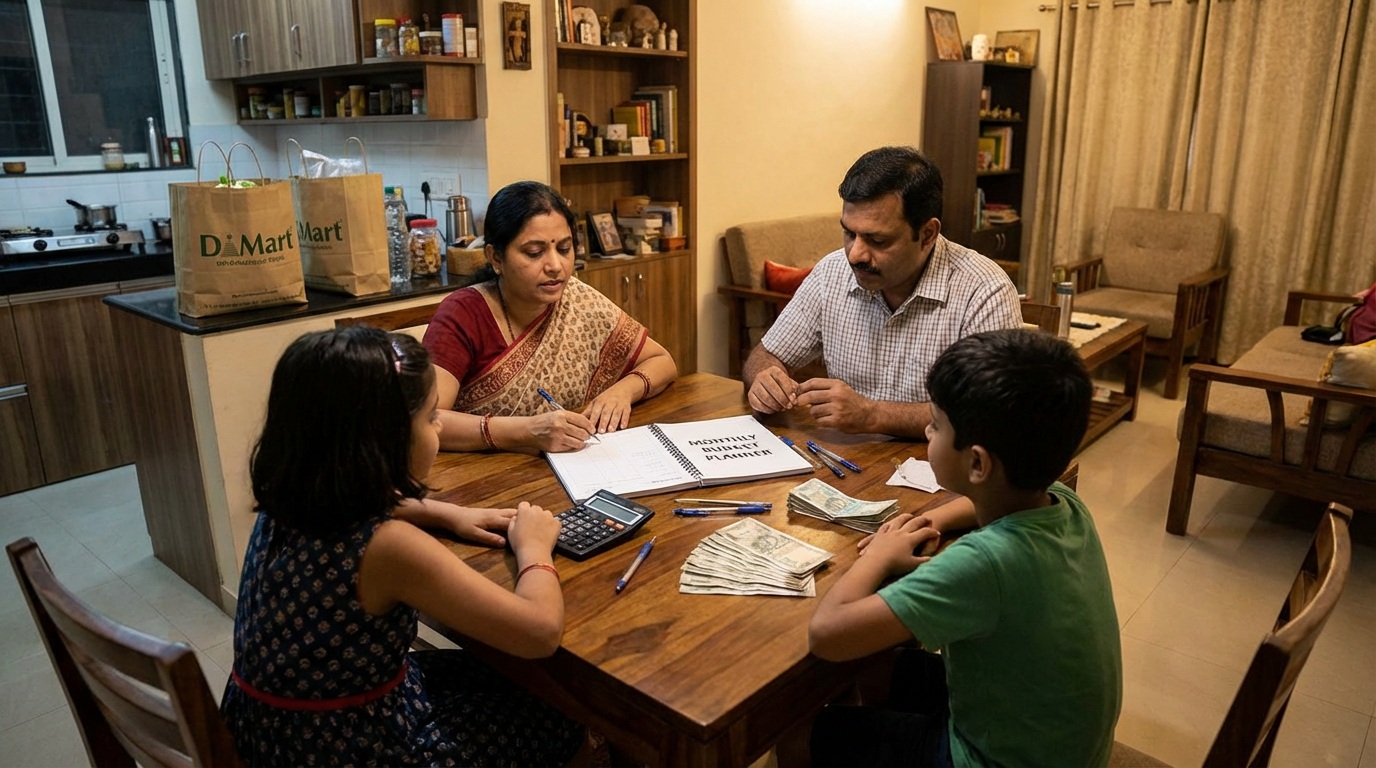

Buying a property in Navi Mumbai comes with a cost most buyers underestimate until registration day: stamp duty and registration fees. This guide sets out the current 2026 rate structure, exactly where the components come from, and how to check the figures that apply to your specific property rather than relying on a single blanket number.
Whether you’re buying in Kharghar, Ulwe, Panvel, or Vashi, stamp duty in Navi Mumbai follows Maharashtra state rules, calculated on the higher of your agreement value and the government’s Ready Reckoner (ASR) valuation for your property. Rates and concessions depend on the buyer’s category and the specific instrument. Verify the exact figures for your transaction on the IGR Maharashtra portal before signing or paying. Planning your home purchase? See our guide to the flat-buying checklist for Navi Mumbai.
Quick Answer: Stamp Duty in Navi Mumbai 2026
Stamp duty on property in Navi Mumbai is governed by Maharashtra’s stamp-duty framework and is calculated on the value determined under the applicable valuation rules, generally the higher of the transaction consideration and the government’s Ready Reckoner/ASR valuation. Registration fees are separate from stamp duty. The applicable rate also depends on the buyer’s category and whether a valid concession applies.
The components confirmed in our verification are a 5%/4% base stamp duty plus a 1% Metro Cess: a 6%/5% subtotal for male / female buyers (sole ownership). Some sources report an additional 1% Local Body Tax specific to NMMC, which would bring the total to 7%/6%, but this could not be confirmed directly against an official IGR Maharashtra rate table at time of writing. Do not use this subtotal alone as your final payable stamp duty. Confirm all applicable components for the property’s jurisdiction through IGR Maharashtra or your Sub-Registrar office before payment. Registration is a separate 1% of property value, capped at ₹30,000 for properties above ₹30 lakh.
Last verified: 24 August 2026.
Current 2026 Stamp Duty & Registration Fee Table
The confusion around Navi Mumbai stamp duty usually comes from stacking several components together without showing them separately. Here’s each component broken out, with its verification status:
| Component | Male buyer | Female buyer (sole owner) | Status |
|---|---|---|---|
| Base stamp duty (municipal corporation areas, incl. NMMC) | 5% | 4% | Verified: Maharashtra Stamp Act conveyance duty structure |
| Metro Cess (applies across MMR, incl. Navi Mumbai) | +1% | +1% | Verified: reinstated 1 April 2022 after a COVID-period suspension |
| Confirmed subtotal | 6% | 5% | Base + Metro Cess |
| Additional local-body levy (reported by some sources as specific to NMMC) | possibly +1% | possibly +1% | Not confirmed. Verify for your specific node before budgeting |
| Registration fee | 1% of property value, capped at ₹30,000 for properties above ₹30 lakh. Separate from stamp duty | Verified | |
| Taxable value | Higher of the agreement/consideration value and the applicable Ready Reckoner/ASR valuation | Statutory valuation rule | |
Do not use the subtotal alone as your final payable stamp duty. Confirm all applicable components for the property’s jurisdiction through IGR Maharashtra/Sub-Registrar before payment. Whether an additional 1% applies in your specific Navi Mumbai node is the one open question in this table. See the next section for how to resolve it for your property.
What Makes Up the Stamp Duty Rate?
Stamp duty in the Mumbai Metropolitan Region isn’t a single flat percentage. It’s layered:
- Base conveyance duty under the Maharashtra Stamp Act, which is higher in municipal-corporation areas than in Municipal Council or Gram Panchayat areas.
- Metro Cess: a 1% surcharge introduced to fund metro rail infrastructure, applicable in Mumbai, Thane, Navi Mumbai, Pune, Nagpur, and Nashik. It was suspended during the COVID period and reinstated from 1 April 2022, and currently applies as a standing addition on top of base duty.
- A possible additional local-body levy reported by some sources specifically for Navi Mumbai (NMMC) areas. This guide flags it as unconfirmed rather than stating it as fact. That’s a genuine gap that couldn’t be closed against an official IGR Maharashtra rate table at the time of research. If you’re transacting in Navi Mumbai, ask your sub-registrar office or check the IGR portal directly for whether this applies to your specific node, since Panvel and Ulwe sit in Raigad district and may follow a different structure than NMMC proper.
These layers are why you may see different totals quoted for “Navi Mumbai stamp duty” depending on the source. Some quote only the base + Metro Cess (6%/5%), others include the reported additional levy (7%/6%). Confirm which applies to your transaction before finalizing your budget.
Women’s Stamp-Duty Concession: Who Actually Qualifies?
This is the detail that most commonly gets misstated, and it can change your duty by a full 1% of the assessable value, so it’s worth getting precisely right.
Maharashtra’s women’s stamp-duty concession is governed by GR Mudrank-2021/UOR.12/CR.107/M-1, dated 31 March 2021, issued under Section 9(a) of the Maharashtra Stamp Act, 1958 (amended 26 May 2023 to remove an earlier 15-year resale restriction on the beneficiary). The concession applies only where the woman or women are the sole purchaser(s) of the residential unit: a single woman buyer, or two or more women buying jointly.
It does not apply to a joint purchase between a husband and wife, regardless of whose name is listed first. A joint male-and-female purchase is charged at the male rate. This is a stricter condition than “woman as first owner,” which is a common misstatement of the rule.
The concession applies to stamp duty only, not to the separate registration fee, which is charged at the same rate regardless of buyer category.
How Stamp Duty Is Calculated
Stamp duty = applicable rate × the higher of (a) your agreement/consideration value, or (b) the government’s Ready Reckoner/ASR valuation for that property. Registration fee is calculated separately, at 1% of the same value, capped at ₹30,000.
Formula: (Taxable value × stamp duty rate) + registration fee (1% of taxable value, capped at ₹30,000) = total government charges.
Agreement Value vs Ready Reckoner/ASR Value
The Ready Reckoner Rate (also called the Annual Statement of Rates or ASR) is the government’s minimum valuation benchmark for a given area and property type. You cannot pay stamp duty on a value lower than the applicable ASR entry for your property, even if your negotiated purchase price is lower. Duty is charged on whichever figure is higher: your agreement value or the ASR valuation.
For FY 2026-27 (effective 1 April 2026), Maharashtra’s Ready Reckoner rates were kept unchanged. That’s a statewide freeze announced by the state government, providing relief compared to prior years’ revisions. This is different from the FY 2025-26 cycle, which did see an increase (reported in the 3.4%-5.9% range depending on area type and source, not a single precise statewide figure). Whatever your source, a statewide average figure for any cycle doesn’t tell you your specific property’s ASR value, and shouldn’t be applied to an individual Navi Mumbai property as a shortcut. You need your building’s or plot’s specific ASR entry, not a state or citywide average.
How to Check Your Exact ASR Value
Ready Reckoner/ASR valuation isn’t a single number per locality. It varies by zone, property type (residential, commercial, land), floor, and other valuation parameters set out in the applicable ASR guidelines for that year. Rather than relying on a locality-level estimate from an article, look up your specific property:
- Use the official Ready Reckoner/ASR lookup on the IGR Maharashtra portal.
- Identify the correct village/zone, survey/CTS number, and property classification for your specific unit. A nearby building in the same locality can carry a different ASR entry.
- If your transaction involves CIDCO-allotted land, also confirm the relevant classification with CIDCO, since leasehold status can affect the applicable valuation approach.
This is slower than reading a locality-wide benchmark table, but it’s the only way to get a number that will actually match what the Sub-Registrar’s office calculates at registration.
Does Floor Level or Building Age Affect Stamp-Duty Valuation?
Government ASR valuation can involve adjustments for factors such as floor level and building age, prescribed in the applicable ASR guidelines for the relevant year and zone. These adjustments are set by the valuation authority and can change from year to year and area to area. They are not a fixed universal percentage table that applies identically everywhere.
Rather than apply a generic floor-rise premium or age-based depreciation percentage from an online article to your specific transaction, use the official valuation method for your exact property, available through the IGR Maharashtra ASR lookup, or by confirming directly with your Sub-Registrar office, since applying the wrong adjustment can materially misstate your stamp-duty liability.
Worked Examples: ₹50L / ₹1Cr / ₹2Cr
Illustration using confirmed components only. NOT final payable duty. These examples apply only the confirmed 6% male / 5% female (sole ownership) subtotal, plus the capped ₹30,000 registration fee. If the additional 1% local-body levy is confirmed to apply to your specific transaction, actual stamp duty could be higher, for example ₹2,00,000 more on a ₹2 crore property. Do not treat these figures as your final payable amount; confirm all applicable components for your property’s jurisdiction through IGR Maharashtra or your Sub-Registrar office before budgeting or paying.
| Property value | Male buyer (6% + registration) | Female buyer, sole ownership (5% + registration) |
|---|---|---|
| ₹50 lakh | ₹3,00,000 + ₹30,000 = ₹3,30,000 | ₹2,50,000 + ₹30,000 = ₹2,80,000 |
| ₹1 crore | ₹6,00,000 + ₹30,000 = ₹6,30,000 | ₹5,00,000 + ₹30,000 = ₹5,30,000 |
| ₹2 crore | ₹12,00,000 + ₹30,000 = ₹12,30,000 | ₹10,00,000 + ₹30,000 = ₹10,30,000 |
These figures assume your agreement value is at or above the applicable ASR valuation for the property. If your building’s ASR value is higher than your agreement value, duty is calculated on the ASR figure instead. Confirm this before you budget.
Registration Fee
Registration fee in Maharashtra is 1% of the property’s taxable value, capped at ₹30,000 for properties valued above ₹30 lakh. In practice, since most Navi Mumbai residential transactions exceed ₹30 lakh, this means a flat ₹30,000 registration fee for most buyers; properties below ₹30 lakh pay a straight 1% of value. This fee is separate from stamp duty and is not affected by the women’s stamp-duty concession, which applies to stamp duty only.
Registration is the process that makes your sale deed a public record at the Sub-Registrar’s office serving your property’s location (in Navi Mumbai, this could be Vashi, Panvel, Belapur, Airoli, or another office depending on where the property sits). Paying stamp duty alone does not complete the legal transaction. Registration of the compulsorily registrable instrument is a separate, necessary step.
CIDCO Charges Are Separate From Stamp Duty
Much of Navi Mumbai sits on land originally allotted by CIDCO (City and Industrial Development Corporation) on a leasehold basis. CIDCO-allotted or leasehold properties may involve separate authority-level transfer, lease, or record-update formalities depending on the specific property and transaction. These are distinct from and additional to Maharashtra’s stamp duty and registration fees, and completing one does not automatically complete the other.
Rather than budget against a generic transfer-fee figure, check the applicable CIDCO documents for your specific property and confirm the current procedure and fee directly with CIDCO before finalizing your transaction.
CIDCO Leasehold and Freehold Conversion: What Buyers Should Check
CIDCO has, in the past, allowed conversion of leasehold plots to freehold status on payment of a premium. If you’re buying a resale property, it’s worth checking whether the current or previous owner has already completed a freehold conversion, since this can affect what formalities apply to your purchase. Confirm the current conversion process, eligibility, and premium directly with CIDCO rather than relying on a general description, since terms and availability can change. Freehold conversion may affect future authority-level formalities for the property, but treat any specific claim about future fee savings or resale-value impact as something to verify for your property rather than a guarantee.
GST vs Stamp Duty: Don’t Confuse Them
GST and stamp duty are separate charges with different triggers. GST applies to under-construction property (a property sold before a Completion or Occupancy Certificate is issued); a completed, ready-to-move property with a valid Occupancy Certificate does not attract GST, since it’s treated as a sale of immovable property rather than a supply of construction service.
For under-construction residential property, the applicable GST rate depends on whether the unit qualifies as “affordable housing” under the GST framework, broadly a unit with carpet area up to 60 sq. m in metro areas (90 sq. m in non-metro areas) and value up to ₹45 lakh, which attracts 1% GST without input tax credit; non-affordable under-construction residential property attracts 5% GST without input tax credit. These rates have applied since April 2019 and were confirmed unchanged through the GST rate rationalization in September 2025. Confirm your specific unit’s classification and applicable rate with your developer and the current GST framework, since it depends on both the construction/completion status and the affordable-housing qualifying criteria, not simply the colloquial “ready-to-move” description.
Stamp duty and registration fees apply regardless of GST status. They are charged on the property’s taxable value whether or not GST also applies to the transaction.
How to Pay Stamp Duty
Step 1: Confirm the taxable value. Use the higher of your agreement value and the applicable Ready Reckoner/ASR valuation for your specific property, looked up on the IGR Maharashtra portal.
Step 2: Choose the applicable payment channel. Stamp duty and registration fees can be paid through the payment channels currently supported by Maharashtra’s Registration & Stamps system, including GRAS/e-payment and authorised banking channels where applicable. Follow the payment method generated or prescribed for your transaction and retain the official receipt. Do not make duplicate payments through multiple channels.
Step 3: Book your Sub-Registrar office appointment through the IGR Maharashtra portal’s e-Stepin token/slot system, which lets you check slot availability and book a date for registration after entering your document details. Appointment and office procedures can vary and change. Check the current process for the relevant Sub-Registrar office on the IGR Maharashtra portal rather than assuming a fixed format.
How Property Registration Works
Registration requirements vary by instrument and transaction type, so treat the following as an indicative outline rather than a universal checklist: documents typically involved can include the sale agreement, SBTR/GRAS payment receipt, identity proof of all parties, property documents, and other papers specific to your transaction and Sub-Registrar office. Follow the exact document requirements generated or specified for your particular registration by the IGR Maharashtra system or your Sub-Registrar office, rather than assuming a fixed universal list.
Biometric verification is generally taken for the parties to the transaction at the time of registration. Registration timing depends on appointment availability, document readiness, valuation and stamp-duty verification, and the applicable Sub-Registrar workflow. Don’t rely on a fixed completion period (such as a specific number of hours for the appointment, weeks for booking, or days for document download) when coordinating loan disbursement or possession. Confirm current timelines directly with your Sub-Registrar office.
Refund, Underpayment, and Delayed Registration
Underpayment penalty: Under Maharashtra’s 2026-27 state budget, the penalty for insufficient stamp duty payment on property transactions was raised substantially, reported as an increase from ₹5,000 to up to ₹1 lakh, effective from January 2026, on top of recovering the underpaid amount. Undervaluing an agreement to reduce duty carries a materially higher risk than in prior years.
Presentation timeline: Under the Registration Act, 1908, a document (other than a will) must generally be presented for registration within four months from its date of execution (Section 23). Where presentation is delayed, the Registrar may, for a delay not exceeding a further four months, accept the document on payment of a fine of up to ten times the ordinary registration fee (Section 25), meaning documents can, in practice, still be registered up to roughly eight months after execution, subject to that fine. This is a statutory presentation deadline, not a guarantee that registration itself will be completed by a specific date. Have your execution and registration schedule confirmed by your drafting advocate or the Sub-Registrar rather than relying on a fixed deadline from an online summary if you’re close to this window.
Refunds: Refund of stamp duty is possible in certain circumstances under the Maharashtra Stamp Act, subject to conditions and timelines set by the Act and current IGR Maharashtra procedure. If you believe you’ve overpaid or a transaction has been cancelled, check the current refund process and eligibility conditions directly on the IGR Maharashtra portal rather than assuming a fixed percentage or timeline.
Tax Deduction on Stamp Duty & Registration
A deduction for stamp duty and registration charges paid on a residential property is available under Section 80C of the Income Tax Act, but it comes with conditions that are easy to overstate:
- The deduction is available only if you’re filing under a tax regime where Section 80C deductions apply (the old tax regime). It is not available under the new/default concessional tax regime.
- It falls within the overall ₹1.5 lakh Section 80C limit, shared across all your 80C investments and payments (PPF, ELSS, life insurance premiums, home-loan principal repayment, and so on). It is not a separate ₹1.5 lakh allowance just for stamp duty.
- It’s generally available for a residential house property, subject to Section 80C conditions and the taxpayer’s individual circumstances.
- The deduction can only be claimed in the year the stamp duty and registration payment is actually made.
Eligibility is subject to Section 80C conditions, the overall ₹1.5 lakh limit, the applicable tax regime, and the taxpayer’s individual circumstances. Confirm eligibility for your transaction with a tax professional or the Income Tax Department.
Buyer Checklist Before Registration
Government/statutory costs to budget for:
- Stamp duty (confirm your exact rate and taxable value)
- Registration fee (1% capped at ₹30,000)
- GST, if applicable (under-construction property only)
- Authority-level charges, where applicable (e.g. CIDCO formalities for leasehold properties)
Variable transaction costs to obtain directly from the relevant party. These are not statutory and vary by transaction:
- Legal/due-diligence fees
- Lender/loan-processing fees, if financing
- Brokerage
- Society or project deposits (corpus fund, maintenance deposit)
- Other professional services
Obtain current figures for the variable costs directly from your lender, lawyer, broker, society, or the relevant authority rather than budgeting against a generic range, since these vary significantly by transaction and provider.
Frequently Asked Questions
What is the current stamp duty rate in Navi Mumbai in 2026?
The components confirmed in our verification are a 5%/4% base stamp duty plus a 1% Metro Cess: a 6%/5% subtotal for male / female buyers (sole ownership). Some sources report an additional 1% local-body levy specific to Navi Mumbai (which would bring the total to 7%/6%), but this could not be confirmed against an official rate table at time of writing. Do not use this subtotal alone as your final payable stamp duty. Registration is a separate 1% of property value, capped at ₹30,000, and all applicable components should be confirmed for your property and node on the IGR Maharashtra portal before payment.
Is stamp duty the same across all areas of Navi Mumbai?
The underlying Maharashtra stamp-duty framework is state-level, but the total payable duty can depend on the property’s jurisdiction, applicable local/cess components, instrument and buyer eligibility for concessions. Ready Reckoner/ASR valuation also varies by zone and property classification.
Who qualifies for the women’s stamp-duty concession?
Only a residential property where the woman, or women, are the sole purchaser(s): a single woman buyer, or two or more women buying jointly. A joint purchase between a husband and wife is charged at the male rate, regardless of whose name is listed first. The concession applies to stamp duty only, not to the registration fee.
Do PMAY beneficiaries get a 1% stamp duty rate in Maharashtra?
PMAY-U 2.0 eligibility under the central scheme does not by itself establish a particular Maharashtra stamp-duty rate. A separate Maharashtra government order does provide a flat ₹1,000 stamp duty (not a percentage) on the first sale instrument for EWS and LIG category buyers in MHADA-certified affordable housing projects, subject to specific income and unit-size conditions. This is a distinct and narrower benefit than a general 1% concession for properties up to ₹45 lakh. Confirm current eligibility and status directly against the applicable Maharashtra Government notification for your specific project.
What happens if I don’t register my property after paying stamp duty?
Where an instrument is compulsorily registrable under the Registration Act, 1908, failure to register it can materially affect its legal effect and its admissibility as evidence of the transaction. An unregistered instrument generally cannot be used to establish the transaction it records, though it may still be usable as evidence in a suit for specific performance or as evidence of a collateral matter. Buyers should complete the applicable registration requirements and get legal advice immediately if a registrable instrument hasn’t been registered within the required period.
How long does property registration take in Navi Mumbai?
Registration timing depends on appointment availability, document readiness, valuation and stamp-duty verification, and the applicable Sub-Registrar workflow. There is no fixed completion period you should rely on for coordinating loan disbursement or possession. Confirm current timelines directly with your Sub-Registrar office or on the IGR Maharashtra portal.
Do I need to register a document within a fixed deadline after signing?
Under the Registration Act, 1908, a document generally must be presented for registration within four months of its execution date, with a further condonable window of up to four more months available on payment of a fine (up to ten times the ordinary registration fee). Have your specific execution and registration schedule confirmed by your drafting advocate rather than relying on a casual “four-month deadline” if you’re approaching this window.
Can I claim a tax deduction on stamp duty and registration charges?
Only if you’re filing under the old tax regime, where Section 80C deductions apply. This benefit is not available under the new/default tax regime. It falls within the shared ₹1.5 lakh Section 80C limit (not a separate allowance), generally applies to a residential property, and must be claimed in the year of payment. Confirm your specific eligibility with a tax advisor.
Does GST apply to my Navi Mumbai property purchase?
GST applies only to under-construction property, at 5% for non-affordable units or 1% for units meeting the affordable-housing criteria (broadly, carpet area and value thresholds), both without input tax credit. A completed property with a valid Occupancy Certificate does not attract GST. GST and stamp duty are separate and both can apply to the same under-construction purchase.
Official Sources
This guide is cross-checked against the Maharashtra Department of Registration and Stamps / IGR Maharashtra portal, applicable Maharashtra Government GRs and notifications (including the women’s stamp-duty concession GR and the PMAY-linked stamp-duty order), the official ASR/Ready Reckoner valuation system, GRAS for the payment process, and CIDCO for CIDCO-specific matters. Where a figure could not be confirmed against a primary government source, specifically whether an additional local-body levy applies in Navi Mumbai/NMMC. This guide says so explicitly rather than presenting an unverified number as settled fact.
Last verified: 24 August 2026. Rates, valuations, and procedures can change. Always confirm current figures on the IGR Maharashtra portal or with your Sub-Registrar office before signing or paying.