
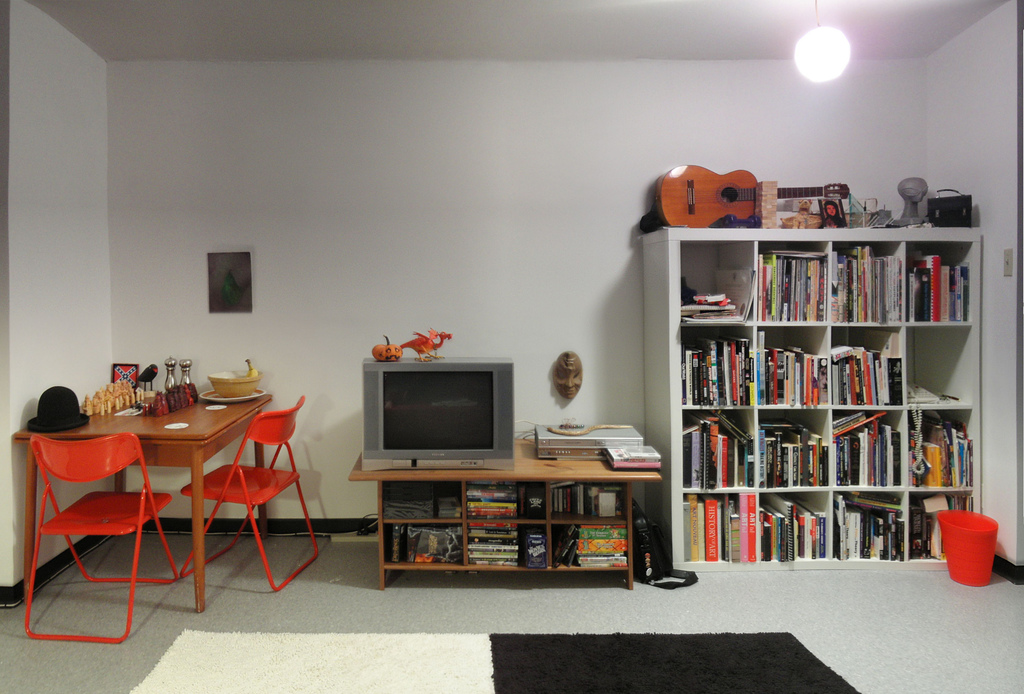
Minimalist living does not require an empty home, a fixed number of possessions or a new set of matching storage boxes. Start by identifying what your household uses, what needs repair and what can leave without creating another expense.
This guide offers a practical way to declutter personal and shared spaces, check donation and disposal options, and review purchases. The aim is a home that works for your routine, not a particular look or a promised amount of savings.
What to Keep: A Decision Table
Automatic rules such as discarding anything unused for six months, one year or two years do not account for seasonal items, shared ownership or personal significance. Use these questions instead.
| Question | What to consider |
|---|---|
| Who owns it? | Obtain the owner’s agreement before moving it out |
| Does it serve a current need? | Include work, care, accessibility and household routines |
| Is it seasonal or occasional? | Festival items, guest bedding and occasion wear may still be useful |
| Can it be repaired? | Consider condition, repair cost and likely future use |
| Would replacement be difficult? | Consider affordability, availability and lead time |
| Does it have personal significance? | Sentimental value is a legitimate reason to keep something |
| Is there a suitable destination? | Confirm acceptance, collection or disposal before packing |
“Would I buy this today?” may be an optional prompt, not a sufficient reason to discard an item.
Room by Room: Where to Start
Start with a manageable drawer, shelf or category. Do not empty an entire wardrobe or kitchen in one sitting.
| Space | Start with | Avoid removing automatically |
|---|---|---|
| Wardrobe | Damaged items, fit and actual use | Seasonal clothing, uniforms and occasion wear |
| Kitchen | Unused purchases and unnecessary duplicates | Equipment needed for household size or different cooking needs |
| Living area | Items blocking everyday use | Shared belongings and meaningful displays |
| Bathroom | Unused products and excess purchases | Necessary care products and accessibility aids |
| Storage | Unlabelled boxes and forgotten contents | Guest bedding, festival items and useful spares |
Furniture and Storage: What You Actually Need
Keep enough equipment and storage for the people who use the home. The useful test is whether you can find, use and maintain what you own, not whether your household fits someone else’s item limit.
Decorative objects are not inherently wasteful. A display that has meaning to your household is a reasonable thing to keep.
Shared Homes, Gifts and Festivals
A bedroom is not automatically private, and a shared home will not always agree quickly. Work through changes deliberately rather than assuming quick consensus.
- Begin with your own belongings.
- Agree on changes to shared cupboards and furniture.
- Do not discard another person’s possessions without permission.
- Let household members retain different preferences.
- Keep essential items accessible to the people who use them.
You can keep a gift because it matters to you, use it differently, or consider passing it on. If it belongs to someone else or is treated as a shared family possession, discuss that first. A photograph may preserve a memory for some people, but it is not a required substitute for the object.
For festivals, review and reuse existing decorations where they are still usable. Temporary decorations are not automatically cheaper or less wasteful than reusable ones.
Donating, Selling and Disposing Responsibly
Organisations do not universally need every donation. Acceptance depends on the item, its condition and what the receiving organisation currently requires. Check before you send or drop off anything.
- Does the organisation accept this item?
- What condition must it be in?
- Is the receiving location currently operating?
- Is delivery required, or is collection offered?
- Are there quantity, size or packaging restrictions?
- Are any transport charges involved?
Goonj’s own guidance directs contributors to check with them before sending material that is not on their published list. You can review Goonj’s official FAQ as an example of how one organisation sets its requirements. Do not assume a similar pickup service is available in your area without confirming it directly.
When selling belongings, a generic resale platform is enough for most households. Check any named service for location eligibility, permitted categories and current charges before relying on it; some international platforms, for example, do not allow sellers located in India to create listings. Jewellery involves a separate valuation and transaction question that a general classifieds listing does not cover well, so treat it separately from ordinary household resale.
- Describe condition and defects accurately.
- Confirm any platform, packing and transport charges.
- Follow the device manufacturer’s instructions for removing personal data before transferring electronics.
- Verify receipt of payment in your own account.
- Arrange a suitable handover without unnecessarily sharing personal information.
Do not enter your UPI PIN or scan a buyer’s QR code to receive payment. NPCI’s own fraud-awareness guidance is explicit that scanning a QR code and entering a UPI PIN is only meant for making payments, never for receiving them.
For items you are not keeping, donating or selling, choose the appropriate exit route rather than treating everything as ordinary rubbish.
| Route | Appropriate next step |
|---|---|
| Keep or repair | Retain useful items or assess repair |
| Donate or give away | Confirm that the recipient accepts the item |
| Sell | Check eligibility, condition disclosure and transaction arrangements |
| Recycle or dispose appropriately | Identify the route for the specific material |
For old electronics, look for a verified producer collection programme or an appropriately registered recycler, following MPCB’s e-waste rules and registered-facility lists, rather than putting them out with household waste. Batteries have their own collection arrangements under MPCB’s battery waste management rules and should be checked separately from electronics. This guide does not cover disposal instructions for medicines, chemicals or damaged batteries; check the specific arrangement for that material before handling it.
Buying Less and Tracking Spending
Before a purchase, work through these questions.
- What specific need will this meet?
- Do I already own something suitable?
- Could repair or borrowing meet the need?
- Where will it be stored?
- What maintenance or consumables will it require?
- Does it fit the household budget?
A waiting period before nonessential purchases can be a useful optional habit, though no specific number of days is a proven method for everyone. The same applies to “one in, one out”: a useful habit for some households, not a universal rule.
Sort and measure before buying storage. Reuse suitable containers where possible, and buy an organiser only when it solves a specific problem. Replacing usable possessions to create a minimalist appearance can add costs.
Instead of a fixed savings promise, track your own spending on a blank worksheet like the one below.
| Category | Previous comparable period | Current period | Difference | Explanation |
|---|---|---|---|---|
| Clothing and accessories | ||||
| Household goods and decor | ||||
| Electronics and accessories | ||||
| Storage purchases or rental | ||||
| Other discretionary purchases | ||||
| Repair, collection and selling costs |
- Assign each purchase to one category.
- Compare periods of the same length.
- Record exceptional purchases separately.
- Keep proceeds from selling possessions separate from recurring spending reductions.
- Do not multiply a single unusually low-spending month into a promised annual saving.
For a closer look at where your household’s money already goes, see this guide to reviewing recurring household expenses. If you have not set up a monthly plan yet, start with building a household budget before you rely on the worksheet above. A move is also a common natural trigger for this kind of review; if you are relocating, see this guide to planning a move to Navi Mumbai.
A Goal You Can Actually Measure
Choose a goal you can assess, such as finding cooking utensils more easily, clearing a usable work surface or reducing purchases you later regret. No medical benefits are needed to justify this article, and results will vary by household.
Frequently Asked Questions
What does minimalist living mean in an Indian home?
It means choosing possessions and purchases around your household’s needs. It does not require empty rooms, a fixed item count or giving up meaningful cultural and family belongings.
Where should I start decluttering?
Start with a small area containing your own belongings, such as one drawer or shelf. Decide what to keep, repair or pass on, and confirm where outgoing items can go before expanding to another area.
Should I discard something because I have not used it for a year?
Not automatically. Consider seasonal use, replacement cost, accessibility needs and personal significance. Time since last use is one prompt, not a complete decision rule.
Can minimalist living work in a joint family?
It can be adapted to a shared home when changes are agreed together. Begin with your own belongings and do not remove another person’s possessions without their permission.
Do I need to buy organisers or new furniture?
No. Start by sorting what you already own and reusing suitable storage. Buy something only if it solves a specific need within your budget.
How much money will minimalism save me?
There is no fixed saving. Compare your own spending over equivalent periods, include any repair or disposal costs, and record resale proceeds separately from recurring spending changes.
Can I donate everything I no longer want?
No. Acceptance depends on the organisation, item and condition. Check current requirements and delivery or collection arrangements before sending anything.
What should I do with unwanted electronics and batteries?
Check the relevant producer collection programme or a registered recycling route and confirm what it accepts. Do not treat electronics and batteries as ordinary mixed household rubbish.
This is an editorial planning guide, not a household survey or a measured savings study. Donation acceptance, collection arrangements and resale-platform conditions should be checked directly before use.