Government information notice: E-challan issuance, fine amounts, grievance processes and court procedures depend on the specific offence, the issuing authority and current Maharashtra Traffic Police, Government of India eChallan and court rules. Verify any challan directly through the official government systems named in this guide before paying or contesting it.
E-challan safety notice: Use only official Maharashtra Traffic Police or Government of India eChallan services to check and pay a challan. Do not enter OTPs, card details or banking credentials on links received from unknown senders. The national eChallan service explicitly warns that it never requests passwords, OTPs or sensitive payment information through calls, emails, messages or links, and cautions that fraudulent websites and apps impersonate its services.
Traffic e-challans in Maharashtra can be issued for offences detected by enforcement officers or electronic enforcement systems. Vehicle owners can check challans through Maharashtra’s official e-Challan service and, where applicable, the national eChallan/Parivahan system. If you receive a challan, verify the vehicle, offence, date, location and amount before paying. If the challan appears incorrect, use the official grievance process rather than ignoring it or paying through an unverified link.
Quick Answer
For a Maharashtra traffic challan, start with the official Maharashtra e-Challan portal at mahatrafficechallan.gov.in. Search using your vehicle number or challan number, verify the offence and amount, and pay through the official payment flow. Maharashtra is also one of the states currently directed to the Government of India’s newer NextGen eChallan portal rather than the older national eChallan interface, so check both if one shows nothing. If the challan is incorrect or a payment has been applied incorrectly, use the official grievance module rather than a private “settlement” service.
Do not rely on a static fine table, including one on this page, as the final authority. The applicable offence, statutory provision and compounding amount can differ, and Maharashtra’s own Motor Vehicle Department maintains the controlling Offences and Penalties schedule.
1. How to Check an E-Challan in Navi Mumbai
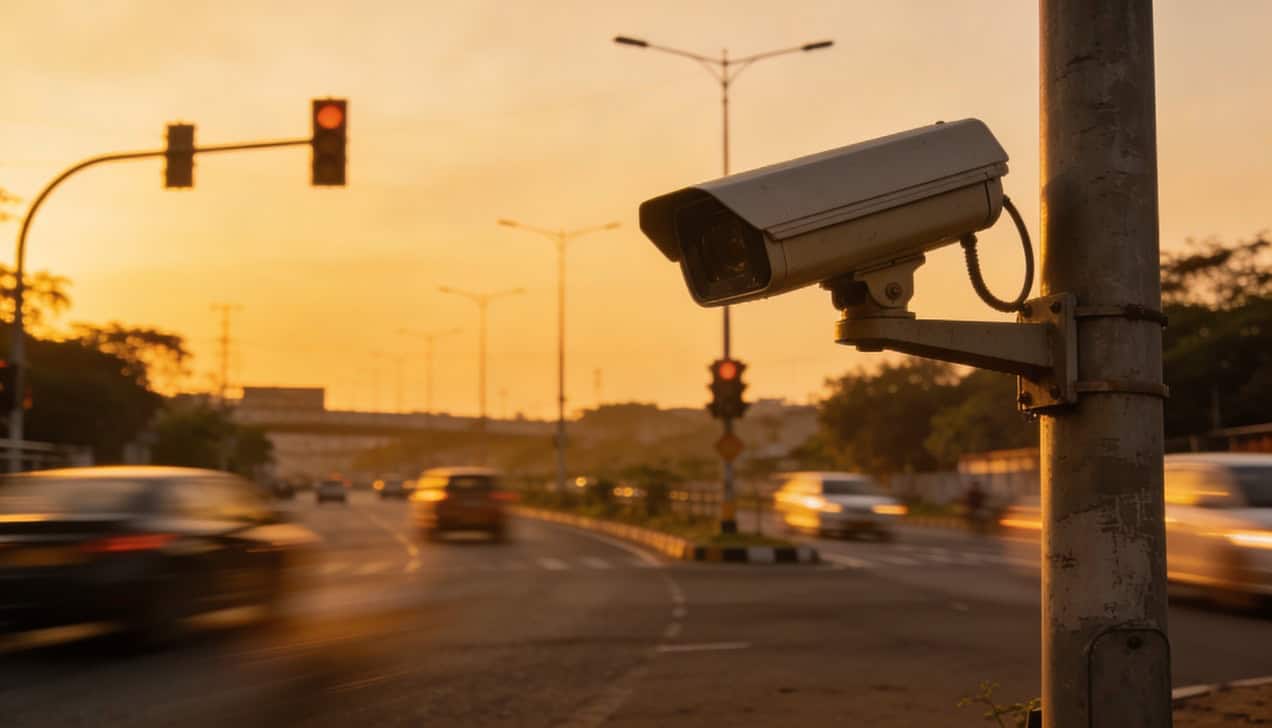
An e-challan can result from more than one enforcement route: an officer issuing a challan at the scene, an electronic enforcement or camera system where one is deployed, or another authorised process. Do not assume every Navi Mumbai junction has automated camera enforcement, or that every challan was camera generated; check the specific record for how it describes the offence and, where shown, any supporting evidence.
Maharashtra maintains its own state e-Challan payment service at mahatrafficechallan.gov.in, operated by the Additional Director General of Police (Traffic), Maharashtra State. It lets you search a pending challan by vehicle number or challan number, and separately offers a link/unlink facility for your mobile number against your vehicle. This is the most direct starting point for a Maharashtra Traffic Police issued challan.
The Government of India’s own eChallan system, run by the Ministry of Road Transport and Highways, also covers Maharashtra. Its homepage currently directs a specific list of states, Maharashtra among them, to a newer NextGen eChallan portal rather than its older interface, so if a search there shows nothing, try the NextGen portal before assuming the challan does not exist. Do not use unofficial third-party “challan checker” sites; use the official state or national systems directly.
If a traffic officer stops you directly: check the offence and payment instructions the officer or the resulting challan actually provides through the official process, and avoid an unofficial cash payment without an authorised receipt. If you dispute the allegation at the roadside, it is safer to accept the challan and use the applicable grievance or court process afterwards rather than trying to resolve a dispute on the spot through an unofficial payment.
Keep the issuing authority and jurisdiction distinct. Navi Mumbai Traffic Police, Mumbai Traffic Police, other Maharashtra commissionerates, the RTO and the courts are not interchangeable, and a challan for an offence recorded in Mumbai is not automatically a Navi Mumbai Traffic Police matter merely because the owner lives in Navi Mumbai. The issuing authority and offence location on the challan determine the relevant office, not the owner’s home address. You generally do not need to visit an RTO office simply to check or pay an e-challan; that becomes relevant only for a specific vehicle or ownership service.
2. How to Pay a Maharashtra E-Challan Online
Once you have located the correct pending challan, review the violation details, date, location and fine amount before paying. Maharashtra Highway Traffic Police describes its online payment flow as accepting net banking, debit card, credit card and UPI; use whichever the payment page you are actually on offers rather than assuming every method is available everywhere. Offline payment is also available through the appropriate traffic division or police station where the official process directs you, but do not treat a specific office address as fixed, since the correct office depends on the issuing authority.
Do not invent charges the official system does not show you, such as a fixed convenience fee, a settlement discount, or a universal payment deadline; use the amount and any charges the official portal actually displays for your specific challan.
3. Before You Pay a Traffic E-Challan
A short check before paying can prevent an unnecessary payment or a payment to the wrong place.
Verify the challan first. Confirm the vehicle registration number, challan number where available, date, time and location of the alleged violation, offence description, issuing authority, fine amount shown, and current status. Do not pay merely because an SMS or WhatsApp message claims a challan is pending.
Use an official government service. Start from mahatrafficechallan.gov.in or the applicable official eChallan/NextGen eChallan service. Do not use payment links from unknown senders, unsolicited email, shortened URLs, or unofficial “challan settlement” websites; a genuine looking message is not proof a link is official.
Confirm the vehicle details. If the vehicle image, type or colour does not match, the location seems impossible, the vehicle was sold, or the plate may have been misread or duplicated, do not simply pay to make the alert disappear. Use the official grievance process instead.
Understand the offence. Do not infer the offence only from a short SMS description. Check the official challan record for the offence description, the applicable legal provision where displayed, the amount due, any supporting evidence or image, and the current status.
Check whether it has already been paid. Verify whether the status shows paid, pending, disposed, or sent to court. If you have already paid but the portal still shows it pending, retain the transaction ID, payment receipt, and challan number, and use the official support or grievance route rather than paying again immediately.
If the challan has moved to court. Do not assume the ordinary online payment flow still applies. If the status shows the matter sent to court or Virtual Court, follow the current instructions that official system gives.
Lok Adalat. Do not treat a Lok Adalat as a guaranteed discount. Eligibility, dates and settlement terms depend on the current official notice for that specific event, and not every e-challan qualifies.
Payment amount. Pay the amount displayed through the official process. Do not manually add together an offence fine, a late fee and a court fee yourself unless the official system specifically itemises those components for your challan.
Save the receipt. After a successful payment, keep the challan number, the transaction or payment ID, the date, the amount, and the receipt or a screenshot. Recheck the official challan status after the payment has had reasonable time to update rather than assuming it is instantly reflected.
Do not pay an agent to “remove” a challan. No private agent can legitimately erase a valid traffic challan from the government system in exchange for an unofficial payment. Use the official payment, grievance or court process instead.
4. How to Recognise a Fake E-Challan Message
Fraudulent messages impersonating e-challan services are a genuine, officially acknowledged risk; the national eChallan service’s own homepage carries a standing notice warning about exactly this. Be cautious of any message that pressures you to pay immediately, threatens instant licence suspension or arrest without directing you to a record you can independently check, uses a shortened or unfamiliar URL, asks you to download an app outside an official app store, requests your OTP, card PIN or banking credentials, asks for payment to a personal UPI ID, claims an agent can cancel the challan for a fee, or contains vehicle information you cannot independently verify on the official system.
Do not open the payment link in the message first. Instead, open the official government challan portal independently in your own browser and search using the required vehicle or challan details. If a message still looks suspicious after that check, report it to the police rather than acting on it.
5. What If the Challan Is Wrong or Not Yours?
Camera based and manual enforcement systems can both make mistakes. Possible issues include an incorrect number plate reading, a cloned or duplicate plate, a challan for a vehicle that was sold, an incorrect offence description, a wrong location or date, a challan that has already been paid, or a genuine duplicate challan.
Maharashtra’s e-Challan service provides two distinct grievance routes rather than one generic form: a grievance against the challan itself, for disputes about the offence, vehicle identification, or validity, and a separate grievance against a receipt, for a payment applied incorrectly, for example against the wrong vehicle. The receipt-based form asks for the receipt number, amount, the vehicle number the payment was wrongly applied to, and your own vehicle number, so have those ready. Provide supporting evidence the form requests, such as your RC, vehicle photographs, sale or transfer documentation, a payment receipt, or location evidence, depending on the case.
Submitting a grievance does not itself guarantee cancellation; the authority reviews it through its own process. If the online route does not resolve things, the Maharashtra Traffic Police e-Challan helpdesk can also be reached directly at 844 844 8960 or helpdesk@mahatrafficechallan.gov.in.
6. Paid the Wrong Vehicle’s Challan, or Challan for a Vehicle You Sold?
If a payment was applied against the wrong vehicle, do not attempt to reverse the issue by making another payment. Use Maharashtra’s official grievance against receipt process described above and provide the requested transaction and vehicle information.
If the challan itself relates to a vehicle you sold, do not simply ignore it on the assumption that selling the vehicle ends your responsibility. The registered ownership and transfer status on record matters. Check the vehicle’s current registration and ownership transfer status alongside the challan details; if the challan relates to a period after the sale but the government record still reflects you as the owner, use the applicable vehicle transfer process at the RTO together with the challan grievance process, and retain your sale or transfer documentation, including any Form 29/30 transfer filing, when you do.
7. How Much Is the Traffic Fine?
Traffic penalties depend on the exact offence and the applicable legal provision, and similar looking violations can carry different consequences depending on the circumstances, the vehicle category, and whether it is a first or repeat offence. Maharashtra’s Motor Vehicle Department maintains an official Offences and Penalties schedule listing the applicable section or rule, the maximum court imposed penalty, and the separate compounding fee payable under Section 200 of the Motor Vehicles Act for each offence, and that schedule, not a private fine list, is the controlling reference.
Be aware that different sources currently describe Maharashtra fine amounts differently. A number of insurance company and third-party blogs publish tables citing the higher, post-2019-amendment Motor Vehicles Act figures as if they were the amount actually collected, while Maharashtra’s own Motor Vehicle Department schedule lists separate, generally lower compounding fees for the same offences under Section 200. Rather than pick one figure to publish here and risk contradicting what your own challan actually shows, use the amount displayed on your specific challan and the department’s own schedule as the final word.
| Violation | What to do |
| Helmet-related offence | Check the exact offence and amount on your official challan |
| Seat-belt offence | Check the official challan and the current department schedule |
| Signal or lane violation | Check the exact provision shown on the challan |
| Speed-related offence | Amount and consequence can depend on the specific offence and vehicle category |
| Licence-related offence | Verify the exact statutory provision on the challan |
| Insurance-related offence | Verify against the current official schedule; the amount can differ for the driver and the vehicle owner |
Do not assume a repeat offence simply doubles the first-offence amount. Some provisions do set a specific higher figure for a second or subsequent offence, others do not, and a few serious offences such as drunk or drugged driving are not compounded at all and are sent directly to court rather than settled through a fixed fee. Check the applicable provision for your specific offence rather than generalising from one violation to another.
8. What Happens If an E-Challan Remains Unpaid?
Do not assume an unpaid challan simply disappears, or that it automatically triggers a specific blanket consequence such as blocking every RC renewal or vehicle transfer. Depending on the challan’s status, the offence, and the applicable process, an unpaid challan may remain pending, be escalated through compounding, or be forwarded for court disposal. Certain serious or repeated violations can involve consequences beyond a monetary fine, but do not infer a licence suspension or vehicle impounding order simply from the number of challans a vehicle has; those are specific enforcement or court actions, not an automatic countdown.
Check the challan’s current official status rather than relying on a fixed timeline you have read elsewhere, and resolve it through the correct official channel, whether that is payment, a grievance, or the applicable court process, if the challan appears incorrect.
9. Court, Virtual Court and Lok Adalat
Some traffic challans in India are handled through the Virtual Courts system, an online adjudication platform run on a pilot basis by the judiciary’s e-Committee, and the national eChallan system’s own status lookup explicitly points to the Virtual Courts website for challans sent there. Coverage is department specific rather than statewide, though: at the time of writing, Virtual Courts’ own portal lists Maharashtra’s participation as the Nashik Traffic Department and the state Transport Department, not every Maharashtra traffic authority. Do not assume every unpaid Navi Mumbai or Mumbai area challan is automatically routed there; use the status shown on your specific challan as the trigger for which process applies, and follow whatever instructions that status displays.
If your challan moves to a court process, follow the specific instructions the official system gives for that status rather than assuming the standard payment flow still works.
Do not wait for a Lok Adalat expecting a guaranteed discount, or treat every pending challan as automatically eligible for one. Eligibility, dates and settlement terms are set case by case through current official notices, and deliberately leaving a challan unpaid in hope of a future reduction is not a safe strategy.
10. Money Debited but Challan Still Shows Pending?
Do not pay a second time immediately. The national eChallan system provides an official Check Pending Transaction facility specifically for this situation, letting you verify a payment using your challan number, vehicle number, transaction number, state, amount, date or status rather than guessing. Keep your transaction reference, bank or payment confirmation, and challan number, check the status through that official tool after allowing reasonable time for it to update, and use the applicable payment grievance route if the amount still is not reflected after that.
11. Downloading Your Payment Receipt
Once a payment is confirmed, the official portal you paid through typically lets you download a payment receipt or challan print for your own records, and the national NextGen eChallan portal separately offers a dedicated download for both the challan print and the payment receipt. Keep this alongside your transaction reference. A bank debit notification alone does not prove a challan has been marked disposed on the government system; treat the official receipt or an updated “paid” status as the actual confirmation, and check back on the portal if a debit has occurred without either.
Related Guides
- RTO Navi Mumbai (Vashi) 2026: Driving Licence, Vehicle Registration, Fees, and Online Services
- HSRP Maharashtra: Booking, Fees and Deadline Checks
- Driving Licence Renewal in Maharashtra: Process, Documents and Fees
Official portals named in this guide: Parivahan (Ministry of Road Transport and Highways), e-Challan (Parivahan), Maharashtra Transport Department.
Frequently Asked Questions
How do I check an e-challan for a vehicle in Navi Mumbai?
Use Maharashtra’s official e-Challan portal at mahatrafficechallan.gov.in with your vehicle number or challan number, and separately check the Government of India’s eChallan or NextGen eChallan service, since Maharashtra is currently directed to the newer NextGen interface for national records.
Which is the official website for paying a Maharashtra traffic challan?
mahatrafficechallan.gov.in is the Maharashtra Traffic Police’s own state service. The Government of India’s national eChallan system, including its NextGen eChallan portal, also supports Maharashtra challans depending on the issuing authority.
How can I tell whether an e-challan SMS or link is fake?
Do not trust a message purely because it mentions your vehicle number. Open the official portal independently rather than clicking the message’s link, and be wary of urgent payment pressure, unfamiliar shortened links, requests for OTP or card details, or a demand to pay a personal UPI ID; the official eChallan service states it never asks for this information through calls, emails or messages.
What should I do if the challan is for the wrong vehicle or seems incorrect?
Do not pay simply to make it go away. Use Maharashtra’s official grievance against challan process, provide the requested details and any supporting evidence, and understand that filing a grievance does not itself guarantee the challan is cancelled.
Can I dispute a traffic e-challan?
Yes, through the official grievance process for the portal that issued it. Provide accurate vehicle, challan and supporting evidence details, and expect the authority to review the matter through its own process rather than an automatic cancellation.
What happens if I do not pay a traffic challan?
The consequence depends on the challan’s status, the offence, and the applicable enforcement or court process; it is not a single universal outcome. Check the current status through the official portal rather than assuming a fixed timeline or an automatic RC or licence block.
Can a traffic challan be settled through Lok Adalat?
Only where a current official Lok Adalat notice makes the specific matter eligible, with terms set by that notice. There is no standing guaranteed discount, and you should not deliberately leave a challan unpaid expecting one.
What if money was debited but the challan still shows pending?
Do not pay again immediately. Use the official Check Pending Transaction facility on the eChallan portal with your transaction and challan details, and use the payment grievance route if it remains unresolved after a reasonable wait.
How do I download my challan payment receipt?
Through the same official portal you paid on; the national NextGen eChallan portal offers separate downloads for the challan print and the payment receipt.
What should I do if a challan appears for a vehicle I already sold?
Check the vehicle’s current registration and transfer status alongside the challan. If the record still shows you as the owner for a period after the sale, use the RTO’s vehicle transfer process together with the challan grievance process, and keep your sale or transfer documentation.
Bottom Line
If you receive an e-challan notification for a vehicle in Navi Mumbai, verify it independently through the current official government challan system before paying. Check the vehicle, offence, date, location, amount and challan status rather than trusting a payment link sent by SMS or WhatsApp.
If the challan is incorrect, duplicated, already paid, or associated with a vehicle you sold, use the applicable official grievance or court process and retain supporting records. Fine amounts and consequences can depend on the offence and the case status, so the official challan record and Maharashtra’s own Offences and Penalties schedule should take precedence over any old online fine table, including the illustrative one above.
Sources and Methodology
Traffic challan payment, status and grievance information in this guide is checked primarily against Maharashtra’s own e-Challan service at mahatrafficechallan.gov.in, the Government of India’s national eChallan and NextGen eChallan systems, the Virtual Courts platform, and Maharashtra’s Motor Vehicle Department Offences and Penalties schedule.
Traffic penalties are not treated as fixed, universal Navi Mumbai price list figures, since the applicable amount can depend on the offence, the vehicle category, whether it is a repeat violation, and whether the matter is compounded or sent to court. Where the department’s own compounding fee schedule and commonly repeated third-party fine figures diverge, this guide points readers to the department’s schedule and their own challan rather than asserting either figure as correct. Current official challan information and applicable law take precedence over anything in this guide.
NaviMumbai.com does not recommend private challan payment agents or third-party settlement services. Official government systems should be used to verify and pay challans.
Last verified: 13 September 2026