The local train network is how Navi Mumbai moves. If you live anywhere between Panvel and Airoli, the Harbour Line and Trans-Harbour Line are almost certainly part of your daily routine, for the commute into Mumbai, for getting between Navi Mumbai’s own nodes, and increasingly for reaching Uran and the airport corridor too. This guide covers the routes, how ticketing actually works now that RailOne has replaced the old UTS app, what changed with the Uran line, and the practical habits that make a crowded commute easier to live with. Where a fact changes often (timings, fares, mega block schedules), we point you to the live official source instead of printing a number that goes stale in a few months.
Harbour Line: CSMT to Panvel
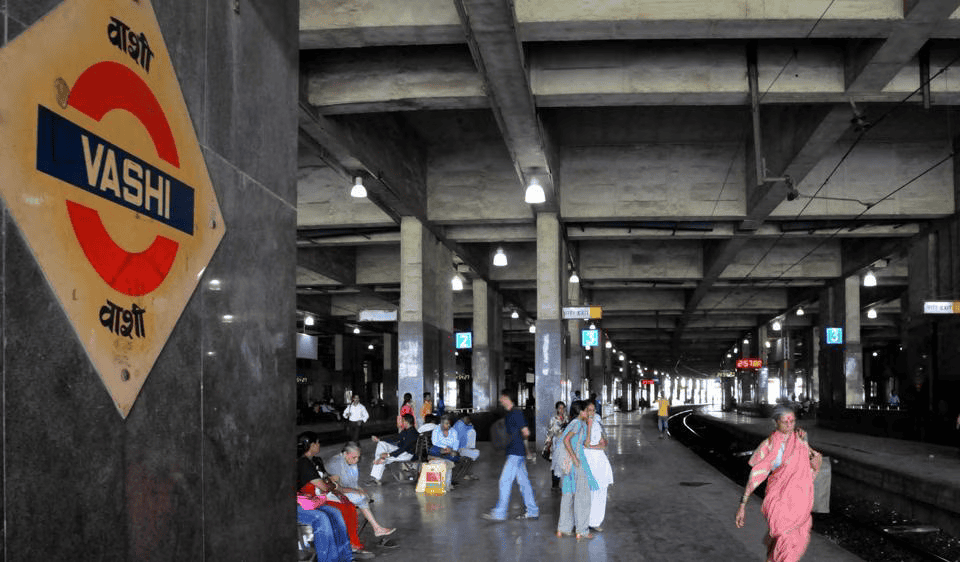
The Harbour Line is the main rail link between Navi Mumbai and South Mumbai. It runs from Chhatrapati Shivaji Maharaj Terminus (CSMT) through Mumbai’s eastern suburbs: Wadala, Kurla, Tilaknagar, Chembur and Mankhurd, before crossing into Navi Mumbai. Mankhurd is the last station on the Mumbai side of that boundary, not the first Navi Mumbai station; the first stop once you’re across is Vashi.
Key Navi Mumbai stations on the Harbour Line, in sequence: Vashi, Sanpada, Juinagar, Nerul, Seawoods-Darave, CBD Belapur, Kharghar, Mansarovar, Khandeshwar and Panvel. Panvel is the southern terminus and also the interchange point for the Panvel-Karjat corridor and, further out, routes toward Pune via Karjat.
For anyone commuting to offices in Fort, Nariman Point or the BKC/Parel corridor, the Harbour Line is your line, though for BKC and Parel you’ll typically need to change trains (more on Western Line connections below). We’ve deliberately left exact journey-time figures out of this section: Central Railway occasionally revises timetables, and a fixed number here would go stale. Check current timings via the RailOne app or Central Railway’s official schedule before you travel.
Trans-Harbour Line: Thane to Navi Mumbai
If your commute involves Thane, Airoli, Kopar Khairane, Turbhe, Ghansoli or Rabale, or anywhere on the Central Line reached by changing at Thane, the Trans-Harbour Line is your route. It connects Thane to Navi Mumbai on a double-track line with no separate fast service running on it. Individual services run toward Vashi, Nerul, or all the way to Panvel depending on the specific train and current timetable. Check RailOne or Central Railway to confirm which stations your service covers. The full corridor runs through Airoli, Rabale, Ghansoli, Kopar Khairane, Turbhe, Sanpada, Vashi, Juinagar, Nerul, Seawoods, CBD Belapur, Kharghar, Mansarovar and Khandeshwar to Panvel.
It tends to be less crowded during Mumbai-bound peak hours than the Harbour Line, since it doesn’t carry the full weight of CSMT-bound office traffic. If you work in Airoli’s IT parks, Rabale MIDC, the Turbhe industrial belt, or anywhere along the Thane-Belapur Road corridor, this is your daily line, and it also functions as the connector between the Central Line (via Thane) and the rest of Navi Mumbai for commuters coming from Dombivli, Kalyan or Badlapur.
The Uran corridor: Nerul/Belapur to Uran
This is a genuinely new addition to Navi Mumbai’s rail map. The Nerul/Belapur-Uran line (officially the Port Line extension) opened in phases and became fully operational through to Uran in December 2025, after the Kharkopar-Uran stretch (including Nhava Sheva, Dronagiri, Targhar and Gavan) was completed. Bamandongri and Kharkopar were the first stretch to open; the line now runs the full distance to Uran.
This matters if you live in or around Dronagiri, Ulwe, or the broader Uran node. It’s now a direct rail connection rather than a road-only journey. It also matters for anyone tracking Navi Mumbai International Airport access, since Bamandongri sits on this corridor (see the airport section below for how that actually works today). Because this line is still relatively new, check the current timetable and frequency via RailOne or Central Railway before planning a trip. Service levels on newly-opened stretches tend to be adjusted as ridership settles in.
Which line and station should you use?
Rather than a fast-versus-slow strategy, the Harbour and Trans-Harbour lines don’t currently run a separate express service the way the Western and Central lines do, so there isn’t really a “fast train” to catch. The more useful question for most Navi Mumbai commuters is which line and boarding station fits your route:
| If you’re heading to… | Use this line | Typical change, if any |
|---|---|---|
| Fort, CSMT, Nariman Point (South Mumbai) | Harbour Line | None; direct to CSMT |
| Thane, or the Central Line beyond it | Trans-Harbour Line | Change at Thane for Central Line |
| Airoli, Rabale, Ghansoli, Turbhe (IT/industrial belt) | Trans-Harbour Line | None |
| Western Line areas (Bandra, Andheri, Borivali) | Harbour Line | Change at Mahim Junction (see Western Line section) |
| Uran, Dronagiri, Ulwe | Uran corridor (Port Line) | Change at Nerul or Belapur |
| Navi Mumbai Metro corridor (Kharghar to Pendhar) | Harbour or Trans-Harbour to CBD Belapur | Change to Metro Line 1 at Belapur |
On crowding: origin or near-origin stations (Panvel, Kharghar, Belapur) generally give you a better chance at a seat than mid-route stations like Vashi during peak hours, simply because trains arrive already fuller the further they’ve travelled. That’s a genuinely useful, evergreen piece of commuter knowledge. Unlike a specific stop-pattern table, it doesn’t go stale.
Timings and frequency
Mumbai’s suburban network generally runs from the early hours through past midnight, with frequency tightening considerably during morning and evening peak periods. We’re deliberately not printing a fixed first-train/last-train table or an exact peak-hour frequency figure here: Central Railway revises timetables periodically, and a number that’s accurate today can be wrong within months. For the current first train, last train and frequency at your specific station, check the RailOne app, Central Railway’s official timetable, or a live tracking app like m-Indicator or Mumbai Lifeline, all of which pull from the current schedule rather than a fixed table like this one would.
Ticketing: RailOne, season passes, and first class
Ticketing changed significantly in 2026. The old UTS (Unreserved Ticketing System) app has been discontinued and its functions folded into RailOne, Indian Railways’ unified app, which became the sole app for unreserved ticket booking from March 2026 onward. If you still have UTS installed, switch to RailOne. It now handles single-journey tickets, platform tickets, and season/monthly pass booking in one place, along with live train tracking and other services.
For paperless single-journey tickets, RailOne uses your phone’s location to confirm you’re booking from outside the station rather than from the platform or on board. This is a standard anti-fare-evasion safeguard, so make sure GPS is enabled and you complete the booking before you reach the platform.
Season (monthly) passes remain the cheapest way to commute daily, and can now be bought directly through the RailOne app as well as at station counters, a change from the old UTS-era limitation where passes needed a counter visit. Pricing depends on your specific route, class and pass duration, so check the current fare in the app rather than relying on a fixed figure; as a rough guide, a monthly pass tends to cost roughly the equivalent of 15 to 20 single journeys, with quarterly and half-yearly options working out cheaper per month. Some sources describe conflicting rules around exactly when a freshly booked season pass becomes valid, rather than state a specific same-day or next-day rule that may not hold for your route, confirm activation timing in the app or at the counter when you buy.
First class costs several times more than second class but comes with noticeably less crowding (though it’s still busy at absolute peak), and the penalty for travelling in first class without a valid first-class ticket is steep. Whether it’s worth it depends on your budget and how much a calmer commute matters to you. Check the current first-class fare for your route in RailOne before deciding.
Ladies-only compartments and special trains
Every rake includes compartments reserved for women throughout the day, clearly marked on the platform and on the train exterior. Beyond that, Central Railway runs dedicated ladies-special trains during peak commuting windows on the Harbour Line. Exact timings shift periodically, so rather than list fixed departure windows here, check the current ladies-special schedule via RailOne, m-Indicator, or the notices posted at your station. These trains are generally less crowded than mixed-gender services during the same hours and are a solid option if they line up with your schedule.
Peak-hour commuting tips
Board as close to the originating station as you can. If you live near Panvel, Belapur or Kharghar, a train starting from Panvel gives you a real shot at a seat that a train boarded at Vashi or Nerul during peak hours generally won’t.
Shift your timing slightly if you can. The absolute peak windows into CSMT in the morning and out of CSMT in the evening are the most crowded by a wide margin. Even 15-20 minutes of flexibility on either side tends to make a noticeable difference.
Use a live tracking app. RailOne, m-Indicator and Mumbai Lifeline all show live train positions, platform numbers and delay alerts, which is far more useful in the moment than a printed timetable.
Plan for a long-ish ride if you’re going the full distance. Panvel to CSMT is a substantial trip. Many regular commuters use the time to read, listen to something, or catch up on messages rather than treat it as dead time.
Mega blocks and Sunday disruptions
Central Railway periodically runs maintenance “mega blocks” on Sundays, during which services on the affected stretch are suspended, reduced, or run on a single track for a set window. These are announced roughly a week ahead via Central Railway’s official channels and are reflected in apps like RailOne and m-Indicator. Rather than list a fixed weekly time window here. The schedule genuinely varies week to week and line to line. Check the app or Central Railway’s official announcement before making Sunday travel plans, especially if you’re relying on the Harbour or Trans-Harbour Line for something time-sensitive. NMMT and BEST typically run substitute bus services between affected stations during a block.
Connecting to Navi Mumbai Metro
Navi Mumbai Metro Line 1 currently runs from CBD Belapur to Pendhar: 11 stations, fully operational since November 2023, and connects with the suburban railway at CBD Belapur station. If your destination is in Kharghar’s inner sectors, Central Park or Pendhar, take the train to Belapur and switch to the Metro for the last leg.
Further metro extensions, toward Taloja MIDC, Khandeshwar, and eventually Navi Mumbai International Airport, are planned but not yet built or operational as of this writing. Don’t plan a route around a metro-to-airport link; it doesn’t exist yet. We’ll update this section once any extension actually opens.
Reaching Navi Mumbai International Airport by rail
There is no direct train service into NMIA’s terminal. The nearest suburban rail access points are Panvel and Bamandongri, which get you close but not to the terminal door. You’ll need a last-mile road connection (taxi, app-based cab, or bus) from either station. For the full picture on getting to the airport (including bus and cab options), see our guide on how to reach Navi Mumbai Airport. We’re not listing Kharghar as an airport gateway or promising a specific shuttle service here, since neither is confirmed by the airport’s own current transport information. Check that guide and NMIA’s official site for what’s actually available when you travel.
Connecting to the Western Line
The Harbour Line physically meets the Western Line at Mahim Junction, which serves both. That’s the genuine interchange point for Navi Mumbai commuters heading toward Bandra, Andheri, Borivali or other Western Line stations, rather than any single named “best” route. Journeys and platform changes can take a few minutes to navigate, so build in some buffer if you’re catching a connecting train.
The Mumbai Monorail, which runs between Wadala and Jacob Circle and in theory offers another link toward Lower Parel, has been suspended since September 2025 for safety and reliability upgrades, with reopening repeatedly delayed. Don’t plan around it until it’s confirmed running again. Check current status before assuming it’s an option.
NMMT feeder buses
NMMT runs feeder routes from every major Harbour and Trans-Harbour station out to the surrounding residential sectors: Kharghar, Vashi, Nerul, Belapur and Panvel all have local feeder networks. Fares and frequencies are revised periodically, so check current rates via the NMMT app or at the station rather than relying on a fixed number here. For the full NMMT network, see our NMMT bus routes and fares guide.
Apps and resources for Navi Mumbai commuters
RailOne: The official Indian Railways app and, since March 2026, the sole channel for unreserved ticket booking, platform tickets and season passes, alongside live train tracking. This is the one app every Navi Mumbai commuter should have installed.
m-Indicator: A long-standing third-party app for live train positions, platform numbers, mega block alerts and timetables, widely used alongside RailOne rather than as a replacement for it.
Mumbai Lifeline: Another third-party option offering real-time train tracking and station-specific departure information.
Moovit: A multi-modal trip planner that combines train, bus, metro and walking directions for door-to-door route planning.
Sources and methodology
This guide draws on Central Railway’s public route and station information; two official Press Information Bureau (Government of India) releases on the RailOne app, its July 2025 launch release confirming it consolidates Unreserved Ticketing System (UTS) bookings, live tracking and other passenger services, and its March 2026 update confirming RailOne now carries UTS and platform ticketing; Navi Mumbai Metro’s public operational updates; and reporting on the Nerul-Uran (Port Line) extension’s phased completion through December 2025. Season-pass booking through RailOne and the app’s location-based booking rule are reported consistently by railway-sector coverage, but we couldn’t find an official PIB release confirming those two specific details. Treat them as good current guidance and confirm in-app before relying on them. Timings, fares and mega block schedules change; we’ve avoided hard-coding figures that go stale quickly and pointed to live official sources instead. Last verified: August 2026.
Common questions
Can I book Mumbai local train tickets online in Navi Mumbai?
Yes. RailOne, Indian Railways’ official app, handles single-journey unreserved tickets, platform tickets and season passes for the Harbour, Trans-Harbour and Uran corridor lines. It replaced the older UTS app, which was discontinued in March 2026.
Do I need to book my ticket before entering the station?
Yes. RailOne uses your phone’s location to confirm you’re booking from outside station premises rather than from the platform or on board a train, as a standard anti-fare-evasion measure. Complete your paperless booking before you reach the platform.
Is there a direct train from Navi Mumbai to the airport (NMIA)?
No. There’s no direct rail service into the NMIA terminal. Panvel and Bamandongri are the nearest suburban rail stations, and you’ll need a last-mile taxi, cab or bus connection from either one. See our guide on how to reach Navi Mumbai Airport for the full options.
How do I connect from the local train to Navi Mumbai Metro?
Navi Mumbai Metro Line 1 connects with the suburban railway at CBD Belapur station. Take the Harbour or Trans-Harbour Line to Belapur, then switch to the Metro for Kharghar’s inner sectors, Central Park or Pendhar. Extensions toward Taloja and the airport are planned but not yet operational.
Which line should I take from Navi Mumbai to South Mumbai?
The Harbour Line runs directly from Panvel through Vashi, Nerul and Belapur to CSMT with no change needed. For Western Line destinations like Bandra or Andheri, take the Harbour Line and change at Mahim Junction, where the two lines meet.
Is there a train to Uran from Navi Mumbai?
Yes. The Nerul/Belapur-Uran line (the Port Line extension) became fully operational to Uran in December 2025, serving Bamandongri, Kharkopar, Nhava Sheva, Dronagiri, Targhar and Gavan along the way. Check current timings before travelling, since this stretch is still relatively new.
Are there ladies-only compartments on Navi Mumbai’s local trains?
Yes, every rake carries compartments reserved for women throughout the day, and Central Railway also runs dedicated ladies-special trains during peak hours on the Harbour Line. Check the current ladies-special schedule via RailOne or m-Indicator, since timings shift periodically.
What happened to the UTS app?
Indian Railways has moved mobile unreserved-ticketing functionality toward the RailOne app. Commuters should use the current official railway app and follow the booking, location and ticket-validity rules shown there.
Related Reading
- Salons and Spas in Navi Mumbai: Where to Go and What to Check
- DY Patil Stadium Navi Mumbai: Events, Tickets, Parking & How to Reach
- Navi Mumbai PIN Codes 2026: Area-Wise List & Post Offices
- Temples, Churches & Mosques in Navi Mumbai: Complete Guide to Religious Places
- Best Wedding Venues in Navi Mumbai 2026: Banquet Halls, Costs & Booking Tips
- Best Nurseries & Plant Shops in Navi Mumbai 2026: Where to Buy Healthy Plants
- Navi Mumbai for Digital Nomads 2026: Best Areas, Coworking, Costs & Lifestyle