Table of Content
ToggleThe Navi Mumbai Metro connects key nodes with defined operating hours, peak-time frequency, fares, and a planned route map. This guide covers timings, ticketing, and stations so you can plan your commute.
Navi Mumbai Metro Line 1: The Complete Overview
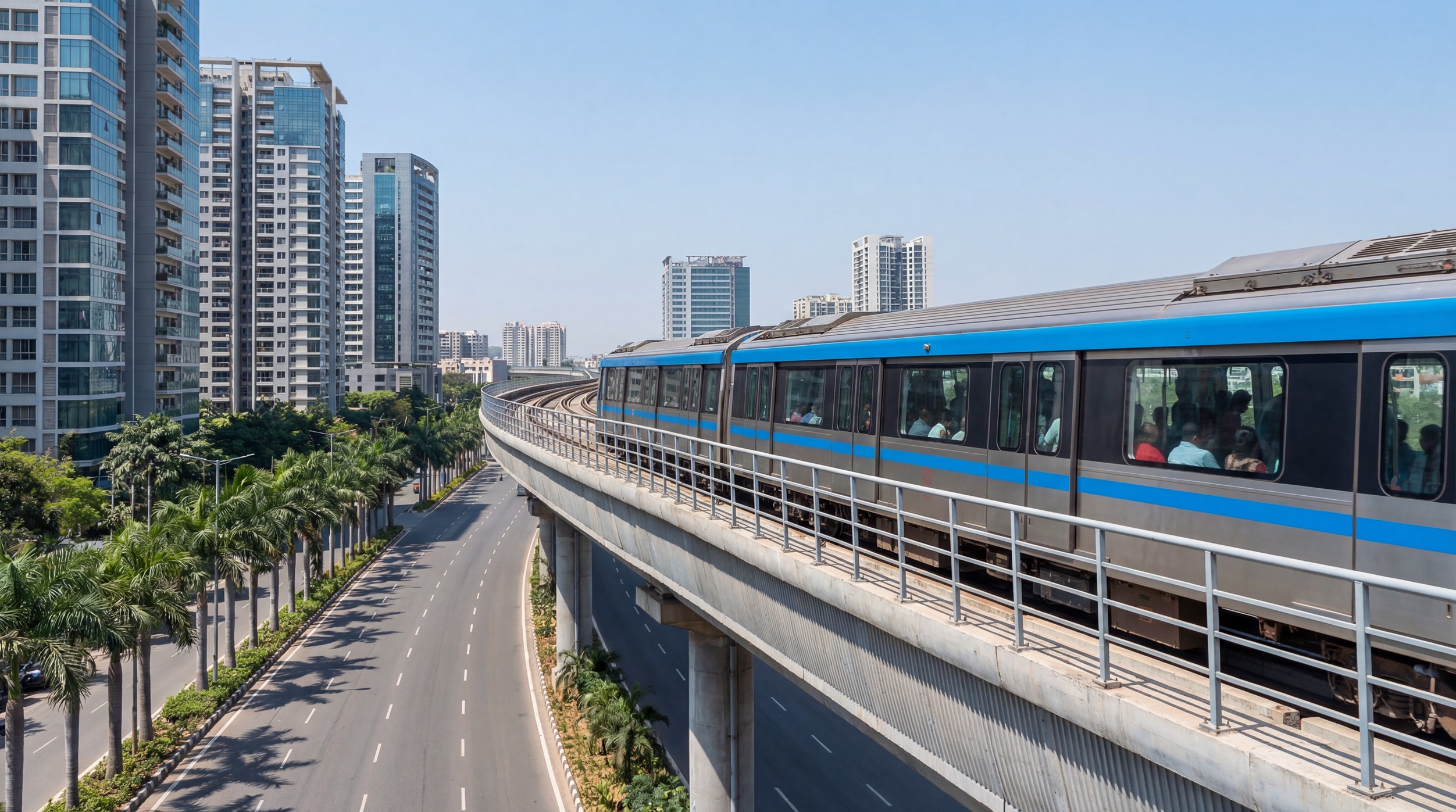
Navi Mumbai Metro’s first operational line stretches 11.1 kilometers from CBD Belapur to Pendhar with 11 stations. The entire line is elevated, meaning no underground tunnels or construction disruptions that were common during development. The system launched with modern infrastructure including elevators, escalators, and spacious platforms designed for comfort. The operational line is Phase 1 of what will eventually become a larger metro network. Future phases will expand connectivity to the upcoming Navi Mumbai International Airport and beyond. This is just the beginning of the system’s growth.All 11 Stations on Navi Mumbai Metro Line 1
Here’s the complete list of stations on the Belapur-Pendhar route, from start to finish:- Belapur Terminal: Starting point with interchange to suburban train network.
- RBI Colony: Residential area access point.
- Belpada: Connected to Belpada locality.
- Utsav Chowk: Commercial hub and central meeting point.
- Kendriya Vihar: Residential complex connection.
- Kharghar Village: Serves the expanding Kharghar area.
- Central Park: Business district and shopping area.
- Pethpada: Key commuter junction.
- Amandoot: Connector to surrounding neighborhoods.
- Pethali-Taloja: Interchange point with suburban trains.
- Pendhar: Terminal station with future airport extension connectivity.
Navi Mumbai Metro Route Stations Timings: Daily Schedule
Understanding the operating schedule is crucial for planning your commute. The metro runs seven days a week with consistent timings:Operating Hours
- First train departure: 6:00 AM from both Belapur Terminal and Pendhar.
- Last train from Belapur: 10:00 PM.
- Last train from Pendhar: 9:45 PM.
- Extended hours: Special late-night service until 1:30 AM on select dates (New Year, events)
Frequency: How Often Do Trains Run?
Train frequency varies by time of day, designed to match commuter demand:Peak Hours Frequency
- Morning peak (7:00 AM – 10:00 AM): Every 10 minutes.
- Evening peak (5:00 PM – 8:00 PM): Every 10 minutes.
- Normal hours (Off-peak): Every 15 minutes.
Navi Mumbai Metro Fare Chart 2026
Navi Mumbai Metro fares are distance-based and highly affordable. In September 2024, CIDCO slashed fares by 33% to encourage ridership, making the metro even more budget-friendly:| Distance (km) | Fare (₹) | Example Journey |
|---|---|---|
| 0-3 | Rs. 10 | Belapur to RBI Colony |
| 3-6 | Rs. 15 | Belapur to Utsav Chowk |
| 6-9 | Rs. 20 | Belapur to Central Park |
| 9-11 | Rs. 25 | Belapur to Pethali-Taloja |
| Full length (11 km) | Rs. 30 | Belapur to Pendhar |
How to Navigate Between Navi Mumbai Metro Stations
The metro system is straightforward even for first-time users. Simply identify your start and end station, purchase a ticket from the counter or using the automated vending machines. Tap at the entry gate, Board the next train. All platforms are clearly marked with destination signs in English and Marathi. At interchange stations (Belapur Terminal and Pethali-Taloja), signs direct you to suburban train platforms. The walk between metro and train platforms takes 3–5 minutes.Upcoming Extensions: Airport Connector & Line 2
The current Line 1 is just the foundation. CIDCO has ambitious expansion plans that will dramatically increase metro connectivity:Phase 2: Khandeshwar to MIDC Taloja
An 10.30 km extension with 8 additional stations is planned from Khandeshwar to MIDC Taloja, with a further extension proposed onward to the upcoming Navi Mumbai International Airport (NMIA). This phase will bring the metro closer to the airport corridor and connect industrial and residential clusters along the route.Phase 3: Pendhar-MIDC Interlink
A short 2.2 km, single-station interlink between Pendhar and MIDC Taloja will join Phase 1 and Phase 2, forming a complete loop between Belapur and Khandeshwar and taking the network to its full planned length of roughly 23.4 km across 20 stations.Future Mumbai-NMIA Connection (Line 8, Gold Line)
Separately, a future Line 8 (Gold Line) is proposed to connect Navi Mumbai International Airport with Chhatrapati Shivaji Maharaj International Airport in Mumbai, though this falls under Mumbai Metro’s broader network plans rather than CIDCO’s Navi Mumbai Metro Line 1 expansion. Timelines for Phase 2, Phase 3, and the Gold Line connection depend on construction progress and official CIDCO/Maha Metro announcements, so commuters should check official sources for the latest updates.Essential Tips for Navi Mumbai Metro Commuters
Best Times to Travel
Avoid morning peak hours (7:00-10:00 AM) and evening peak hours (5:00-8:00 PM) if you prefer less crowded trains. Mid-morning (10:30 AM–4:30 PM) and late evening (8:30 PM onwards) offer comfortable travel with fewer commuters. For peak-hour trains, expect crowded platforms typical of any major metro system.Ticketing Options
While single tickets work fine for occasional trips, frequent users should invest in a Smart Card. Smart Cards eliminate queues at ticket counters and offer faster gate entry. Monthly passes provide better value than daily tickets if you commute regularly. Digital wallet integration is also available for contactless payments.Station Facilities
All stations offer restrooms, water dispensers, and basic retail kiosks. Food options are limited at most stations — plan ahead if you’re catching early morning trains. Seating is abundant on trains, and during off-peak hours, you’ll find spacious, comfortable compartments.Safety & Security
The metro is well-patrolled with CCTV cameras at all stations and inside trains. Security personnel are present during peak hours. Women’s compartments are available on every train for additional safety and comfort. Personal luggage must be kept with you; there are no storage facilities.Connectivity with Other Transport
Belapur Terminal and Pethali-Taloja offer direct suburban train connections. From other stations, you can access local bus networks and auto-rickshaw stands. For example, plan multi-modal journeys that combine metro with buses or trains for maximum convenience.Getting the Most Out of Navi Mumbai Metro: Practical Guide
The metro has already reduced traffic congestion and commute times for thousands of daily travelers. For instance, as the network expands, it will become even more central to how people move around Navi Mumbai. Whether you’re using it for daily commutes, weekend outings, Airport trips. Understanding the route stations and timings helps you plan with confidence. For updated information, check the official Navi Mumbai transportation guides or download the metro app for real-time train tracking. If you’re new to Navi Mumbai or planning a move here. Familiarizing yourself with metro connectivity is essential as it impacts your daily life and property value in different areas. Looking for neighborhoods with excellent metro access? In particular, read our guide on best areas to live in Navi Mumbai to find communities that maximize metro convenience. Also check our airport guide for complete travel tips once the airport extension launches.Frequently Asked Questions About Navi Mumbai Metro Route Stations Timings
How many stations are on Navi Mumbai Metro Line 1?
Navi Mumbai Metro Line 1 has 11 operational stations spanning from CBD Belapur to Pendhar across 11.1 kilometers. These include: Belapur Terminal, RBI Colony, Belpada, and Utsav Chowk. Kendriya Vihar, Kharghar Village, Central Park, Pethpada, Amandoot, Pethali-Taloja.
What is the maximum fare on Navi Mumbai Metro?
The maximum fare for a full-length journey from Belapur Terminal to Pendhar (11 km) is Rs. 30 as of 2026. This was reduced by 33% in September 2024 to encourage ridership. The minimum fare for short journeys (0-3 km) is Rs. 10. Metro commuting is highly affordable compared to auto-rickshaws and taxis.
How often do trains run during peak hours on Navi Mumbai Metro?
During peak hours (7:00-10:00 AM and 5:00-8:00 PM), trains run every 10 minutes. During off-peak hours, the frequency is every 15 minutes. This ensures minimal waiting time and smooth commuter flow throughout the day. The first train departs at 6:00 AM and the last train leaves Pendhar at 9:45 PM.
When will the Navi Mumbai Metro airport extension be operational?
Phase 2 of the Navi Mumbai Metro (Khandeshwar to MIDC Taloja, 8 stations) and Phase 3 (a short Pendhar-MIDC interlink) are planned to extend the network toward Navi Mumbai International Airport, with a separate future Line 8 (Gold Line) proposed to connect NMIA to Mumbai’s international airport. Exact completion timelines depend on construction progress, so check official CIDCO/Maha Metro announcements for updates.
Is there an interchange between Navi Mumbai Metro and suburban trains?
Yes, two stations offer direct interchange with suburban trains: Belapur Terminal (starting point) and Pethali-Taloja. These interchanges allow seamless transfers between the metro and Navi Mumbai’s suburban train network. Expanding connectivity across the region. The walk between metro and train platforms takes 3-5 minutes.
For routes to the new airport via metro, see our Navi Mumbai Airport guide. Considering buying near a metro station? Read our area-wise property rates guide.
Pari Chaudhary
Founder & Editor
15+ years in digital, content and creative; a decade living in Navi Mumbai. Writes about the city's neighbourhoods, real estate, transport and daily life.