Wondering about the best time to visit Navi Mumbai? This month-by-month 2026 guide breaks down weather patterns, monsoon safety, festivals and outdoor activities across all three seasons, so you can plan around what actually matters for your trip: rainfall, heat, humidity and local disruptions, not adjectives.
Weather note: The temperature and rainfall information in this guide describes historical climate patterns, not a long-range forecast for individual dates in 2026. Check the latest IMD forecast and local advisories shortly before travelling.
Last updated: September 2026
When Should You Visit Navi Mumbai?
There is no single “best” month for every visitor. The right period depends on whether your priority is outdoor sightseeing, monsoon scenery, festivals or indoor activities.
- For generally drier weather: November to February
- For green landscapes and monsoon scenery: June to September, subject to rainfall and safety conditions
- For hotter, more humid conditions: March to May
| Your priority | Consider | Why |
|---|---|---|
| Outdoor sightseeing | November to February | Generally drier and comparatively cooler |
| Monsoon greenery | June to September | Peak rainfall and lush landscapes |
| Photography after monsoon | September to November | Green surroundings with declining rainfall |
| Indoor or business trip | Any month | Less weather-dependent |
| Waterfalls and hill scenery | Monsoon, subject to safety and access | Seasonal water flow and greenery |
| Heat-sensitive traveller | Prefer November to February | Lower nighttime temperatures and lower rainfall |
Check our guide to free things to do in Navi Mumbai once you have settled on a season.
Navi Mumbai’s Climate: Three Distinct Seasons
Navi Mumbai sits on the Konkan coast, between the Arabian Sea and the Western Ghats (Sahyadri mountains). This creates real microclimates within the city: coastal sectors like Nerul, Seawoods and Belapur get more sea breeze, while inland sectors like Kharghar and Panvel tend to run hotter and more humid. The three seasons below describe the city as a whole; expect inland areas to run a degree or two warmer in practice.
Monsoon Season (June to September)
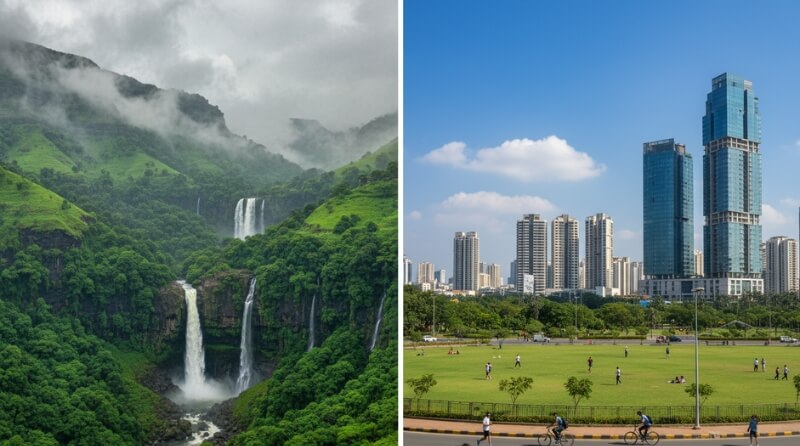
If you want to see Navi Mumbai’s hills and waterfalls at their most dramatic, monsoon is the season. It’s also the season with the most potential for disruption, so plan with that trade-off in mind.
Monsoon safety: Heavy rainfall can affect roads, visibility, trails, waterfalls and low-lying areas. Access to individual nature spots may also be restricted during unsafe conditions. Check IMD warnings and local authority, forest or police advisories before visiting waterfalls, hills or trekking routes.
What monsoon actually looks like, month by month
| Month | IMD mean rainfall* | Travel implication |
|---|---|---|
| June | ~493 mm | Monsoon begins; increasing disruption possible |
| July | ~841 mm | Wettest month; plan flexibility, expect rain on most days |
| August | ~585 mm | Persistent monsoon conditions |
| September | ~341 mm | Still wet, usually transitioning later in the month |
*Historical Mumbai (Santacruz) climatological normals, the nearest long-term official reference station. Not a 2026 forecast.
Together, June through September brings roughly 2,260mm of rain on average, based on these IMD normals alone, before accounting for any pre or post-monsoon showers.
What monsoon is good for
- Green landscapes: The hills and parks around Kharghar and Panvel turn green within weeks of the monsoon starting.
- Waterfalls: Seasonal waterfalls appear in the hills around Kharghar and Panvel, including Pandavkada Falls. Their appearance and accessibility both depend heavily on current rainfall, see the note below.
- Trekking: Trails in the wider Sahyadri range offer misty, monsoon-only scenery. For destination comparisons and questions to resolve before choosing a route, see our monsoon trekking guide.
Pandavkada becomes visually dramatic during the monsoon, but access can be officially restricted because of dangerous water flow. In July 2026, police banned tourist entry to Pandavkada Falls and several other hazardous monsoon spots in the Kharghar and Taloja area, including Chafewadi, Phanaswadi and the hill opposite Taloja Jail, after a string of drowning and accident risks. Check current police and local-authority advisories before planning a visit, and do not enter any area marked restricted.
July and August bring the greenest scenery and the fullest waterfalls, but they’re also the wettest months of the year with the highest chance of a trip getting rained out or a route being closed. Treat “peak monsoon” as peak scenery and peak rainfall together, not just the former.
Winter Season (November to February)
Winter, from November to February, is generally considered the easiest season for outdoor sightseeing in Navi Mumbai: rainfall is minimal and conditions are comparatively cooler than the rest of the year. October sits just before this window and is better treated as a post-monsoon transition month: rainfall is usually tapering off but hasn’t necessarily stopped, and conditions can still be warm and humid rather than reliably cool. See the month-by-month planner above for how October compares.
Historical climate pattern: roughly 17 to 34°C across the November to February period, with January typically having the coolest nights. December to February generally brings lower overnight temperatures, much lower rainfall and more comfortable conditions than the monsoon or the humid pre-monsoon period, although afternoons can still be warm: historical mean daily maxima for December, January and February all run around 31 to 32°C. This is a comparatively cooler, drier season, not a genuinely cold one.
January mornings and evenings can feel comparatively cooler, especially for visitors accustomed to warmer conditions. This is generally the driest and comparatively cooler part of the year, which makes outdoor sightseeing easier than during the monsoon or the pre-monsoon heat of March to May.
This period also overlaps with several major festivals, which can affect crowds, traffic and hotel pricing around specific dates. See the festivals section below for what to expect and how to plan around it.
What winter is good for
- Outdoor sightseeing and day trips, given the lower rainfall and comparatively cooler daytime conditions
- Parks and open spaces such as Central Park Kharghar and Wonders Park Nerul
- Cycling and walking routes along Palm Beach Road and the Mini Seashore
- Bird watching at Karnala Bird Sanctuary, when migratory species are present
Popular spots and hotels can get busier on weekends and around festival dates during this period. If you’re travelling around a specific festival, book accommodation in advance.
Summer Season (March to May)
March through May is generally hotter and increasingly humid. Historical IMD normals show average daily maxima around 33°C, though hotter spells can occur and often get reported as more extreme than the seasonal average.
This is less comfortable for prolonged outdoor sightseeing, particularly around midday, but it can still work for trips centred on indoor activities or shorter morning and evening outings. It isn’t a season to categorically avoid, it depends on what your trip actually involves.
What summer can still work for
- Indoor and business trips: shopping, restaurants, malls and air-conditioned attractions are unaffected by the heat
- Mango season: April and May bring Alfonso mangoes to local markets
- Family visits: school holidays mean some families travel for this reason regardless of weather
If you do plan outdoor time, keep it to before 10am or after 6pm, carry water, and lean on coastal sectors like Nerul and Seawoods where sea breeze offers some relief.
Navi Mumbai Month-by-Month Travel Planner
| Period | Typical conditions | Better suited to | Main consideration |
|---|---|---|---|
| Jan to Feb | Drier, comparatively cooler | Outdoor sightseeing | Warm afternoons still possible |
| Mar to May | Hotter and humid | Indoor or mixed itinerary | Midday heat |
| Jun | Monsoon onset | Green scenery | Heavy rain and disruption possible |
| Jul to Aug | Peak monsoon | Monsoon scenery | Very heavy rainfall |
| Sep | Monsoon transition | Green landscapes | Rain still significant |
| Oct | Post-monsoon transition | Mixed sightseeing | Can remain warm |
| Nov to Dec | Drier | Outdoor activities | Popular travel period |
Events and Festivals: Verify Before Planning Around Them
Festival dates can be confirmed from official calendars, but local fairs, marathons, markets and cultural programmes may change from year to year, or stop running altogether. This guide does not treat an event as confirmed for 2026 unless an organiser or public authority has published current details, so it deliberately doesn’t list specific local festivals, marathons or pop-up events by name here.
What’s reliably true is that major festival periods can affect your visit even if you aren’t attending the festival itself, through:
- Increased traffic and road access restrictions near celebration areas
- Crowding at popular public spaces
- Higher demand for local transport
- Temporary changes to normal business hours near festival sites
Ganesh Chaturthi, Navratri, Diwali, and the Christmas and New Year period are all widely observed in Navi Mumbai and typically fall between late summer and winter. Exact dates move from year to year on the lunar and festival calendars, so check the current year’s official festival dates rather than relying on a fixed month.
Independence Day (15 August) is a national holiday and can affect local schedules and events regardless of specific programming. For any locally organised event, marathon or festival you’re considering building a trip around, check that event’s own current listing or organiser directly before finalising travel plans.
What Can Disrupt a Navi Mumbai Trip?
| Factor | What it affects |
|---|---|
| Heavy monsoon rain | Road waterlogging, visibility, trail and waterfall access |
| Heat and humidity | Outdoor comfort, particularly around midday |
| Festival crowds | Traffic, parking, and local road restrictions |
| Air quality | Can vary seasonally and day to day; don’t assume any single season guarantees clear skies |
| Local access restrictions | Nature spots and events may temporarily close or restrict access |
Weather Data and Methodology
Navi Mumbai does not have its own long-term IMD weather station, so this guide uses IMD’s climatological normals (1981 to 2010) for the Mumbai (Santacruz) station as the nearest long-term official reference. These figures describe historical averages for that station, not measurements taken at a specific Navi Mumbai location, and they should not be interpreted as a forecast for specific 2026 travel dates. For real-time conditions and short-range forecasts, check IMD’s current advisories directly before travelling.
Bottom Line
For most outdoor sightseeing, November through February offers the easiest combination of lower rainfall and comparatively cooler conditions. Monsoon from June through September brings Navi Mumbai’s greenest landscapes, but also heavy rain and a genuinely higher chance of disruption, so build in flexibility rather than fixed plans if you’re visiting for waterfalls or trekking. March through May is hotter and more humid and works best for trips centred on indoor activities, business, or family visits, rather than full days outdoors.
Coastal sectors such as Nerul, Seawoods and Belapur stay comparatively cooler year-round thanks to sea breeze, while inland areas like Kharghar and Panvel run hotter but sit closer to the hills and trekking routes.
For the rest of your trip planning: see our guide to free things to do in Navi Mumbai, our weekend getaways from Navi Mumbai guide for day trips beyond the city, our Navi Mumbai Metro guide and Mumbai Local Train guide for getting around, and our list of best cafes in Navi Mumbai for when you need an indoor break.
FAQs
Which month is best to visit Navi Mumbai?
For generally drier and comparatively cooler conditions, November to February is usually the easiest period for outdoor sightseeing. If your priority is monsoon greenery, June to September offers a very different experience but with substantially more rain and possible travel disruption. There isn’t a single best month for everyone; it depends on what you want from the trip.
Is Navi Mumbai worth visiting during monsoon season?
Yes, if you specifically want monsoon scenery and are comfortable with heavy rainfall and possible disruption. July is historically the wettest part of the season, so keep plans flexible and check weather and access advisories before outdoor trips to waterfalls, hills or trekking routes.
Is it safe to visit Navi Mumbai during monsoon?
Yes, the city itself is safe to visit during monsoon. Heavy rain affects comfort and timing more than safety in built-up areas like Vashi, Nerul and Belapur, and in malls, restaurants and other indoor spaces. The real safety question is around specific recreational spots: waterfalls, hill trails and low-lying nature areas, where conditions change with rainfall and access can be officially restricted. In July 2026, for example, police banned tourist entry to Pandavkada Falls and several other Kharghar and Taloja monsoon spots after drowning and accident risks. Treat visiting the city and visiting a specific outdoor nature spot as two separate questions, and check current advisories for the spot before you go.
What is the hottest month in Navi Mumbai?
May is typically among the hottest and most humid months. Historical IMD normals show average daily maxima in the low to mid 30s Celsius across March to May, though individual heat events can be hotter than the long-term average.
Does it rain every day in Navi Mumbai during July?
Rain is very frequent in July, but “every day” is too absolute. IMD’s long-term climatological data records about 23 rainy days on average in July at the Mumbai (Santacruz) reference station, out of 31 days in the month.
Is winter cold in Navi Mumbai?
No. Navi Mumbai has a tropical climate, and winter is comparatively cooler and much drier than the rest of the year, but historical mean daily maxima for December, January and February all run around 31 to 32°C according to long-term IMD data, so afternoons regularly stay warm. Mornings and evenings, particularly in January, can feel comparatively cool, especially to visitors used to warmer conditions, but this isn’t a genuinely cold season.
What festivals can affect a visit to Navi Mumbai?
Ganesh Chaturthi, Navratri, Diwali, and the Christmas and New Year period are all widely observed in Navi Mumbai. Exact dates move each year, so check the current year’s official festival calendar rather than assuming a fixed month. Around these dates, expect more traffic, busier public spaces, and higher demand for local transport, even if you aren’t attending the festival itself.
Can I see waterfalls in Navi Mumbai, and are they always accessible?
Seasonal waterfalls, including Pandavkada Falls, appear in the hills around Kharghar and Panvel during monsoon and dry up outside of it. Access isn’t guaranteed even in season: in July 2026, police banned tourist entry to Pandavkada Falls and several other hazardous Kharghar and Taloja monsoon spots after drowning and accident risks. Check current police and local-authority advisories before visiting, and do not enter any area marked restricted.
Is air quality better in Navi Mumbai during winter?
Not reliably enough to promise. Air quality can vary by season and by day, and winter conditions don’t guarantee clear skies. If air quality matters for your trip, check current readings close to your travel dates rather than relying on a seasonal assumption.
What should I pack based on the season?
For monsoon (June to September): a waterproof layer, non-slip footwear for wet trails, and quick-dry clothing. For winter (November to February): a light layer for mornings and evenings, comfortable walking shoes, and sun protection for daytime. For summer (March to May): light, breathable clothing, sun protection, and enough water for the day. Comfortable footwear and breathable fabrics are useful year-round given the coastal humidity.