Quick Answer
| Question | Answer |
|---|---|
| Best route | Mumbai-Pune Expressway (Yashwantrao Chavan Expressway) via Kalamboli / Panvel, then Khopoli, Lonavala and Talegaon |
| Distance | Roughly 145-160 km, depending on where in Navi Mumbai you start |
| Travel time | Typically 2.5-4 hours in a car, depending on traffic, weather and the time of day. It can run longer on weekends, monsoon days and around the Khandala/Lonavala ghat |
| Car toll (one-way) | ₹320 for a car/jeep/van, unchanged since April 2023 and confirmed by MSRDC to stay unchanged until April 2030 |
| FASTag | Mandatory at MSRDC plazas since 1 April 2025; vehicles without a working FASTag are charged double the toll, not turned away |
| EV toll | Eligible electric vehicles are exempt on this expressway since around 22 August 2025, under a Maharashtra government notification. Verify at the plaza before you rely on it |
| 2026 update | The expressway’s new “Missing Link” tunnel-and-bridge bypass opened on 1 May 2026. As of this writing it is open to light motor vehicles and buses only. Trucks and other heavy vehicles stay on the older ghat alignment until at least November 2026 |
Best Route from Navi Mumbai to Pune
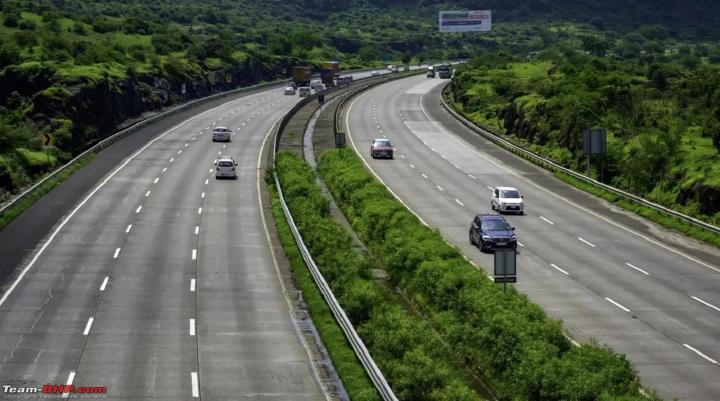
For almost anyone starting in Navi Mumbai, the fastest and most reliable way to Pune is the Mumbai-Pune Expressway, officially the Yashwantrao Chavan Expressway. You join it via Kalamboli or Panvel, head toward Khopoli, climb the ghat section past Lonavala, and continue through Talegaon into Pune. It’s a six-lane, access-controlled expressway built for car and bus traffic, not for two-wheelers or, at present, for goods vehicles on its newest stretch (more on that below).
Journey time depends heavily on when you travel. Early morning departures and weekday off-peak windows tend to be quickest; Friday evenings, Sunday evenings and the approach to Lonavala on monsoon weekends are consistently the slowest. Treat any fixed “2 hours” or “2.5 hours” claim you see online with caution. It’s realistic only in ideal, low-traffic conditions. Build in extra time rather than planning around a best-case number.
Mumbai-Pune Expressway Toll 2026
The current one-way toll for a car, jeep or van on the Mumbai-Pune Expressway is ₹320. This rate has been in effect since April 2023, and MSRDC (Maharashtra State Road Development Corporation) has stated that toll charges on this expressway will not change again until April 2030, so it’s a reasonably stable number to plan around for the next few years. The exact amount charged can still vary slightly by your entry and exit point along the expressway’s toll plazas and by vehicle class, so always confirm the current figure via MSRDC before you travel.
Commercial and heavy-vehicle tariffs (mini-buses, two-axle and multi-axle trucks, buses, cranes) are also charged on this expressway and are typically several times the car rate. Because these figures are revised periodically and vary by axle count and vehicle class, don’t rely on a fixed number if you’re driving a commercial or heavy vehicle. Check the current tariff at MSRDC’s official site or at the toll plaza before you travel.
Tolls are collected at the Khalapur and Talegaon plazas along the main route. If you also cross the Atal Setu (Mumbai Trans Harbour Link) as part of your journey, that’s a separate toll charged by MMRDA, not MSRDC. The two are different authorities with different rates.
FASTag & Toll Payment
FASTag has been mandatory at MSRDC toll plazas across Maharashtra, including the Mumbai-Pune Expressway, since 1 April 2025. In practice this means there are no dedicated cash lanes left at these plazas. If you turn up without a valid, working FASTag and try to pay by cash, card or UPI instead, you’ll be charged a fee equal to double the normal toll, rather than being refused passage.
What this means for your trip: make sure your FASTag is properly linked to your vehicle, has sufficient balance, and is affixed correctly on the windscreen before you set out. A low balance or a misread tag is treated the same as not having one. You’ll pay the 2x penalty rate, not the standard toll.
If your FASTag lane or reader isn’t working properly, follow the toll-plaza staff’s instructions and use whichever alternative payment method they direct you to. Keep your payment receipt in case of a billing dispute.
EV Toll Exemption
Maharashtra has exempted eligible electric vehicles from paying toll on three major routes: the Mumbai-Pune Expressway, the Atal Setu (Mumbai Trans Harbour Link), and the Samruddhi Mahamarg (Mumbai-Nagpur Expressway). The exemption was announced by the state’s Transport Minister and reported as taking effect from around 22 August 2025, under a Maharashtra government notification tied to the Motor Vehicle Tax Act, 1958.
Coverage, as reported, includes pure battery-electric passenger vehicles as well as state-run and privately operated electric buses. The intent is to encourage EV adoption by removing toll costs on some of the state’s busiest and most expensive tolled corridors.
One important caveat: this is a relatively new benefit, and how consistently it’s applied at the toll booth can lag the policy on paper. If you’re driving an eligible EV, don’t assume the exemption will register automatically. Confirm your FASTag is correctly tagged to your vehicle’s EV classification, and be ready to show your registration if a plaza operator has a question. If you’re ever charged in error, you can raise it with MSRDC or through the toll operator’s grievance channel rather than assuming the exemption doesn’t apply to you.
Mumbai-Pune Expressway Missing Link: 2026 Update
The single biggest change to this route in 2026 is the opening of the expressway’s “Missing Link”: a new 13.3 km stretch between Khopoli and Kusgaon (near Lonavala) that bypasses the older, accident-prone ghat section with a pair of tunnels and a cable-stayed bridge over the Khandala valley. It opened to traffic on 1 May 2026, Maharashtra Day.
The new alignment cuts the distance by roughly 6 km and saves about 25-30 minutes in normal conditions, more during the monsoon, when the old ghat road is prone to slowdowns, landslides and fog-related caution.
Important restriction: as of this writing, the Missing Link is open only to light motor vehicles (cars, and per most reporting, buses); goods vehicles and other heavy vehicles are barred from this new stretch for an initial phase running from 1 May to 31 October 2026, while authorities monitor tunnel safety and traffic behaviour. A review is due from 1 November 2026, after which heavy-vehicle access may be reconsidered. Vehicles carrying hazardous or inflammable cargo (petrol, diesel, LPG, CNG) are barred from the tunnel section permanently and must continue to use the old ghat route regardless of the outcome of that review.
If you’re driving a car between Navi Mumbai and Pune in 2026, you’ll most likely be routed onto this new stretch automatically. If you’re driving something larger (a loaded van, a truck, or anything carrying hazardous cargo), confirm current rules before you travel, since the restriction is explicitly temporary and subject to change.
Old Mumbai-Pune Highway as an Alternative
The older Mumbai-Pune highway (NH-48’s earlier alignment through the ghat, also used by two-wheelers, which aren’t permitted on the expressway) remains available as a slower alternative. It’s the route you’ll use if you’re on a two-wheeler, if the expressway is closed for an incident, or if you’re driving a heavy vehicle that isn’t yet permitted on the new Missing Link stretch. Expect meaningfully longer travel times, more traffic through town sections, and slower going through the ghat itself.
Choosing the Route Based on Your Navi Mumbai Origin
Where you start in Navi Mumbai changes how you join the expressway. From areas like Kharghar, Kalamboli and Panvel, you’re close to the expressway’s starting points and can join quickly. From Vashi, Nerul or Belapur, you’ll typically head south through Kalamboli or Panvel first, adding some local travel time before you’re on the expressway proper. Factor in local traffic on these connecting roads, especially during Navi Mumbai’s own peak commuting hours, when estimating your total trip time.
Your Pune Destination Matters
Where you’re headed within Pune also affects your total time. Reaching the eastern and central parts of the city (Hadapsar, Camp, Swargate) from the expressway’s Pune-side exits is usually the most direct. Destinations further west or north (Hinjawadi, Baner, Aundh, or beyond) add meaningful time as you cross the city, especially during Pune’s own rush hours. If you’re headed to Hinjawadi specifically, some drivers find it worth checking current conditions on the Katraj bypass versus routing through central Pune before committing to one path.
Speed Limits & Vehicle Rules
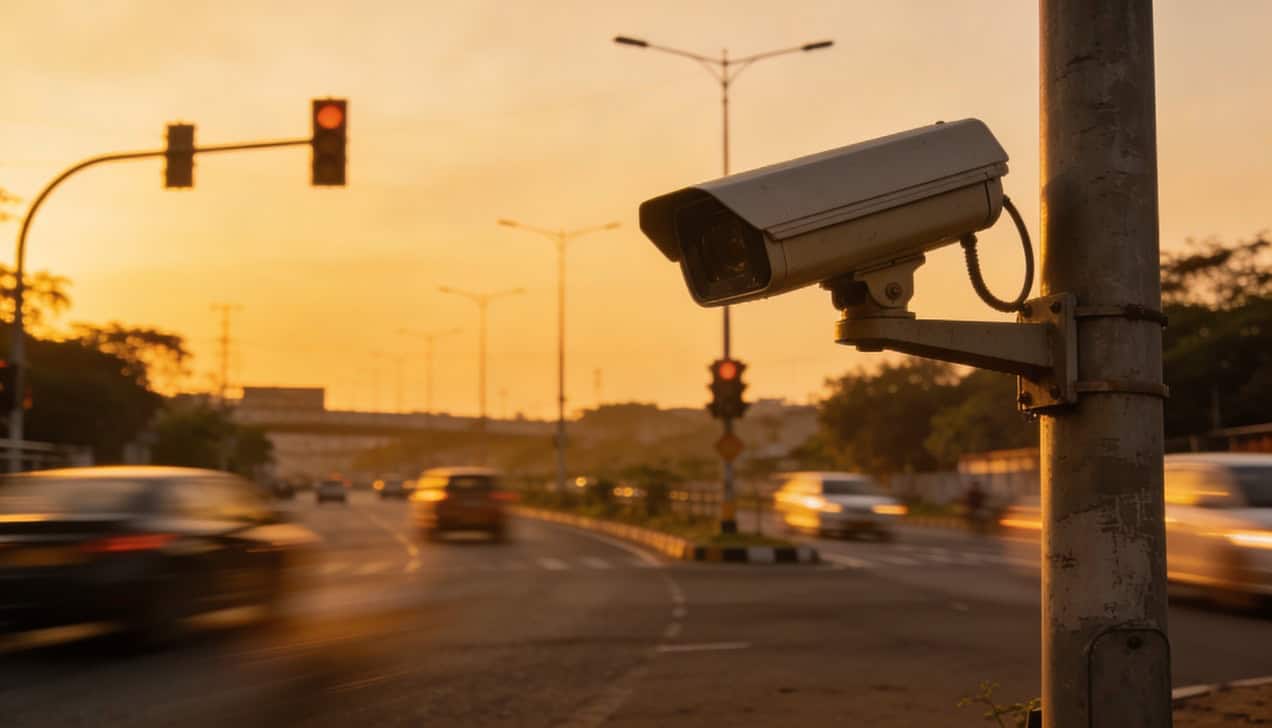
Speed limits on the expressway are not a flat number across the whole route. Under the current notification from the Additional Director General of Police (Traffic), the limit is 100 km/h on the plain sections and drops to 60 km/h through the ghat terrain, where curves and gradient make higher speeds unsafe. On the new Missing Link stretch, reported limits are 100 km/h for cars and 80 km/h for buses. Watch for posted signage, since limits can vary by exact section and vehicle type, and enforcement cameras are active along the route.
Two-wheelers are not permitted on the expressway at any point; use the old highway instead. As covered above, heavy and goods vehicles are currently restricted from the Missing Link section specifically, not from the expressway as a whole.
Monsoon & Road-Safety Guidance
The ghat section between Khopoli and Lonavala sees heavy rain, fog and occasional landslide-related closures during the monsoon (roughly June to September). Authorities have, in past monsoons, had to shut a carriageway temporarily after debris on the road; when that happens, expect diversions, slower speeds and advisories urging drivers to delay non-essential travel. Check for live traffic advisories before you set out on a monsoon-season trip, keep your following distance longer than usual, and avoid driving through the ghat at night in heavy rain if you can help it.
Fuel, CNG & EV Trip Planning
Fuel prices change often enough that a fixed rupee figure in an article goes stale within weeks, so it’s more useful to plan using your own numbers. A simple way to estimate your one-way fuel cost: divide the distance you’ll drive (roughly 145-160 km from Navi Mumbai to Pune, depending on your starting point) by your vehicle’s actual mileage in km per litre, then multiply by today’s fuel price in your city. You can check the current price for your city on the IOCL price finder before you leave.
CNG stations along this corridor are relatively sparse compared with Mumbai or Pune city limits, so if you’re driving a CNG vehicle, top up before you leave rather than assuming you’ll find a station along the expressway. If you’re driving an EV, charging infrastructure around Khopoli and Lonavala has been expanding but is still limited relative to demand on a peak weekend. Check a live charging-station app for current, verified locations and availability rather than relying on a fixed list, since new chargers are being added and older listings can be outdated or temporarily out of service.
Where to Stop
The Lonavala and Khopoli areas have the highest concentration of food and rest stops along the route, from expressway food courts to well-known local eateries just off the highway. If you’re travelling with kids or need a longer break, these are the most practical places to plan a stop, rather than the newer Missing Link stretch itself, which currently has fewer amenities directly along it.
Pre-Trip Checklist
- FASTag is active, correctly linked to your vehicle, and has enough balance for a round trip
- You know your car’s toll (₹320 one-way as of 2026) and, if applicable, have confirmed your commercial-vehicle tariff separately
- If you’re driving an EV, your FASTag/vehicle registration reflects your EV classification correctly
- You’ve checked whether your vehicle type is currently allowed on the Missing Link stretch, or whether you’ll be routed via the old ghat road
- You’ve checked a live traffic and weather advisory, especially during monsoon months
- Fuel or charge is topped up before you leave, particularly if you’re driving CNG or EV
- You’ve planned your Navi Mumbai entry point and your Pune-side exit based on your actual start and end points, not a generic route
Frequently Asked Questions
What is the toll from Navi Mumbai to Pune?
The Mumbai-Pune Expressway toll for a car, jeep or van is ₹320 one-way, a rate in place since April 2023 and confirmed by MSRDC to remain unchanged until April 2030. Commercial and heavy-vehicle rates are higher and vary by vehicle class. Check MSRDC’s current tariff if you’re driving one.
Is FASTag compulsory on the Mumbai-Pune Expressway?
Yes. FASTag has been mandatory at MSRDC toll plazas, including this expressway, since 1 April 2025. Vehicles without a valid, working FASTag are charged double the toll rather than turned away, so it’s worth making sure yours is active and properly linked before you travel.
What happens if my FASTag doesn’t scan at the toll plaza?
Follow the instructions given by toll-plaza staff and use whichever alternative payment method they direct you to at that lane. Keep your payment receipt in case you need to dispute a charge later.
Do electric vehicles pay toll on this route?
Eligible electric vehicles are exempt from toll on the Mumbai-Pune Expressway, along with the Atal Setu and Samruddhi Mahamarg, under a Maharashtra government notification reported to be effective from around 22 August 2025. This is a relatively new benefit and implementation at individual toll booths can vary, so EV owners should verify their vehicle’s FASTag classification is correctly recorded and confirm eligibility if a charge is applied incorrectly.
Are trucks and heavy vehicles allowed on the Mumbai-Pune Expressway?
Yes, on the main expressway. Trucks and other heavy vehicles are tolled and travel this route routinely. The exception is the new Missing Link stretch specifically: since it opened on 1 May 2026, that particular section has been open only to light motor vehicles and buses, with goods and heavy vehicles required to use the older ghat alignment during an initial phase running to 31 October 2026, pending a review from 1 November 2026.
What is the Missing Link and does it change my route?
The Missing Link is a new 13.3 km tunnel-and-bridge bypass between Khopoli and Kusgaon that opened on 1 May 2026, cutting the old ghat section out of the journey for eligible vehicles. If you’re driving a car, you’ll likely be routed onto it automatically, saving time and avoiding some of the ghat’s traditional trouble spots. If you’re driving a heavy vehicle, you’ll currently still use the old ghat road until heavy-vehicle access is reviewed.
How long does it take to drive from Navi Mumbai to Pune?
Typically 2.5 to 4 hours by car, depending on your exact starting point, traffic, weather and time of day. Treat shorter fixed estimates as best-case only. Weekends, monsoon conditions and peak-hour departures from either city commonly push travel time toward the higher end of that range.
Are two-wheelers allowed on the Mumbai-Pune Expressway?
No. Two-wheelers are not permitted on the Mumbai-Pune Expressway. They must use an alternative permitted route such as the old Mumbai-Pune highway, subject to current traffic rules.
Sources & Methodology
Toll rates, FASTag rules and the toll-freeze confirmation are drawn from MSRDC statements and toll-rate reporting current as of 2023-2026. EV exemption details are drawn from reporting on the Maharashtra government’s 2025 notification; as with any recently introduced policy, on-ground implementation can lag official rules, so we recommend confirming current status directly with MSRDC or at the toll plaza. Missing Link details, including its opening date and phased vehicle restrictions, are drawn from reporting at the time of its 1 May 2026 opening. Speed-limit figures are drawn from the traffic police notification governing the expressway. This page was last verified on 26 August 2026 and will be revisited as toll rates, EV rules or Missing Link vehicle access change.
Last verified: 26 August 2026.