A useful food budget starts with your household’s actual meals, shopping habits and available cooking time. Home cooking, tiffin services and eating out have different costs, and none is automatically the cheapest choice for every Navi Mumbai resident.
Use this guide to compare equivalent meals, check shopping and delivery costs, and track a month of spending. You can reduce restaurant orders without turning the exercise into a strict no-eating-out challenge.
What a Food Budget Actually Includes
A supermarket bill can get mistaken for a food bill unless you separate categories first. Track these separately before comparing anything:
- Groceries used for household meals.
- Tiffin subscriptions.
- Restaurant meals and takeaway.
- App delivery charges, platform charges and tips.
- Cooking fuel or additional cooking electricity.
- Shopping transport or grocery delivery.
- Initial cookware or appliance purchases.
Record cleaning products and other non-food shopping separately, since a mixed supermarket trip otherwise inflates the food figure. Household size, meals eaten elsewhere, dietary requirements and existing pantry stock all affect comparisons, so treat any outside benchmark as a starting point rather than a target.
If you cook at home, cooking energy is part of the real cost. Check our LPG, PNG and induction cost comparison guide to work out what a month of cooking fuel or electricity actually costs your household.
Comparing Shopping Channels
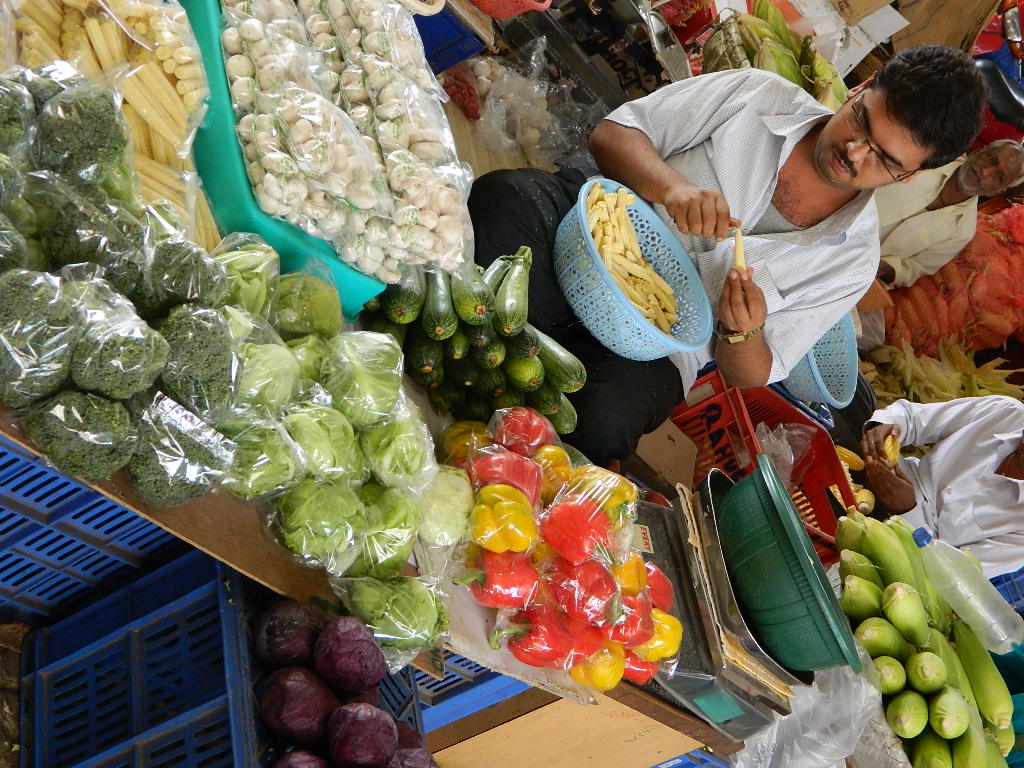
Do not assume any one shopping channel is automatically cheapest. Compare the same usable quantity and quality across options, and include the costs that a sticker price leaves out.
| Shopping option | What to compare | Costs or constraints to include |
|---|---|---|
| Local vegetable vendor or kirana | Quantity, quality and the actual quoted price | Delivery, minimum order and frequency of top-ups |
| Supermarket | Unit price for equivalent products | Pack size, offer conditions and travel |
| Online grocery service | Final checkout price | Delivery, handling, minimum order and substitutions |
| APMC trader | Equivalent grade and quantity | Minimum purchase, transport, handling and storage |
Mumbai APMC’s official website provides links to commodity-market price information. Treat these as market references, not guaranteed household purchase prices, and check the commodity, date, grade and quoted unit before using any number.
A lower purchase price may not reduce your total cost once travel, carrying capacity and unused produce are considered. Compare the same usable quantities and include the cost of getting them home, whether you live in Vashi, Nerul, Kharghar, Panvel or elsewhere. Storage and consumption needs vary by household, so there is no single correct shopping frequency to prescribe.
Checking APMC Before You Go
Mumbai APMC operates separate markets with different trading arrangements. Its published timetable lists the vegetable market from 2 PM to midnight, the fruit market from 4 AM to 3 PM, and the onion and potato market from 8 AM to 6 PM. These are published market and auction timings, not confirmation of household retail access or individual trader opening hours.
Before making a household shopping trip, confirm the relevant market, whether a trader sells your required quantity, minimum purchase sizes, opening arrangements and payment options. Do not assume a fixed weekly or Sunday shopping pattern applies across every market.
Comparing Tiffin Plans
Menu variety is not the main measure of a tiffin service. Before subscribing, confirm each of the following with the provider:
- Exact delivery address and service area.
- Lunch, dinner or both.
- Number of meals and excluded days.
- Portion sizes and included dishes.
- Dietary needs and allergen handling.
- Delivery window and missed-delivery policy.
- Trial-meal availability and cost.
- Pauses, cancellations and refunds.
- Delivery charges and container deposits.
- Business identity and FSSAI licence or registration details.
FSSAI’s consumer tools provide licence and registration verification and complaint facilities. A verified registration is not a guarantee of taste, nutritional suitability or safe handling on every occasion.
A monthly tiffin price alone does not tell you the cost per meal. Use this instead:
Comparable tiffin cost per meal = total payable for the plan, including compulsory delivery and other charges, divided by the number of meals included.
Show any refundable container deposit separately, as upfront cash you need to have on hand rather than as part of the recurring cost.
Use this worksheet to compare quotations from two providers on the same basis before committing to either:
| Detail | Provider A | Provider B |
|---|---|---|
| Quote date and delivery address | ||
| Meals included | ||
| Days excluded | ||
| Portion and menu details | ||
| Subscription price | ||
| Compulsory additional charges | ||
| Refundable deposit | ||
| Pause and refund terms | ||
| Comparable cost per included meal |
Tracking Your Own Household Spending
Use this worksheet to record two comparable periods, such as a normal month and a month with fewer restaurant orders:
| Expense | Baseline period | Comparison period |
|---|---|---|
| Food groceries | ||
| Tiffin payments | ||
| Restaurants and takeaway | ||
| Meal-delivery fees and tips | ||
| Grocery delivery or shopping transport | ||
| Cooking energy estimate | ||
| Total recurring spending | ||
| One-off equipment purchases, separately |
Compare equal-length periods and note changes in household size, guests, travel and meals provided elsewhere. A month funded partly by existing pantry stock is not directly comparable with a month that includes a large restock.
Track discarded food separately to identify waste, but do not add its purchase value again when it is already included in grocery spending. If you want to review household spending beyond food, see our guide to cutting monthly costs in Navi Mumbai.
Once both periods are recorded, work out the change:
Change in spending = baseline recurring food spending minus comparison-period recurring food spending.
A positive result indicates lower spending for those recorded periods, not a guaranteed ongoing saving. Keep cooking, shopping and cleaning time as a separate practical consideration, since it affects whether a change is sustainable even when the numbers look favourable.
A Flexible Month-Long Plan
- Before starting: Record normal spending and identify which meals need replacing.
- First week: Trial manageable meals or a tiffin service before committing.
- During the month: Log actual payments, missed meals, waste and convenience purchases.
- At the end: Compare spending and decide which changes fit the household.
Allow planned restaurant meals as part of the plan. If you do eat out, our Navi Mumbai restaurants guide can help with sourced options rather than guesswork. Not being able to cook every day does not mean a household is failing at this; it means eating out is one of the categories being tracked and compared like any other.
Food Safety While You Compare
Plan purchases around what you can use and store safely. Keep raw and cooked food separate, cook thoroughly, use safe water and follow safe temperature and storage practices. Consider how delivered meals will be stored if they are not eaten promptly. See the World Health Organization’s Five Keys to Safer Food for the full guidance. Home cooking and tiffin food are not automatically safer than restaurant food; safe handling depends on practice, not on which category the meal falls into.
Frequently Asked Questions
How much should I budget for food in Navi Mumbai?
Start with your household’s actual spending and meals required. Include groceries, tiffin payments, restaurant meals, delivery charges and cooking costs rather than relying on one citywide monthly figure.
Is home cooking always cheaper than a tiffin service?
No. Compare equivalent meals and include groceries, cooking energy, waste and any initial equipment costs. Also consider the time and facilities available to you.
How should I compare monthly tiffin plans?
Check the number of meals, portions, excluded days, delivery charges, deposits and cancellation terms. Divide the total payable, excluding refundable deposits, by the included meals to compare plans on a consistent basis.
Is APMC always the cheapest place for household groceries?
Not necessarily. Compare equivalent quantities and quality, then include transport, minimum purchases and storage needs. Published market prices are not guaranteed retail quotations.
Can individual shoppers buy at APMC?
Confirm arrangements with the relevant market or trader before travelling. Ask whether household quantities are sold, what minimum purchases apply and when that trader serves such customers.
How much can a no-eating-out month save?
There is no guaranteed saving. Compare equal-length periods using your actual total food spending, and account for pantry restocking, household changes and one-off purchases.