
Some household problems need simple maintenance; others need diagnosis, replacement parts or professional repair. This guide helps you assess furniture, clothing and appliances before attempting a fix or paying for a replacement. Check the item’s material, model instructions and warranty first, and stop when a task involves damaged electrical parts, unstable furniture or a fault you cannot identify.
NaviMumbai.com is an independent information website. This guide has not been validated by professional repair technicians, and we have not tested these techniques ourselves; where a specific claim needs manufacturer support, we link to the manufacturer’s own page.
Maintenance or Repair: Where to Start
| Situation | Appropriate starting point | When to stop |
|---|---|---|
| Dirty furniture surface | Identify its finish and use compatible cleaning instructions | Unknown coating, flaking paint or extensive damage |
| Missing button or small open seam | Check the fabric and practise a simple repair | Fragile fabric or damage requiring specialist work |
| Scale inside a kettle | Read that model’s descaling instructions | Instructions unavailable, leakage or electrical fault |
| Loose furniture fitting | Inspect the fitting and surrounding material | Cracked joints, stripped fixings or unstable seating |
| Sparking or grinding appliance | Stop using it and arrange inspection | Do not open the motor housing using this guide |
| Slow phone or laptop | Follow official software troubleshooting and backup guidance | Hardware damage, battery swelling or internal repair |
| Dripping tap | Identify the fitting and whether water can be isolated | Unknown valve type, concealed leak or shared supply |
Identifying a problem does not by itself establish its cause. Move to the relevant section below only after confirming which row applies.
Furniture: Cleaning, Scratches and Structural Issues
Identify the surface and finish before choosing a cleaner, polish or filler. Solid wood, veneer and laminate respond differently, and a finished surface needs different care from bare wood. Follow the product instructions and test on an inconspicuous area first. A cosmetic treatment does not restore the strength of a cracked joint, and a surface mark is a different problem from missing material or structural damage.
For an unstable chair, loose joint or failed screw fixing: inspect the accessible fittings, and recognise when the surrounding material itself has failed. Glue, filler or an improvised repair is not a dependable substitute for a sound structural fixing. Where a joint has genuinely failed or the piece is unsafe to sit on, treat it as a repair job for someone with the right tools and materials, not a quick fix.
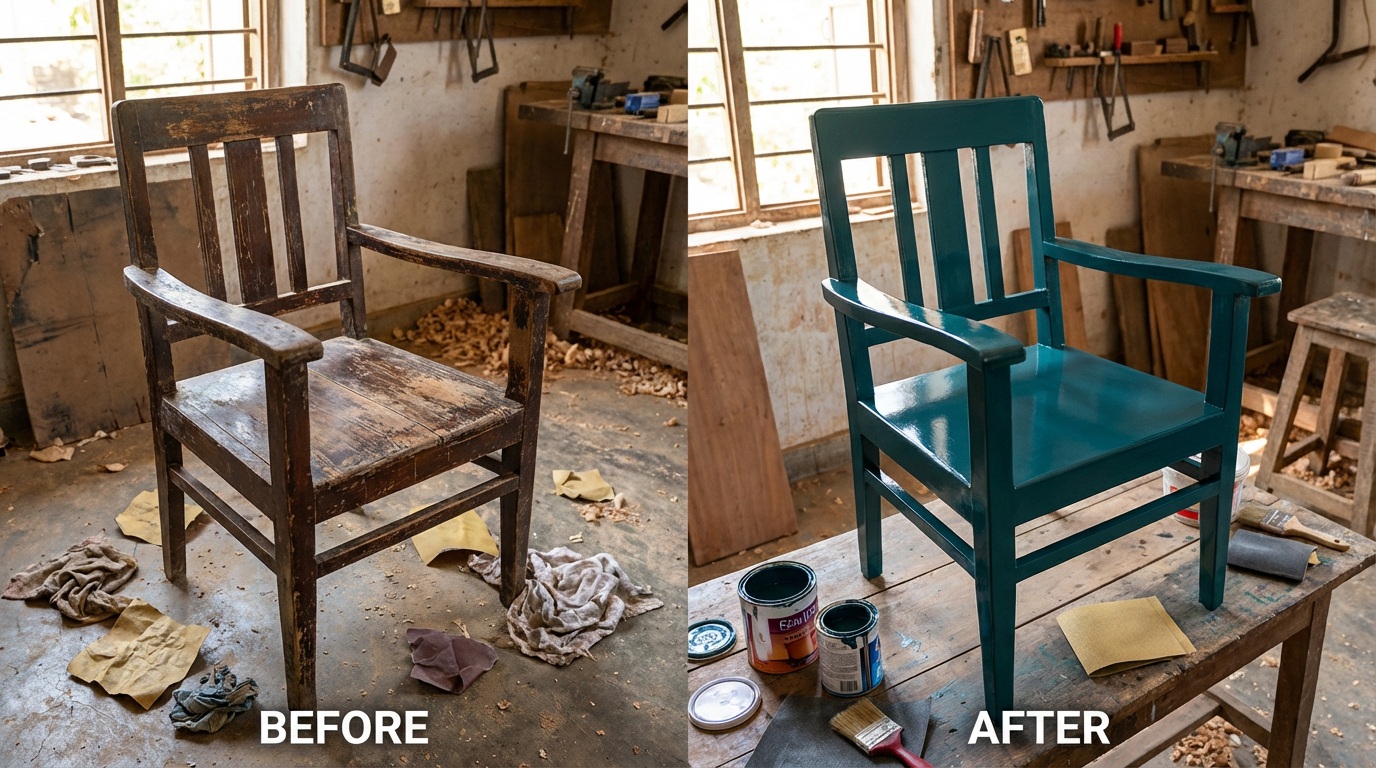
Before sanding or repainting old furniture, assess the existing coating rather than sanding it without knowing what it is. Check that your primer and paint are compatible, and follow that specific product’s ventilation, preparation, recoating and curing instructions. Touch-dry is not the same as ready for normal use. The US EPA’s guidance on lead paint confirms that disturbing old paint can generate lead-contaminated dust; treat unidentified old paint on older furniture with caution and avoid casual sanding, though the specific regulatory cutoffs in that guidance apply to US housing, not Indian homes.
Almirahs and Shelving
A sticking almirah or cupboard door is not automatically a lubrication problem. Misalignment, damaged hardware, swelling and obstruction all produce the same symptom and need different fixes. Check which one applies before treating every sticking door the same way.
For shelving, check the shelf’s dimensions, material, supports and intended load before assuming any shelf can be reused anywhere. For a persistent musty smell, look into the underlying moisture source rather than assuming coffee, charcoal or newspaper solves it; airing the item is not a universal fix for every case.
Clothing: Basic Repairs
Replacing a missing button, closing a small open seam or patching a simple tear are reasonable tasks for most households, provided the fabric is sturdy enough to hold the repair. Fragile fabric or damage beyond a small patch is better handled by a tailor.
For stains, check the garment’s care label and follow a compatible stain-removal product’s own directions rather than a fixed home recipe; soaking time and treatment depend on the fabric and the dye used, not a universal duration. If dyeing a garment at home, dye selection and method depend on the fibre and product used. Follow the dye manufacturer’s instructions, and use dedicated equipment rather than cookware, since Rit states its dye is not food-grade and advises against using a container that is also used for food.
Kitchen: Cookware and Kettles
For cookware, identify the material and coating first, then follow its own care instructions. A cleaning method suitable for uncoated stainless steel may not suit a coated nonstick pan, and no cleaning method restores a coating that is already failing. Avoid vigorous scrubbing or boiling strong acidic mixtures across every cookware type without checking the manufacturer’s guidance for that specific pan.
For a kettle, follow that specific model’s own descaling instructions rather than one universal recipe; manufacturers such as Philips publish different descaling guidance across their own support pages, which is why a single vinegar concentration and schedule should not be applied to every kettle. Do not use a bathroom cleaner as a kettle descaler: a checked bathroom-cleaner product page lists bathroom surface applications, ingredients including sodium hypochlorite, material exclusions and a warning against mixing with other products, and does not support use inside an appliance meant for drinking water.
Appliances: When to Stop and Call for Service
Geysers. Do not open a geyser’s tank or attempt a chemical descaling procedure through its drain valve using generic instructions. Follow your specific model’s manual and arrange a qualified service technician for descaling or repair.
Mixer grinders. Slow operation, sparking, a burning smell or an unfamiliar grinding noise does not, by itself, tell you which part has failed. Stop using the appliance and consult the model’s own troubleshooting instructions. Only remove or replace a part where the manufacturer provides an applicable user procedure for that specific part; do not open the motor housing or replace internal components on the assumption that the fix is generic across mixers.
Taps. A dripping tap does not always share the same mechanism or fix. Rather than a fixed disassembly-and-sanding procedure: identify where the leak originates, identify the tap or cartridge model, confirm whether the relevant water supply can be isolated, check landlord or society responsibilities where applicable, and get a plumber’s assessment when the mechanism or isolation point is unclear.
Phones and Laptops
Follow the manufacturer’s own troubleshooting, software-update and storage guidance, and confirm you have a verified backup before making changes; a cloud sync is not automatically a separate backup. Do not use toothpaste, abrasive polish, or an object like a toothpick inside a charging port; Apple’s own cleaning guidance for its devices warns against abrasive materials, moisture in openings, and compressed air, since abrasives can damage screen coatings. Treat this as guidance specific to that manufacturer’s own products, not a universal cleaning procedure for every device.
Hardware changes such as RAM or storage upgrades depend on that specific model’s compatibility, and require backing up your data before opening the device. Apple states that a lithium-ion battery does not need to be fully discharged before recharging, and normal capacity loss over time is not reversed by discharging it fully. If a battery is visibly swollen or damaged, stop using the device and seek manufacturer service rather than attempting to open or replace the battery yourself.
Repair or Replace: Compare the Full Quotation
Get a written quotation for both repair and replacement before deciding, using a worksheet like this rather than a fixed percentage rule:
| Compare | Repair quotation | Replacement quotation |
|---|---|---|
| Exact item/model and fault | ||
| Diagnosis or inspection charge | ||
| Parts and materials | ||
| Labour or installation | ||
| Collection, delivery or transport | ||
| Taxes and other charges | ||
| Warranty and exclusions | ||
| Total payable | ||
| Remaining limitations |
Compare the complete quotations alongside safety, parts availability, condition and expected usefulness. A cheaper repair is not automatically the better decision.
Building a Basic Toolkit
Buy tools for a defined task rather than assuming every household needs the same fixed kit. A basic set for simple maintenance might include a screwdriver set, pliers, measuring tape, and a small assortment of screws and fixings; add specific tools such as a handsaw, drill or chemical products only when a specific job calls for them. Choose protective equipment, such as gloves, a mask or eye protection, to suit the actual task; a generic inexpensive mask is not adequate protection for every dust or vapour hazard.
Before You Start
- Identify the item, material and model.
- Find the applicable care or repair instructions.
- Check warranty, tenancy and society responsibilities.
- Confirm that the task is intended for a household user.
- Check product compatibility and required protective measures.
- Protect nearby people, surfaces and belongings.
- Back up data before device troubleshooting.
- Stop if the fault, isolation method or next step is unclear.
Frequently Asked Questions
What household repairs are suitable for beginners?
Small clothing repairs and simple maintenance may be suitable when the material and instructions are clear. Electrical faults, unstable furniture and repairs requiring internal appliance access need a different level of assessment.
Can I descale a kettle and geyser in the same way?
No. Follow the instructions for the particular appliance. Do not transfer a kettle-cleaning recipe to a geyser or open its tank using this guide.
Can I use bathroom cleaner inside a kettle?
Do not use a bathroom cleaner as a substitute for an approved kettle descaler. Follow the kettle manufacturer’s instructions and the cleaning product’s stated uses.
Should I open a mixer that sparks or makes a grinding noise?
Stop using it and consult the manufacturer or a repair technician. These symptoms do not establish which component has failed, and this guide does not provide internal motor-repair instructions.
Can toothpaste remove scratches from a phone screen?
Do not use toothpaste or abrasive polish as a screen repair. Abrasives can damage coatings. Follow the device manufacturer’s cleaning guidance and seek an assessment for damaged glass.
Does fully draining a battery restore its capacity?
No. Fully discharging a lithium-ion battery does not reverse normal capacity loss. Follow the device manufacturer’s charging and battery-service guidance.
How should I decide between repair and replacement?
Compare written quotations, safety, parts availability, warranty and the item’s condition. Include inspection, labour, transport and installation costs rather than relying on a fixed percentage rule.
How often should household items be serviced or descaled?
Follow the manufacturer’s schedule and guidance for your usage and conditions. There is no single interval suitable for every appliance or household.
Sources & Verification Date
Sources checked on 28 September 2026: the US EPA’s guidance on lead paint hazards; Rit’s product guidance on dye equipment; a checked Harpic bathroom-cleaner product page, referenced only to confirm it is not intended for use inside a kettle or geyser; Apple’s published device-cleaning and battery guidance; and Philips’ kettle-descaling support pages, referenced to show that descaling instructions vary by model. This is a general household guide, not a substitute for your specific appliance’s manual, your landlord or society’s rules, or a qualified technician’s assessment.
Illustrative AI-generated image. It does not depict an actual restoration performed by this website.