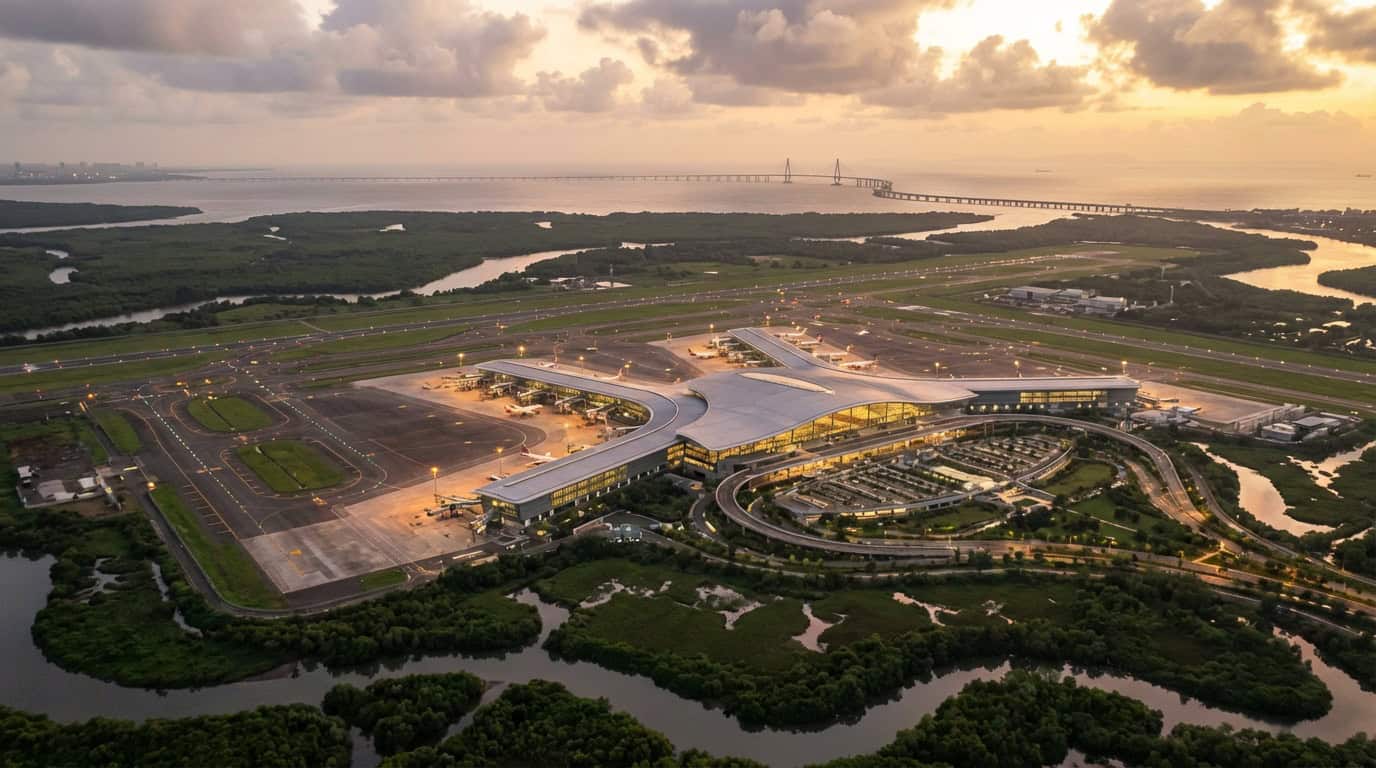
Navi Mumbai International Airport (NMIA) is open. It was inaugurated on 8 October 2025 and commercial passenger operations began on 25 December 2025. This guide covers what’s operating today, how to tell NMIA apart from Mumbai’s existing airport, and how to plan your journey, treating anything still in the planning stage as separate from what you can actually rely on now.
Navi Mumbai Airport: Quick Status
| Question | Current status |
|---|---|
| Is NMIA open? | Yes |
| Commercial flights | Operating |
| Terminal | Terminal 1 |
| IATA code | NMI |
| ICAO code | VANM |
| Domestic flights | Operating |
| International flights | Yes, since 15 July 2026. Check current routes on the live airport board and your airline’s schedule |
| Winter schedule | 25 October 2026 to 27 March 2027, as stated by Adani Airports on 5 October 2026 |
| Direct metro to airport | No operational direct metro connection as of 14 October 2026 |
| Existing road access | Yes |
| Live flight status | Check NMIA’s official website |
The official airport publishes live arrivals and departures from Terminal 1 on its own website, that’s the most current source for any specific flight.
Opening & Operational Timeline
Navi Mumbai International Airport is open. It was inaugurated on 8 October 2025 and commercial passenger operations began on 25 December 2025.
What Was the Navi Mumbai Airport Opening Date?
NMIA was inaugurated on 8 October 2025 and commercial passenger flights began on 25 December 2025. If you’ve seen older coverage asking “when will Navi Mumbai airport open,” this answers it: it already has.
Is Navi Mumbai International Airport Open?
Yes. NMIA is handling scheduled passenger flights from Terminal 1, with current arrivals and departures published through the airport’s live flight-status system. For a specific flight, check that system or your airline directly rather than relying on a fixed schedule printed here.
Where Is Navi Mumbai International Airport?
NMIA is located near Ulwe in Panvel Taluka, Navi Mumbai (Raigad district), on an airport site of roughly 1,160 hectares. It sits in the centre of Navi Mumbai. Adani Airports’ release of 5 October 2026 names Atal Setu, Sion-Panvel Highway, Palm Beach Road, Amra Marg (NH-348A) and NH-548 among the road corridors that serve it.
NMI vs BOM: Check Your Airport Before Leaving Home
Mumbai now has flights using different airports. Check the airport name and IATA code on your ticket before travelling: NMIA uses NMI, while Chhatrapati Shivaji Maharaj International Airport uses BOM. Confirming this before you leave home avoids a wasted trip to the wrong airport.
If your itinerary has you flying into one airport and out of the other, on a connecting or onward journey, see our Mumbai Airport to Navi Mumbai Airport transfer guide for terminal, baggage and timing details.
Current Terminal & Live Flight Information
NMIA is handling scheduled passenger flights from Terminal 1, with current arrivals and departures published through the airport’s live flight-status system. Always check your ticket and the airport’s live flight information before travelling, because terminal arrangements can change as the airport expands.
Official NMIA live flight status
Airlines & International Operations
NMIA’s Terminal 1 supports domestic and international operations. NMIA’s official Airline Information page, as shown on 14 October 2026, lists Air India Express (domestic and international), IndiGo (domestic) and Akasa Air (domestic). Airline participation, routes and frequencies change, so for the current list use that page or our dedicated Flights & Airlines guide.
International passenger operations began on 15 July 2026, when Air India Express launched its first international route to Abu Dhabi. Air India’s newsroom, writing on 16 July 2026, said the airline was then flying that route three times a week. Adani Airports said on 5 October 2026 that the winter schedule runs from 25 October 2026 to 27 March 2027. International routes and frequencies change, so check NMIA’s live flight-status page and the operating airline’s current schedule before booking or travelling.
Official NMIA airline information
How to Reach NMIA
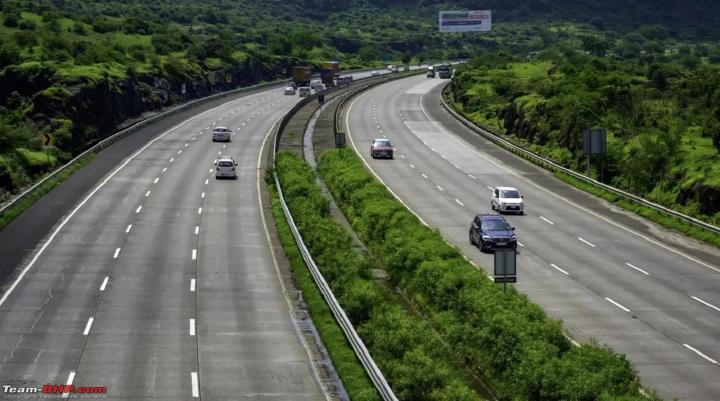
The best route depends on where you’re starting from. For Mumbai-side road travel, Atal Setu provides an important cross-harbour route into Navi Mumbai, with onward road access towards NMIA, actual journey time depends on your origin, the interchange you use, traffic and terminal access, so treat it as one option rather than a guaranteed fastest route. Navi Mumbai travellers may find local arterial roads and highways more direct. There is currently no direct operational metro or rail service to the airport. For public transport, Adani Airports’ release of 5 October 2026 lists seven NMMT airport routes (A1 to A7), Chalo Bus services to Andheri, Bandra, Dadar and Colaba, and MSRTC e-Shivai buses to Dadar, Borivali and Pune.
For turn-by-turn transport options, current road routes and public-transport connections, see the dedicated How to Reach NMIA guide rather than relying on a single route recommendation here. For Atal Setu’s own route and indicative journey information, see the dedicated Atal Setu guide.
Existing vs Planned Airport Connectivity
For travel planning today, rely on transport that is operational now. Treat future metro and rail projects separately until they enter service.
Existing today:
- Road access through Navi Mumbai’s existing road network
- Atal Setu (Mumbai Trans Harbour Link) as a cross-harbour route from Mumbai, with onward road connectivity
- Suburban rail to Panvel, Targhar or Bamandongri, which Adani Airports names as connected stations, followed by a bus, cab or auto for the last stretch
- NMMT, Chalo Bus and MSRTC e-Shivai bus services, as listed by Adani Airports on 5 October 2026
- Taxi, cab and private vehicle access
Planned / future:
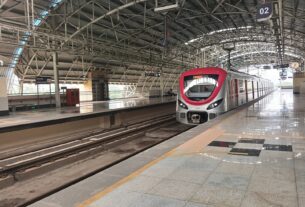
- Direct airport metro connectivity: Navi Mumbai Metro Line 1 is operational between CBD Belapur and Pendhar, but it does not currently provide direct rail access to NMIA
- Metro Line 8 and wider airport-linked connectivity, identified in CIDCO’s mobility planning as part of the future framework
- Additional rail/transit integration
- Further road-access improvements
For current metro fares and station-by-station status, see the dedicated Metro Guide, this page doesn’t maintain that dataset.
NMIA Capacity & Expansion
NMIA’s launch-phase design capacity is 20 million passengers per annum (MPPA), with 0.5 million metric tonnes of cargo capacity. Per CIDCO’s official planning material, the airport’s longer-term development is planned toward a capacity of around 60 MPPA. Cargo figures depend on the document. CIDCO’s About NMIA page (in Marathi) says the airport is planned for at least 60 million passengers and 1.5 million tonnes of cargo a year. The airport’s cargo page, the operator’s December 2025 release and the Prime Minister’s Office release of 8 October 2025 give phased or ultimate figures of 2.60 to 3.25 million tonnes. Quote a figure together with the document it comes from.
These are design and planning figures, not current passenger throughput or cargo handled. Check NMIA/CIDCO’s latest material for the most current expansion plans as airport development progresses.
Does NMIA Replace Mumbai Airport?
No. NMIA supplements Chhatrapati Shivaji Maharaj International Airport (CSMIA) rather than replacing it. NMIA was developed to add aviation capacity for the Mumbai Metropolitan Region alongside the existing CSMIA. The Mumbai Metropolitan Region now has two major commercial airports, and travellers need to check which airport their specific flight uses.
On 3 October 2026 Adani Airports said redevelopment of the north section of Mumbai airport’s Terminal 1B will begin in January 2027, and that airlines may choose to temporarily move some operations to NMIA. Which airport your flight uses is shown on your booking.
What NMIA Changes for Navi Mumbai
An operating international airport changes regional travel patterns and supports aviation, logistics, hospitality and airport-related commercial activity. NMIA is expected to support aviation and airport-linked economic activity over time. For nearby residential markets such as Ulwe, Panvel and other airport-side nodes, proximity is one factor among many that can influence demand. It should not be treated as a guarantee of property appreciation. Property-market performance varies by node, project and time period; use the dedicated Property Rates guide for current, dated area-wise data rather than assuming that airport proximity automatically produces appreciation.
See also: Property Rates, Best Areas to Live, and our Upcoming Projects guide.
Before You Leave for NMIA
- Check that NMI (not BOM) appears on your ticket
- Confirm your flight status on NMIA’s live flight-status page
- Confirm your terminal
- Check your airline’s reporting/check-in time
- Plan your road route in advance
- Allow for traffic variability
- If you’re driving yourself, check the current NMIA Parking Guide for parking zones and charges separately, this page doesn’t maintain parking rates
For how the metro lines connect to stations nearby, see the Navi Mumbai Metro route map.
If you are unsure whether your flight uses this airport or Mumbai’s older one, our comparison of the two Mumbai airports shows how to tell and which international flights run from here today.
For the region’s container port, see our JNPT port guide.
For air cargo at Navi Mumbai airport and the rail and road links behind it, see our cargo and logistics guide.
Frequently Asked Questions
Is Navi Mumbai International Airport open?
Yes. NMIA was inaugurated on 8 October 2025 and commercial passenger operations began on 25 December 2025. The airport is currently handling scheduled flights from Terminal 1.
Where exactly is NMIA?
Navi Mumbai International Airport is located near Ulwe in Panvel Taluka, Navi Mumbai. The airport’s site is near Ulwe Gaothan, and the project covers roughly 1,160 hectares.
Will NMIA replace Mumbai’s existing airport?
No. NMIA supplements Chhatrapati Shivaji Maharaj International Airport (BOM); it does not replace it. Always check the airport name and code on your booking, because flights in the Mumbai Metropolitan Region may use different airports.
How do I get to NMIA from Mumbai?
The best route depends on where you start. Atal Setu can provide an important cross-harbour road option from parts of Mumbai, while Navi Mumbai travellers may use local arterial roads and highways. There is currently no direct operational metro or rail service to the airport, so check the dedicated NMIA transport guide for current road and public-transport options. Adani Airports lists Chalo Bus services from Andheri, Bandra, Dadar and Colaba, and MSRTC e-Shivai buses from Dadar and Borivali.
Does Navi Mumbai Airport have international flights?
Yes. International flights began on 15 July 2026 with Air India Express to Abu Dhabi. Routes and frequencies can change, so check the airport’s live flight information and the airline’s current schedule for your travel date.
What is Navi Mumbai Airport’s code?
NMIA’s IATA airport code is NMI (ICAO: VANM). When booking flights, check NMI carefully so you don’t confuse Navi Mumbai International Airport with Mumbai’s existing airport, CSMIA, whose code is BOM.
Which terminal does NMIA use?
NMIA’s official flight-status system currently shows scheduled passenger flights operating from Terminal 1. Always verify the terminal on your ticket or the airport’s live flight-status page before travelling.
Is there a metro to NMIA?
No direct metro service currently reaches the airport. Navi Mumbai Metro Line 1 operates between CBD Belapur and Pendhar, but direct airport metro connectivity remains a future network project.
How early should I reach NMIA before my flight?
NMIA’s departure guide says to arrive at least two to three hours before a domestic flight and four hours before an international flight. Follow the reporting guidance your airline gives for your flight, and allow extra time if you’re unfamiliar with the airport or travelling in peak road conditions.
Sources & Methodology
Airport operational status, terminal and airline information were checked against Navi Mumbai International Airport’s official website on 14 October 2026. Winter schedule dates, bus services and the Terminal 1B announcement come from Adani Airports’ media releases of 3 and 5 October 2026. Inauguration information was verified against the Prime Minister’s Office/Press Information Bureau and the airport operator’s own announcements. Airport design capacity and project information were checked against CIDCO’s official planning material. Future metro and connectivity projects are identified separately from infrastructure that is operational today. Flight routes, frequencies and terminal arrangements can change and should be reconfirmed with NMIA and the airline before travel.
Last checked against NMIA’s official pages and Adani Airports’ releases on 14 October 2026.
Navi Mumbai International Airport Is Open: Plan Accordingly
Navi Mumbai International Airport is no longer a future infrastructure story: it is an operating airport. For travellers, the practical priorities are now checking whether a flight uses NMI or BOM, confirming the live schedule and terminal, and planning the road journey, because direct metro access to NMIA is not yet operational. The airport will continue to expand, but future terminals and transport projects should be treated separately from the facilities and connectivity available today.