
NRIs can apply for a home loan to buy a flat in Navi Mumbai. Approval depends on the lender’s assessment of your overseas income, existing debts, documents and the property itself. RBI rules provide the regulatory framework, while each lender sets its product terms within that framework. This guide explains what to prepare, how to compare offers and how to manage repayments from abroad.
It is general information, not legal, tax or banking advice. Lender terms change often, so confirm each figure with the bank in writing before you commit.
Last verified: 17 October 2026. The SBI and HDFC Bank NRI pages were read on that date. The RBI direction page was last updated by the RBI on 8 September 2026.
Can NRIs get a home loan in Navi Mumbai?
Yes, in principle. An authorised dealer bank, or a housing finance institution approved by the National Housing Bank, can lend to an NRI or a person of Indian origin to acquire residential accommodation in India. Whether a particular lender lends to you depends on its own policy, your country of residence and your finances. The RBI points that apply to every lender are these:
- The loan is for acquiring residential accommodation, and it must be fully secured by an equitable mortgage on that property.
- The loan amount cannot be credited to your NRE or FCNR(B) account. Ask the bank how it will disburse the money for the purchase.
- You can repay from inward remittances, from eligible funds in your NRE, NRO or FCNR(B) account, from rent on the financed property, or through a qualifying relative in India. Confirm the repayment arrangement with your lender.
The detail behind these points is in the table under the RBI rules heading further down.
NRI home loan eligibility: what lenders assess
Lenders publish different income, country and document criteria, so no single salary, employment period or credit score works everywhere. Ask each bank for its criteria for your country, and use this table to know what you need to be able to show.
| Factor | What you should be able to establish |
|---|---|
| NRI or OCI status | Which category the lender accepts and the evidence it needs. The RBI direction names NRIs and persons of Indian origin. HDFC Bank’s page also names OCI cardholders |
| Country of residence | Whether the lender serves applicants in your country, and whether it applies different rules there |
| Employment or business history | How long you have been in your current work, and the contract, salary slips or business papers that prove it |
| Overseas income | Which parts of your pay count towards eligibility, for example base salary, allowances or bonus |
| Existing liabilities | How loans in India and abroad, and their repayments, affect what you can borrow |
| Age and tenure | SBI’s page gives an age range of 18 to 70. Ask how the maximum age applies to the end of the loan and what tenure you can actually get |
| Credit history | Whether the lender wants an Indian credit report, an overseas credit report, or both. HDFC Bank’s page lists a credit bureau report |
| The property | Whether its title, approvals and valuation meet the lender’s requirements. Our flat buying checklist and occupancy certificate guide cover those checks |
How much money you need upfront
A bank does not usually finance the whole price. The agreed price and the value the lender accepts can differ, and the loan it sanctions depends on your income eligibility, its assessment of the property and the lending limits it applies. You fund the balance yourself and budget separately for the costs of the purchase.
- Ask for the sanctioned amount in writing, not just a quoted percentage.
- Ask which costs the lender will finance and which it will not. Stamp duty, registration and other charges are usually for you to arrange, so check with the bank. See our stamp duty guide for the duty side.
- Keep a cushion for interest or EMIs during construction on an under construction flat, and for the currency conversion of every transfer.
| Illustrative purchase budget | Amount |
|---|---|
| Agreed flat price | Rs 1 crore |
| Assumed sanctioned loan | Rs 75 lakh |
| Your contribution towards the price | Rs 25 lakh |
| Stamp duty, registration and other applicable costs | Additional budget required |
This is a budgeting illustration, not a promised loan to value ratio or a lender quotation.
SBI and HDFC Bank: published terms
These are the points the lenders’ own NRI pages stated when they were read on 17 October 2026: the SBI NRI home loan page and the HDFC Bank NRI home loan page. Neither page gave a dated rate that applies to every borrower, so rates and fees are left to your written quotation.
| SBI | HDFC Bank | |
|---|---|---|
| Who it names | NRIs and PIOs | NRIs, PIOs and OCIs |
| Age | 18 to 70 years. Ask how the maximum age applies to loan maturity | No age limit stated. The page says age, income, credit score and obligations decide eligibility |
| Loan size | Minimum Rs 15 lakh. No maximum stated | Rs 11 lakh to Rs 2,000 lakh (Rs 20 crore) |
| Tenure | Up to 30 years | Up to 20 years |
| Interest | Daily reducing balance. Rates sit in a card rate document | Variable, linked to the repo rate. The page shows older and newer rate tables, so check the date |
| Fees | CERSAI fee, stamp duty on the loan agreement and property insurance after sanction are named. Processing fee is in a separate card rate document | Processing fees vary by product and applicant category, and HDFC Bank’s NRI pages quote different figures for different products and locations. Obtain the applicable NRI fee schedule and a written quotation, including taxes and any non-refundable charges |
| Under construction | Not stated on the page | Interest only until final disbursement, or tranche based EMIs from the first disbursement |
The tenure gap may reflect different products, so ask each bank what it would offer you. A bank’s policy for your country can differ from its public page.
Documents required
Lists differ by lender and applicant, and both banks say their lists depend on your situation. The table groups the items that appear across the SBI and HDFC Bank pages. Some papers are needed when you apply and others before disbursement, so ask the bank which is which.
| Document category | Common examples | What to check |
|---|---|---|
| Identity and address | Passport, PAN or Form 60, Indian and overseas address proof, visa or work permit, PIO or OCI card if you hold one | PAN and Form 60 are not interchangeable for everyone, so ask which your lender accepts for you. HDFC Bank says documents that cannot be verified from originals may need notarising or attestation, with English translations |
| Income, if salaried | Employment contract, last three months of salary slips (HDFC Bank says three to six), six months of overseas bank statements showing salary credits, latest tax return | SBI says the tax return is not required for NRIs in the Middle East or Merchant Navy employees. Ask about your country |
| Income, if self employed | Two years of business returns and financial statements, overseas bank statements for you and the business | Which statements the lender wants audited or certified |
| Credit and existing loans | Credit bureau report where asked, loan account statement for the last year if you have an existing loan (SBI) | Whether overseas credit reports are required |
| Bank account papers | NRE or NRO statements. HDFC Bank asks for the processing fee cheque to be drawn on an NRE or NRO account | Which account the lender wants for repayment |
| Property papers, ready or resale flat | Registered or stamped agreement for sale, occupancy certificate, Maharashtra society share certificate, maintenance bill, electricity bill, property tax receipt, proof of payments to the seller | Whether the lender wants originals or copies, and which papers it needs before disbursement |
| Property papers, new or under construction flat | Allotment letter, approved plan, builder’s registered development agreement, conveyance deed for a new property, construction permission where applicable, payment receipts to the builder | The stage of the project decides what exists yet |
For the property side, read our flat buying checklist and agreement for sale vs sale deed guide.
Applying from abroad and using a power of attorney
- Confirm the lender accepts you. Check your country, employment profile and income against its criteria first.
- Submit your documents. Identity, residency, income and credit papers.
- Get an initial assessment. Many lenders give an eligibility assessment or provisional sanction at this stage.
- Submit the property papers. The lender runs its legal and valuation checks.
- Settle execution and attestation. Confirm any power of attorney, overseas signing and document attestation requirements. Our guide for NRIs buying property in Navi Mumbai sets out the power of attorney questions to ask.
- Meet the conditions. Complete the lender’s conditions, pay your contribution and complete the registration requirements.
- Arrange disbursement and repayment. Set up how the loan is paid out and how your EMIs will be paid.
A provisional sanction is not confirmation that the bank has approved the property or is ready to disburse the loan. Not every lender completes every step remotely, so ask which steps you can do from abroad and which need you or your attorney in India.
Ready, resale and under construction property checks
For a ready flat the lender looks at the registered agreement, the occupancy certificate and the society papers. For an under construction project it looks at the project’s approvals, the builder’s payment schedule and how much has been built, and it releases the loan in stages. HDFC Bank’s page says you can pay interest only until the final disbursement, or opt for EMIs on the tranches from the first disbursement. Ask which applies to your offer, because the first months of an under construction loan can cost you very differently under each.
For a resale flat on CIDCO land, ask the lender’s legal team which lease, transfer and mortgage documents apply to the property. Confirm separately whether a CIDCO transfer permission, mortgage NOC or other clearance is required. Our CIDCO transfer charges guide explains the permissions involved.
Before any money moves on a new project, read our agreement for sale vs sale deed guide for what the agreement does. Our upcoming residential projects guide lists projects to research, not to buy blindly.
Repayment and exchange rate risk
- Standing instruction from an NRE or NRO account. Remit from your overseas account to the NRE or NRO account and let the bank debit the EMI.
- Direct remittance. You can remit straight to the loan account. Ask the bank what paperwork each remittance needs.
- Rent. The RBI text allows repayment from rent on the financed property. Our guide for NRIs buying property in Navi Mumbai covers what you owe locally if you let it out.
- A qualifying relative in India. The RBI text allows a relative to pay by account to account transfer into your loan account. The direction defines relative by reference to the Companies Act, so a friend or an extended family member who offers to pay is not automatically covered. Ask the bank whether your relative qualifies.
Your loan is denominated in Indian rupees. On a floating-rate loan, changes in interest rates can affect your EMI, repayment tenure or both. Separately, exchange-rate movements change how much foreign currency you need to fund each rupee instalment.
The first table shows how the EMI on a Rs 50 lakh loan over 20 years changes with the interest rate. The second holds the 9 per cent EMI constant to isolate the effect of exchange-rate movements. Both are illustrations, not forecasts or quotes, and they exclude remittance fees and currency-conversion charges.
| Example interest rate | Monthly EMI on Rs 50 lakh, 20 years |
|---|---|
| 8% | Rs 41,822 |
| 9% | Rs 44,986 |
| 10% | Rs 48,251 |
| Example exchange rate | Rs 44,986 EMI in US dollars |
|---|---|
| Rs 83 to the dollar | About USD 542 |
| Rs 88 to the dollar | About USD 511 |
| Rs 93 to the dollar | About USD 484 |
If the rupee strengthens from 93 to 88 to the dollar, the same EMI costs you about 5.7 per cent more in dollars. If it weakens from 88 to 93, it costs about 5.4 per cent less. Plan with a cushion for a stronger rupee, and use our EMI calculator guide and home loans guide to test your own numbers.
RBI rules relevant to the loan
These points come from paragraph 4 of the RBI’s Master Direction on borrowing and lending in Indian rupees between residents and NRIs or persons of Indian origin (FED Master Direction No. 6/2015-16).
| Point | What the direction says | What it means for you |
|---|---|---|
| Loan terms | Loan amount, margin money and repayment period are the same as for housing finance to a resident (4.1) | The RBI text sets no special NRI cap. The bank still applies its own policy and credit check |
| Where the loan goes | The loan cannot be credited to an NRE or FCNR(B) account, or to a discontinued NRNR account (4.2) | The loan is for the purchase and cannot go into those accounts. Ask the bank how it will disburse it |
| Security | Fully secured by an equitable mortgage on the property being acquired, with a lien on other assets in India if needed (4.3) | Expect the bank to take the property papers as security and to run its own legal check |
| Repayment sources | Remittances from outside India, funds in the borrower’s accounts, rent from the property, or a relative in India by account to account transfer (4.4) | See the repayment section above for the practical routes |
| Interest rate | Must follow any RBI or NHB directives (4.5) | The rate itself is the lender’s, within those directives |
Paragraph 4.4 also names NRNR and NRSR accounts. The same direction notes that no deposits could be accepted under those two schemes after 1 April 2002, so they are discontinued and are not practical repayment options today.
There is a second route. The RBI’s Master Direction on deposits and accounts lets authorised dealers lend against NRE deposits, including for acquiring a flat or house in India for the borrower’s own residential use, with the loan not repatriable abroad (paragraph 4.8.1). This is a loan against your deposit, not a standard housing loan, so compare its cost with a regular home loan.
Tax considerations
The applicable law depends on the income period, not simply the date you file your return. Income earned in FY 2025-26 is reported for AY 2026-27 under the Income-tax Act, 1961. The Income-tax Act, 2025 applies from 1 April 2026, so check the applicable provisions separately for income periods beginning from that date. The Income Tax Department’s transition FAQs set out the split.
Whether any deduction for housing loan interest or principal is available depends on the Act that applies to the income period, the tax regime you choose, your residential status and how the flat is used. See the department’s house property page and ask a chartered accountant. If you plan to sell later, see our TDS guide for selling as an NRI. If you buy from an NRI seller, see our TDS guide for buying from an NRI.
Comparing the final offer
- Get the offer in writing with a date, the rate type, the spread and how often the rate resets.
- Ask for the full fee list: processing, legal and valuation, CERSAI, insurance, reappraisal, conversion and any prepayment or part payment terms.
- Ask how your overseas income is assessed and which documents the bank will accept from your country.
- Ask which repayment routes it supports from your country, and whether your relative qualifies to pay.
- Ask what happens if the builder is late. A RERA project gives you remedies, but the lender’s terms on a delayed project are separate.
- Keep every sanction letter, disbursement receipt and statement. You will need them for tax and for a later sale.
Frequently Asked Questions
Can an NRI or OCI apply for a home loan to buy a Navi Mumbai flat?
Yes, in principle. The RBI direction allows an authorised dealer bank or an NHB approved housing finance institution to lend to an NRI or person of Indian origin to acquire residential accommodation in India, and HDFC Bank’s page also names OCI cardholders. Approval depends on the lender’s assessment of your income, debts, documents and the property.
What documents are required?
Lenders usually ask for identity and address proof, a passport and visa or work permit, income papers such as an employment contract, salary slips and overseas bank statements, a credit report, NRE or NRO statements and the property papers. Lists differ by lender and applicant, and some papers are needed only before disbursement.
How much down payment will I need?
It depends on the lender, your eligibility and its valuation of the property. The bank sanctions only part of the price, so you fund the balance and budget separately for stamp duty, registration and other costs. Ask for the sanctioned amount and a list of costs it will and will not finance, in writing.
Can I apply without visiting India?
Some steps can often be done from abroad, such as submitting documents and getting an initial assessment, but lenders differ. Ask which steps need you or your attorney in India, and what power of attorney and attestation they accept. A provisional sanction is not confirmation that the bank has approved the property or will disburse.
Can I repay through an NRE or NRO account?
Yes. The RBI direction lists funds in the borrower’s NRE, FCNR(B) or NRO account as permitted repayment sources, along with remittances from abroad and rent from the financed property. Confirm the arrangement with your lender.
Can a qualifying relative in India repay on my behalf?
The RBI direction allows a relative of the borrower in India to pay by account to account transfer into the loan account. It defines relative by reference to the Companies Act, so a friend or extended family member is not automatically covered. Ask the bank whether your relative qualifies.
What additional checks apply to a resale flat on CIDCO land?
Ask the lender’s legal team which lease, transfer and mortgage documents apply to the property, and confirm separately whether a CIDCO transfer permission, mortgage NOC or other clearance is required. Our CIDCO transfer charges guide explains the permissions involved.
How do interest-rate and exchange-rate changes affect repayments?
Your loan is denominated in Indian rupees. On a floating-rate loan, changes in interest rates can affect your EMI, repayment tenure or both. Separately, exchange-rate movements change how much foreign currency you need to fund each rupee instalment.
What to read next
- Buying property in Navi Mumbai as an NRI: rules, tax and checks.
- Home loan EMI calculator guide: test your own loan numbers.
- Agreement for sale vs sale deed vs conveyance: what each document does.
- How to check a project on MahaRERA: search the portal and read the project page.
Sources and method
RBI: FED Master Direction No. 6/2015-16, borrowing and lending in rupees (paragraphs 1.5, 1.6 and 4.1 to 4.5), the Master Direction on deposits and accounts (paragraph 4.8.1) and the Master Direction on acquisition and transfer of immovable property. Lenders: SBI NRI home loan page and HDFC Bank NRI home loan page, read on 17 October 2026. The lender pages carry their own publication dates, and our verification date is 17 October 2026. Tax: the Income Tax Department’s transition FAQs and house property page. Example EMIs use the standard reducing balance formula and are not quotes. Rates, fees and rules change, so confirm them with the lender and your authorised dealer bank.
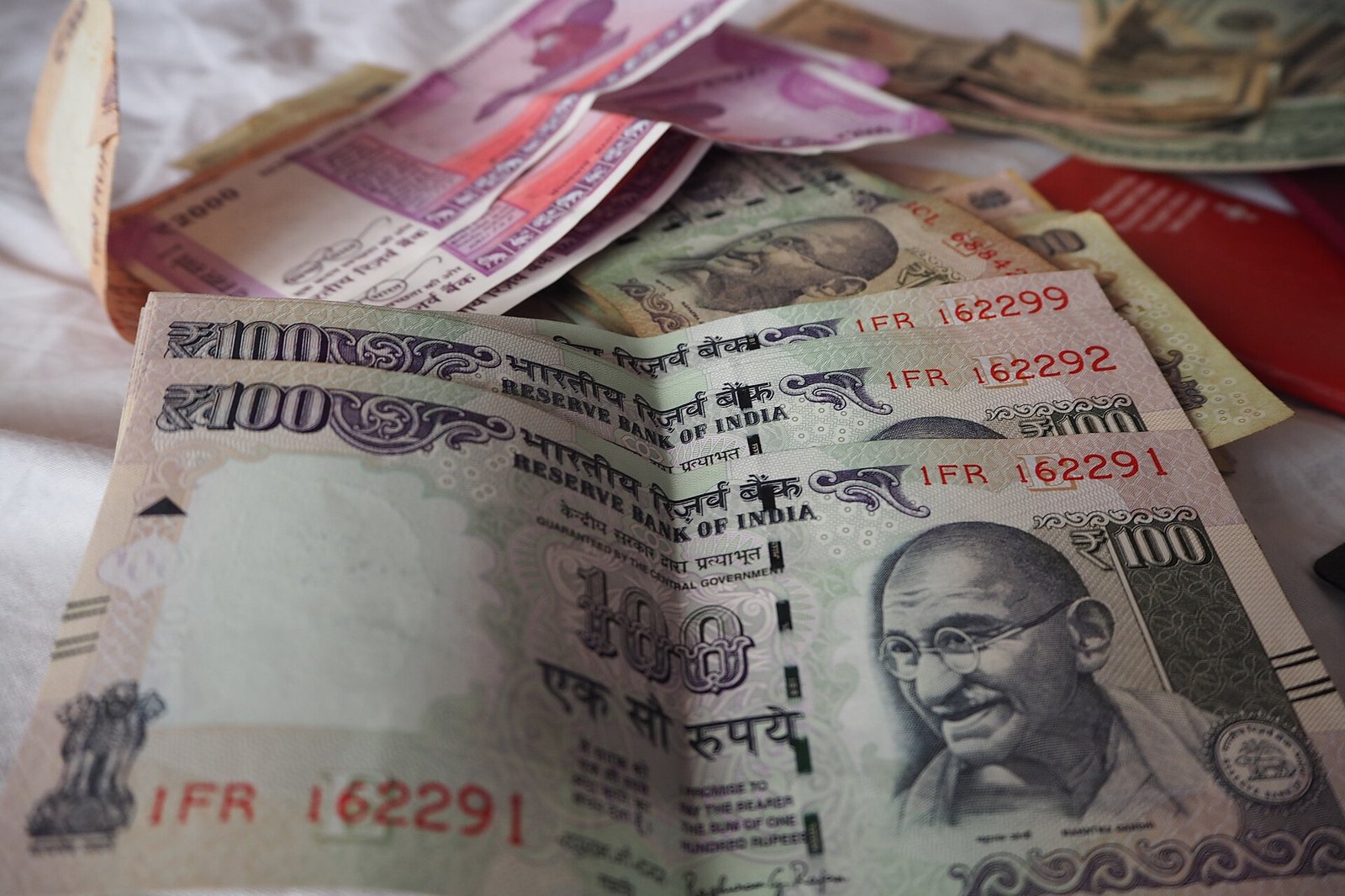
Featured photo: Indian 100 and 2000 rupee notes by Monito – Money Transfer Comparison, licensed CC BY 2.0 via Wikimedia Commons, cropped and resized.
NaviMumbai.com is an independent information site and is not a bank, lender or tax adviser.