
Three words turn up in almost every Maharashtra property deal: agreement for sale, sale deed and conveyance. People use them as if they were the same paper. They are not, and the difference decides when you become the owner, how much stamp duty you pay and what you can enforce if the other side backs out. This guide explains what each document does, where the law says so, and what to check at each stage of a Navi Mumbai purchase.
It is general information, not legal advice. Have a property lawyer read the actual documents before you sign or pay.
Last verified: 17 October 2026. The Acts, the MahaRERA model agreement and the Maharashtra stamp schedule dated 22 July 2026 were read on that date.
The short answer
- Agreement for sale: a contract that a sale will happen on agreed terms. Section 54 of the Transfer of Property Act says such a contract does not, of itself, create any interest in or charge on the property. You hold rights against the seller, not the title.
- Sale deed: the registered document that actually transfers ownership for a price. Section 54 says a transfer of tangible immovable property worth Rs 100 or more can be made only by a registered instrument.
- Conveyance: the wider legal word for a document that transfers property. A sale deed is a conveyance. The stamp schedule has an Article called Conveyance, and RERA speaks of a registered conveyance deed in favour of the buyer. In a new building the word also names the transfer of the land and building to the housing society.
Sources for these points: Transfer of Property Act, section 54, as set out on Indian Kanoon, and the Maharashtra Stamp Act article wise schedule.
Agreement for sale: what it is and what it is not
An agreement for sale records the deal before ownership passes. It names the parties and the property, the price, how and when the money is paid, the date of possession and what happens on delay or default. Builders use it for a flat under construction. In a resale it is the document signed once the price and terms are settled and before the final transfer.
Its limit is the one in section 54: it creates a right to have the sale completed, not ownership. The Supreme Court said the same in Suraj Lamp and Industries v State of Haryana. It held that sale agreements, general power of attorney sales and wills do not transfer immovable property, and that immovable property can be transferred only by a registered deed of conveyance. It also noted that a sale agreement gives only the limited protection of section 53A of the Transfer of Property Act. Do not treat a signed agreement, a power of attorney or a society share certificate alone as proof that you own a flat or plot.
For a flat bought from a builder in a registered project, the agreement matters even more. Section 13 of RERA says a promoter cannot accept more than ten per cent of the cost of the apartment as an advance or application fee without first entering into a written agreement for sale and registering it. The same section says the agreement must be in the prescribed form and must state the project particulars, the payment dates and the date of possession, and the interest payable by each side on default.
Sale deed and conveyance: the transfer itself
A sale deed is the document by which the seller transfers ownership to the buyer in exchange for the price. Section 17(1)(b) of the Registration Act makes registration compulsory for a non-testamentary instrument that creates, declares, assigns, limits or extinguishes a right, title or interest in immovable property worth Rs 100 or more. Section 49 adds that a document which must be registered does not affect the property and cannot be received as evidence of the transaction unless it is registered.
Under section 47 a registered document operates from the time it would have started to operate had registration not been needed, and not from the day of registration.
The word conveyance covers more than a sale deed. Three uses matter to a buyer in Navi Mumbai:
- Deed of sale between two owners. The usual resale or plot purchase transfer.
- Conveyance by the promoter to the buyer. RERA section 17(1) requires the promoter to execute a registered conveyance deed in favour of the allottee, with the undivided proportionate title in the common areas going to the association of allottees. Where no local law sets a period, the proviso says this is to happen within three months from the date the occupancy certificate is issued.
- Conveyance to the housing society. This transfers the land and the building to the society of flat owners. If a builder does not do it, see our deemed conveyance guide. The MahaRERA model agreement provides for the promoter to transfer the structure to the society within three months of the society being registered.
Our occupancy certificate guide explains the certificate that triggers the promoter’s duties, and our housing society registration guide covers how the society is formed.
The three documents side by side
| Agreement for sale | Sale deed or conveyance | |
|---|---|---|
| What it does | Records the deal and the terms. A contract to sell, which does not by itself create an interest in the property | Transfers ownership against the price |
| Registration | Under section 17(1A) of the Registration Act, an unregistered contract to transfer property for consideration has no effect for section 53A of the Transfer of Property Act. RERA section 13 requires it to be registered in a registered project | Compulsory under section 17(1)(b) for property worth Rs 100 or more, and section 54 of the Transfer of Property Act requires a registered instrument |
| Who holds title after signing | The seller | The buyer |
| Typical timing | At booking or once terms are settled, well before possession in a new project | On completion of the sale, or later through the promoter’s conveyance in a new building |
| Stamp duty | Charged as a conveyance if possession is transferred or agreed to be transferred. See the next section | Conveyance rate, with credit for duty already paid on a deemed conveyance |
Stamp duty: the rule that surprises buyers
In Maharashtra the stamp duty can fall on the agreement and not on the later deed. Explanation I to Article 25 of the stamp schedule says that where, in the case of an agreement to sell immovable property, possession is transferred or agreed to be transferred to the purchaser, before, at the time of or after the execution of the agreement, the agreement to sell is deemed to be a conveyance and duty is leviable accordingly.
The schedule then provides two reliefs in the same Explanation. Where a conveyance is later executed in pursuance of the agreement, duty already paid on the agreement is adjusted towards the total duty on the conveyance. And where proper duty was paid on a registered agreement treated as a deemed conveyance, and a conveyance deed is later executed without any modification, that conveyance is treated as another instrument under section 4 and a duty of one hundred rupees is charged.
The rate itself is in Article 25(b). For immovable property inside a municipal corporation area it is 5 per cent of the market value in the schedule dated 22 July 2026, and the schedule carries an editor’s note recording a one per cent reduction for women buyers of residential units under a government order of 31 March 2021. Registration fee, metro cess and any local levy are separate, so ask the Sub-Registrar office for a calculation on your transaction. Our stamp duty guide and ready reckoner guide show how the figure is worked out and where to check it.
The schedule also has a provision at Article 5(g-a)(ii) for agreements to buy units from a developer, with an adjustment against the later conveyance duty if the buyer passes the unit to a subsequent purchaser within three years. Read it with a lawyer if you are buying several units.
The MahaRERA model agreement, in clause 29, puts the stamp duty and registration charges of the agreement on the allottee. In a resale there is no such form, so settle in writing who pays what before you sign.
Registration: where and how soon
- Time limit. Section 23 of the Registration Act says a document other than a will is accepted for registration only if presented to the proper officer within four months from the date of its execution, subject to sections 24, 25 and 26. Do not let a signed agreement sit.
- Unregistered agreements. Under section 17(1A), a contract to transfer immovable property for consideration that is not registered has no effect for the purpose of section 53A of the Transfer of Property Act. The proviso to section 49 lets an unregistered document be received as evidence of a contract in a suit for specific performance, so an unregistered agreement is weak, not worthless. Do not rely on that.
- Project papers. MahaRERA’s Order No. 62 of 2024 recalls its earlier circular saying the project registration certificate need not be insisted upon for registering an agreement or sale deed in projects exempt from RERA registration. For a project that is not exempt, expect the Sub-Registrar to ask for it.
Checks before you sign an agreement for sale
- The RERA registration number of the project, checked on the MahaRERA website (see our MahaRERA project check guide), and the agreement on the MahaRERA prescribed lines. The model agreement is a useful yardstick.
- The payment schedule, with no more than ten per cent taken before the agreement is registered.
- The possession date, the carpet area, the interest each side pays on delay and the refund terms. RERA section 18 gives a buyer who withdraws a refund with interest if possession is not given on the agreed date.
- The title papers and the occupancy certificate position. Our flat buying checklist lists the document checks for a new flat.
- For a resale, the seller’s ownership document, the society no objection and the transfer permission. If the flat sits on CIDCO land, see our CIDCO transfer charges guide.
- An Index II and encumbrance search on the property. Our Index II guide and encumbrance certificate guide show how.
- Who pays stamp duty and registration fees, written into the agreement.
Checks before the sale deed or conveyance
- The balance payment trail matches the agreement, and every receipt is on record.
- Duty already paid on the agreement is shown to the Sub-Registrar so the adjustment is claimed.
- No change in the terms from the agreement if you want the Rs 100 treatment the schedule describes.
- If the seller is a non-resident Indian, tax deducted at source works differently. See our guide to buying property from an NRI.
- After registration, the society transfer, mutation and utility name changes are a separate task list. A registered deed is the base for them, not the end of the process.
Buying a plot or agricultural land has more steps because the parcel, zone and title need checking first. See the guide to buying land in Navi Mumbai and the NAINA land buying checks.
Frequently Asked Questions
Is an agreement for sale enough to make me the owner of a flat?
No. Section 54 of the Transfer of Property Act says a contract for sale does not, of itself, create any interest in the property, and the Supreme Court in Suraj Lamp and Industries v State of Haryana held that immovable property is transferred by a registered deed of conveyance. The agreement gives you rights against the seller. Ownership is meant to pass through the registered transfer.
Must an agreement for sale be registered in Maharashtra?
For a flat in a RERA registered project, section 13 of RERA requires a written, registered agreement before the promoter takes more than ten per cent. More widely, section 17(1A) of the Registration Act says a contract to transfer property for consideration that is not registered has no effect for section 53A of the Transfer of Property Act. Register it.
Is sale deed the same as conveyance deed?
A sale deed is one kind of conveyance. Conveyance is the wider term. In a new building it can also mean the promoter’s transfer of the land and building to the housing society, which is a separate document from the one that covers your flat.
Do I pay stamp duty on the agreement and again on the sale deed?
Not twice on the same value. Explanation I to Article 25 treats an agreement to sell as a conveyance when possession is transferred or agreed to be transferred, and says duty paid on it is adjusted when a conveyance follows. If proper duty was paid and the deed is executed without modification, the schedule charges one hundred rupees. Ask the Sub-Registrar to confirm how it applies to your papers.
Who pays stamp duty and registration on a new flat?
The MahaRERA model agreement, in clause 29, says the stamp duty and registration charges of the agreement are borne by the allottee. For a resale there is no prescribed form, so agree it in writing.
How soon after the occupancy certificate must the builder execute the conveyance?
RERA section 17(1) says within the period set by the sanctioned plans under local laws. If there is no local law, the proviso says within three months from the date the occupancy certificate is issued. If it is delayed, see our deemed conveyance guide.
What if I miss the four month limit for registration?
Section 23 of the Registration Act allows a document to be accepted only if presented within four months of its execution, subject to sections 24, 25 and 26. Late presentation is possible only in the cases and on the terms those sections set, so ask the Sub-Registrar early.
What to read next
- Stamp duty and registration charges: what you pay and how it is worked out.
- How to check a project on MahaRERA: search the portal and read the project page.
- Flat buying checklist: what to verify before you pay.
- Deemed conveyance in Maharashtra: the process and the housing society checks.
Sources and method
Statutes read on 17 October 2026: the Registration Act, 1908 (sections 17, 23, 47 and 49), the Real Estate (Regulation and Development) Act, 2016 (sections 13, 17 and 18), and section 54 of the Transfer of Property Act, 1882. The stamp duty points come from the article wise schedule of the Maharashtra Stamp Act dated 22 July 2026 (Articles 5(g-a) and 25). The model agreement is MahaRERA’s agreement for sale. The judgment is Suraj Lamp and Industries v State of Haryana. MahaRERA’s order is Order No. 62 of 2024. Figures and rates change, so confirm them on the IGR Maharashtra website or with the Sub-Registrar before you pay.
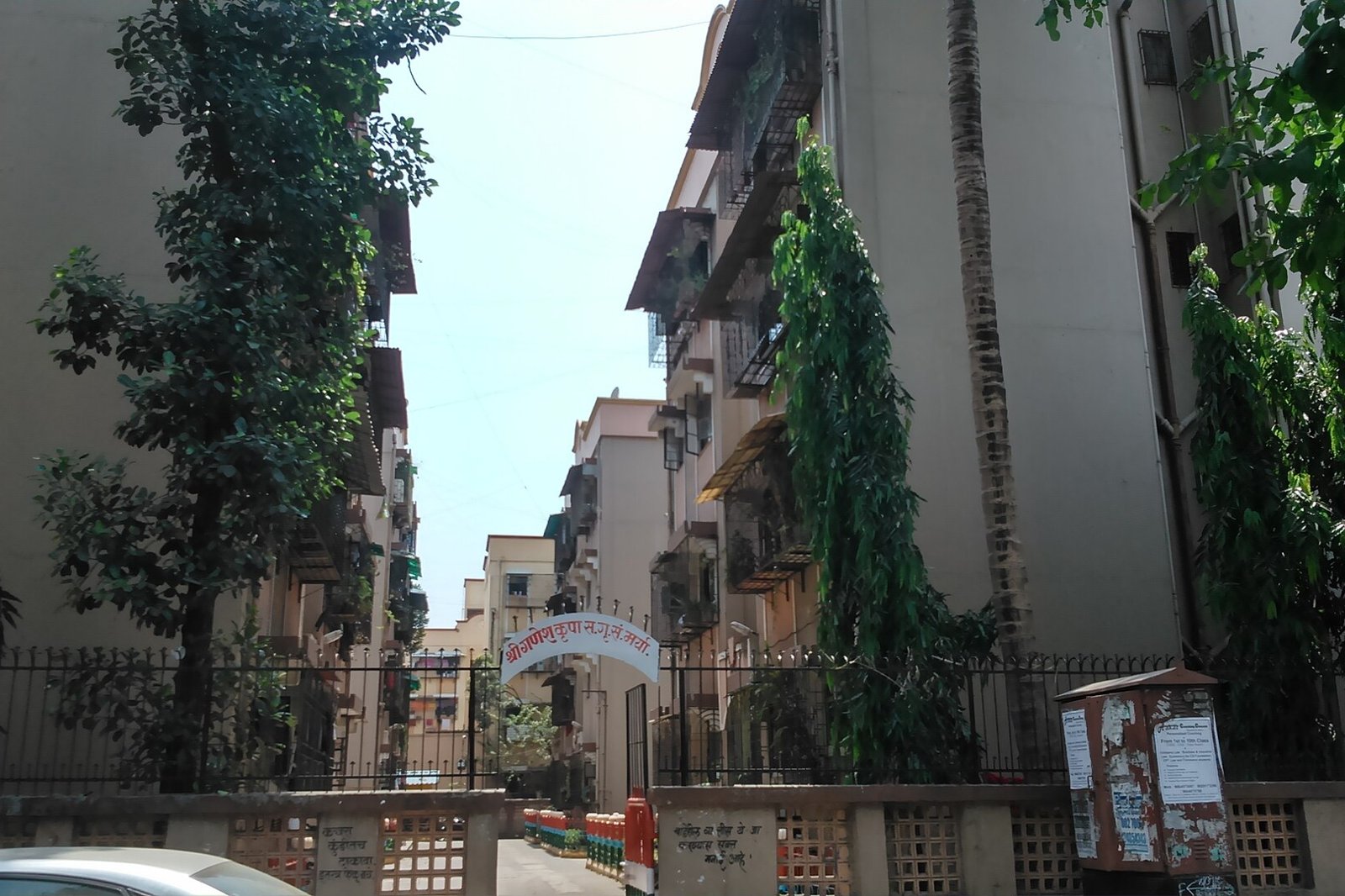
Featured photo: entrance of a housing society in Sector 10, Sanpada by Prashant Gaikwad, taken on 27 March 2016, licensed CC BY-SA 3.0 via Wikimedia Commons, cropped and resized.
NaviMumbai.com is an independent information site and is not a law firm.