
Quick answer: Peel-and-stick wallpaper suitability depends on the specific product, the wall’s condition, and the room’s environment. Check the manufacturer’s approved surfaces and paint requirements, then test a sample before ordering the full quantity. A successful short test does not guarantee long-term adhesion or damage-free removal.
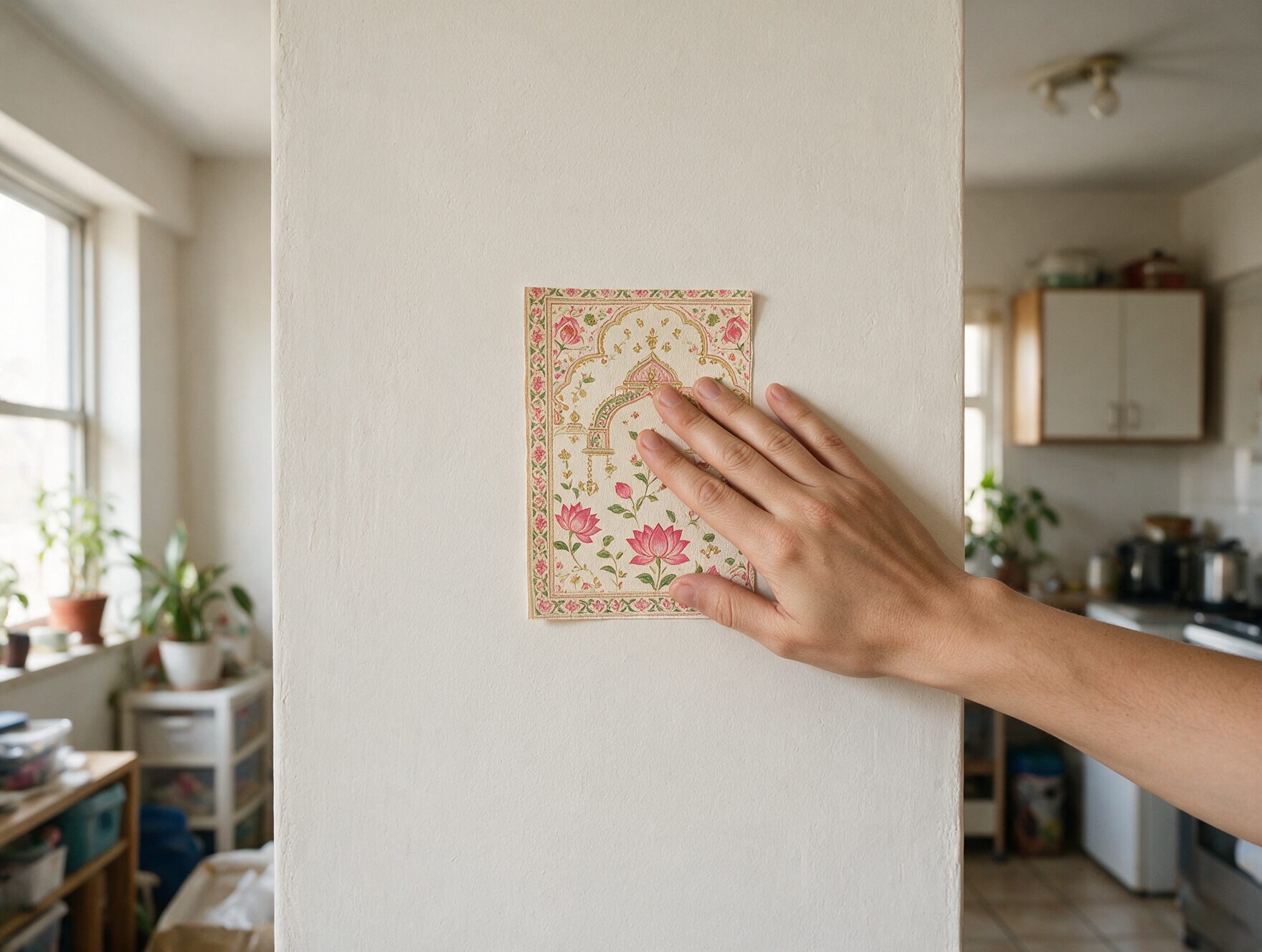
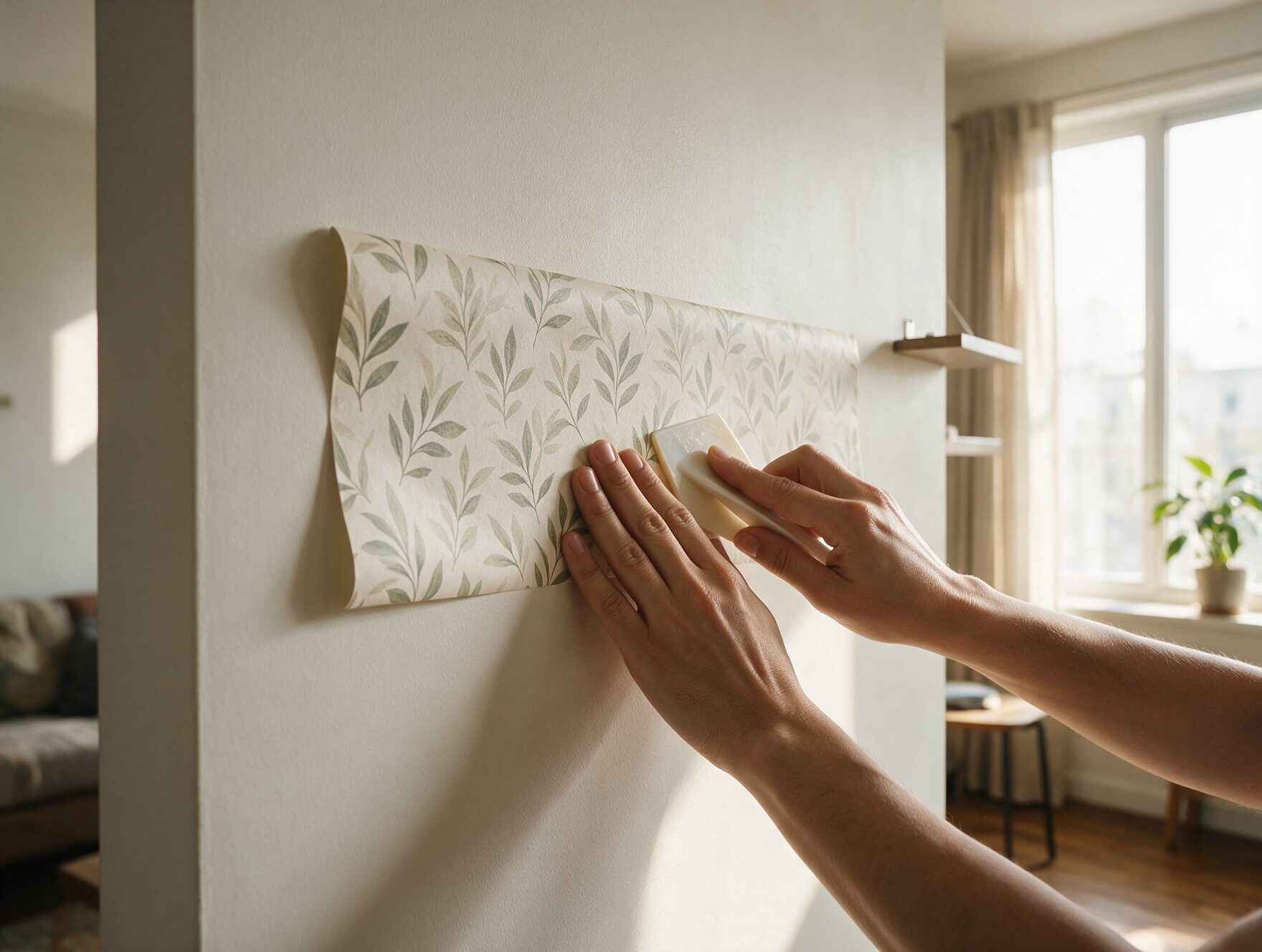
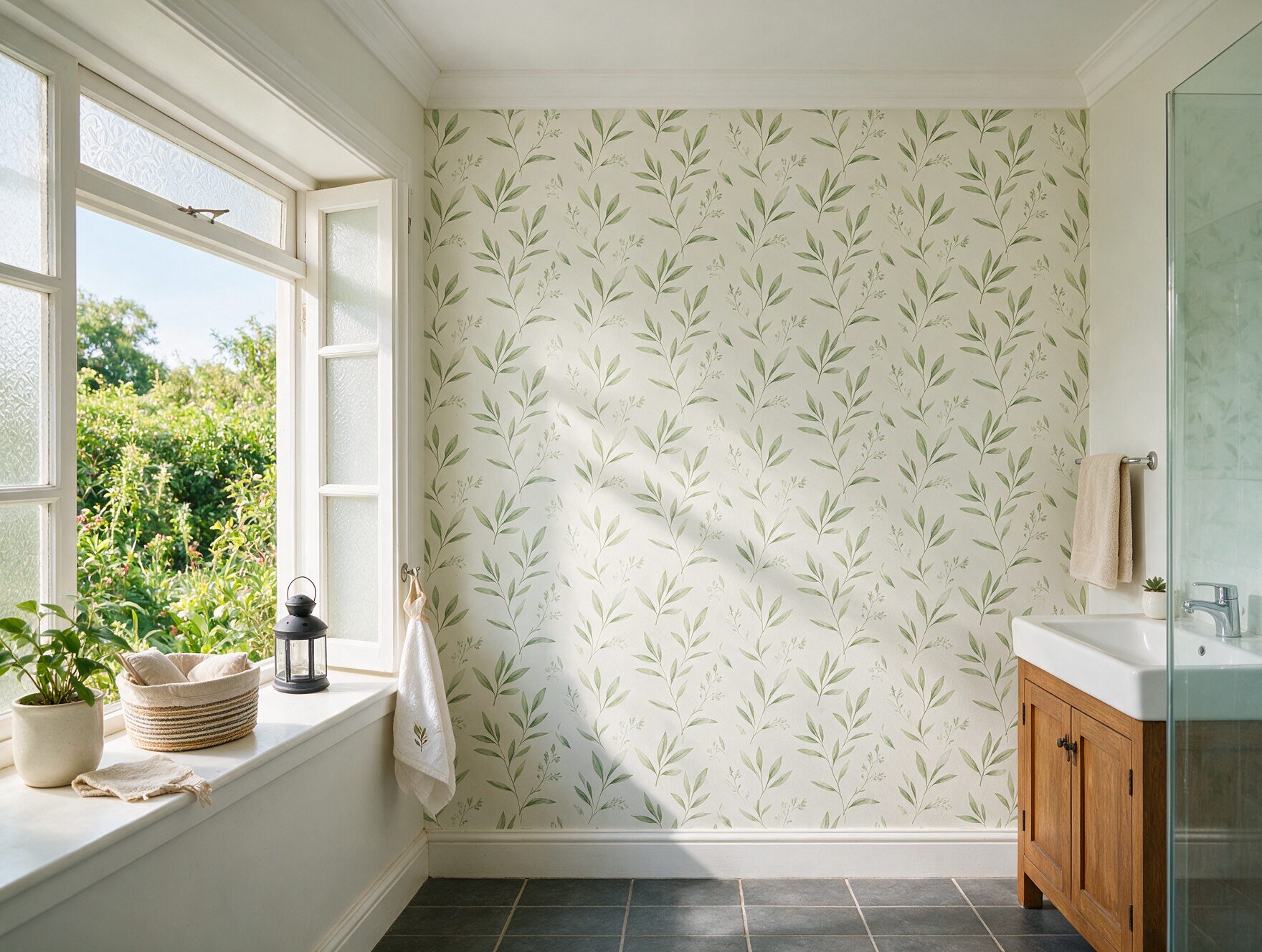
This guide uses original, AI-generated room visuals to illustrate the finished look and application steps. They are conceptual references, not photographs of a real, completed installation, and they don’t demonstrate how any specific product performs on your wall.
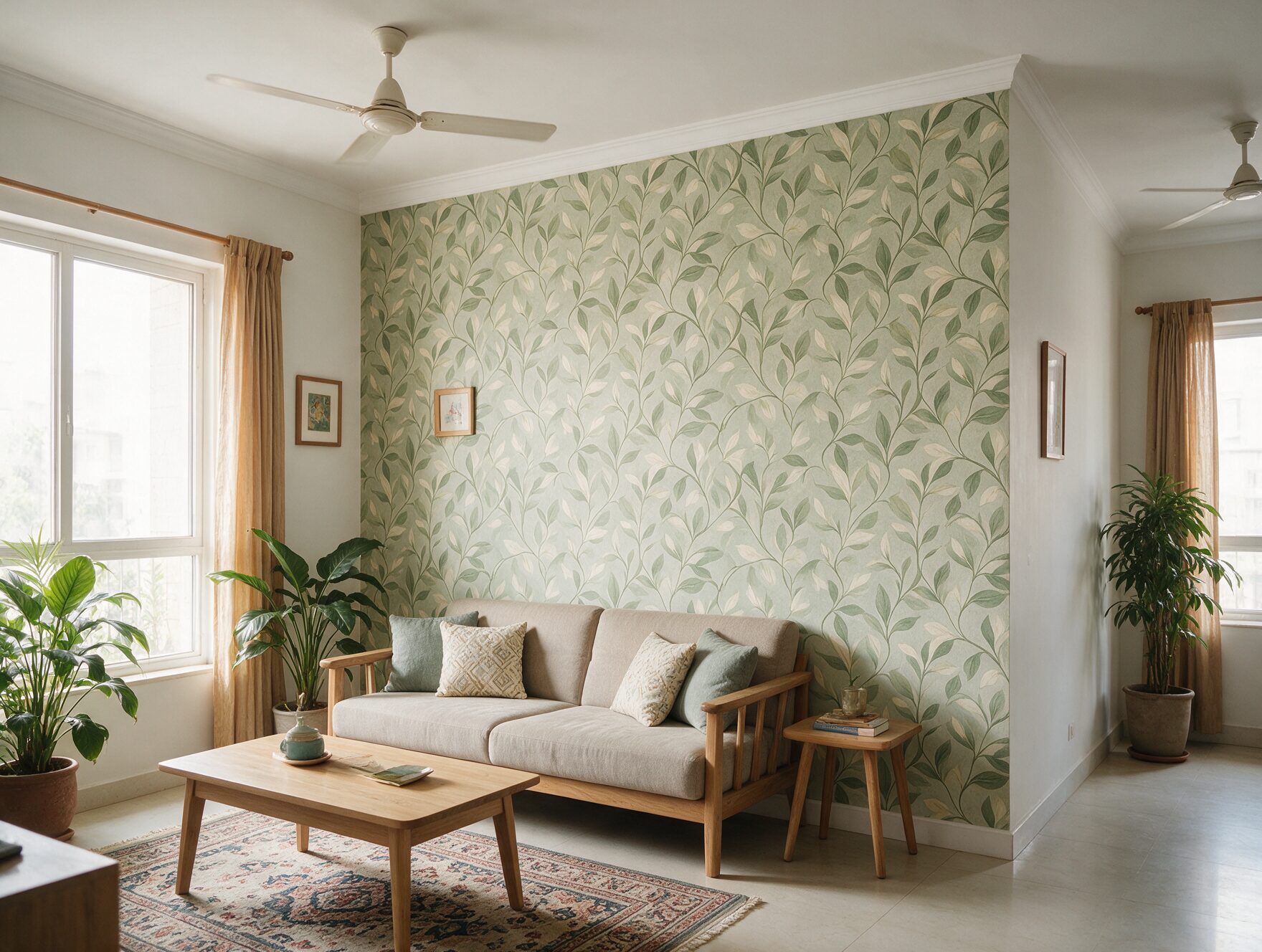
What Peel-and-Stick Wallpaper Actually Is
Peel-and-stick wallpaper has a self-adhesive backing, so the product normally doesn’t require a separate paste application the way traditional pasted wallpaper does. Surface preparation, measuring, alignment, and trimming are still necessary steps, not optional extras. It isn’t a shortcut around an unsuitable wall: visual pattern and reliable adhesion are different questions, and a busy pattern that visually disguises a rough surface doesn’t mean the adhesive is actually bonding to it properly.
Identify Your Wall’s Coating Before You Buy
Identify the existing coating on your wall if you can. Don’t apply wallpaper over loose, flaking, or powdery paint regardless of its finish; that needs attention before any wallpaper decision. A matte appearance alone doesn’t tell you whether paint is sound or deteriorating, so check the surface itself, not just how it looks.
For distemper or any coating you can’t identify with confidence, ask the wallpaper manufacturer directly whether that surface is supported and what preparation it requires; manufacturers vary in what they’ll confirm. CostaCover, one peel-and-stick brand, lists plaster, chalk, and lime-painted finishes among the surfaces its wallpaper is “NOT designed for,” alongside textured walls and walls painted with a stain-resistant or low-VOC paint, which it says the wallpaper “will not stick to” (CostaCover: wall requirements). That is one manufacturer’s stated exclusions, not a universal compatibility chart, but it illustrates how specific these requirements can get.
If your existing finish turns out to be unsuitable, repainting isn’t automatically a simple fix. Get preparation advice for your specific wall and the wallpaper you’re considering, since the existing coating may need repair work, priming, or professional preparation before a new paint layer will hold properly, and a rented home may require permission before you repaint at all. Choosing a different decorative treatment for that wall is also a legitimate option. Whichever route you take, follow both the paint’s and the wallpaper’s curing instructions rather than relying on the paint can alone: CostaCover specifies at least four weeks of drying time after fresh paint, with some paints needing up to five, and warns that applying wallpaper to paint that hasn’t cured will damage the wallpaper’s adhesive backing (CostaCover: wall requirements).
Where It Can and Can’t Go
| Location or condition | What to establish |
|---|---|
| Dry bedroom or living-room wall | Approved coating, surface condition, and preparation |
| Bathroom wall outside splash areas | Explicit product approval for the room’s conditions |
| Shower or direct-water area | Don’t assume ordinary peel-and-stick wallpaper is suitable |
| Kitchen wall | Product restrictions for heat, grease, and splashes |
| Near a stove or other heat source | Manufacturer’s location restrictions; some brands exclude this outright |
| Damp, flaking, or powdery wall | Resolve the underlying condition before considering wallpaper |
| Rented home | Permission, preparation requirements, and agreed restoration |
CostaCover’s installation guidance is explicit that its wallpaper shouldn’t be hung close to heat sources such as panel heaters, central heating, or a cooking stove (CostaCover: installation guide), which is a more specific restriction than a general “keep it away from heat” caution. Check whether the product you’re considering carries the same restriction before placing it anywhere near a kitchen stove.
Testing a Sample
A sample test is useful, but it doesn’t override a manufacturer’s stated exclusions, and it can’t confirm performance through later seasonal changes or guarantee clean removal after the wallpaper has been up for months. Test only within the conditions the manufacturer actually recommends the product for; check application, whether any edge lifts over the following days, and removal using the method and waiting period they specify. A short successful test is still useful information, just not a guarantee.
Measuring and Ordering
First establish whether the product you’re buying is sold as fixed-size panels, a continuous roll, or a custom-sized mural, since the calculation differs for each. Record your wall’s width and height, then check the manufacturer’s usable coverage width, pattern-matching requirements, and trimming allowance rather than estimating from the wall size alone.
For a simple fixed-panel product: panel count depends on the wall’s width divided by the panel’s effective coverage width after any required overlap, not its full printed width. Panel length needs to cover your wall’s height plus a trimming allowance at the top and bottom. If the pattern needs to align across panels, check whether that changes how much you need to buy, since pattern-matching can mean more waste than a plain design. For a roll product, you additionally need to know how many usable drops the manufacturer’s own guidance says you can get from each roll, since this varies by pattern repeat and your wall height.
Don’t simply subtract a door or window’s area from your total and assume that gives you an accurate figure; openings affect how you lay out the cutting plan, and subtracting their area alone can underestimate what you actually need once pattern matching and trimming are factored in. Check the product’s own layout guidance or a supplier’s quantity calculator rather than estimating this yourself.
| Information to record | Your measurement or answer |
|---|---|
| Maximum wall width and height | |
| Product format: roll, panel, or mural | |
| Roll or panel dimensions | |
| Effective width after required overlap | |
| Pattern repeat and matching method | |
| Trimming allowance | |
| Door and window positions | |
| Quantity calculated using the product’s own guidance | |
| Batch or colour-matching information | |
| Spare material and return policy |
Step-by-Step Application
- Clean the wall and let it dry completely; confirm it meets the product’s stated surface requirements before you start.
- Mark a true vertical reference line using a level or a suitable plumb guide. Position your first panel against that line rather than assuming a corner or the ceiling is actually vertical, since neither reliably is.
- Before applying anything, check the panel’s colour, pattern, and sequence if the product uses numbered panels, and confirm any visible defects now rather than after installation.
- Starting at the top of your marked line, peel back a section of the liner and press the panel to the wall, working down and smoothing from the centre outward.
- Align the next panel’s edge to the previous one according to the product’s own overlap or butt-joint instructions, matching the pattern as specified.
- Follow the selected product’s own instructions for handling bubbles, repositioning a panel, and trimming excess material. Don’t puncture, apply heat, or use a cleaning product on the wallpaper unless the manufacturer specifically permits that method for your wallpaper and surface.
Humidity and Room Suitability
Bathroom and kitchen suitability depends on the complete wallpaper product, its adhesive, the specific wall, and the room’s conditions, not on humidity alone. Ventilation doesn’t make an otherwise unsuitable product suitable for a damp room. CostaCover’s own wall-requirements guidance, separate from its more general buying advice, says that high humidity can be a reason wallpaper falls off a wall, and that temperature changes can cause peeling or bubbling (CostaCover: wall requirements); check your product’s specific humidity and splash restrictions rather than assuming a pressure-sensitive adhesive is inherently humidity-resistant. Don’t add sealant, extra adhesive, or tape to the edges unless the manufacturer approves it for your exact product and surface, and ask how doing so affects removal and the wall’s condition afterward if you do. A wall with an existing damp patch or recurring condensation needs that problem resolved before you consider covering it with any wallpaper.
Removal: Reducing the Risk of Paint Damage
Peel-and-stick wallpaper can damage paint or leave residue even when it’s marketed as removable; the actual outcome depends on the wallpaper, the paint’s condition, how the surface was prepared, how long the wallpaper was installed, and the removal method used. Follow your specific product’s own removal instructions, and test removal on your sample before committing to a full wall. CostaCover’s detailed wall-requirements page is direct about this limitation: it states it cannot guarantee its wallpaper will be 100% compatible with every wall, and that removability also depends on the mounting surface, since paper-based, painted, and composite materials may not allow for complete removal without some damage (CostaCover: wall requirements).
Renting? Check Your Agreement First
Even a removable product can affect your security deposit if it damages the paint underneath or the wall isn’t returned to its agreed condition. Our guide to rental home decor covers checking your agreement, photographing existing condition, and what “removable” products still require before installation.
What to Check Before You Buy
| Check | Why it matters |
|---|---|
| Wall coating identified, with no loose, flaking, or powdery paint | Wallpaper shouldn’t be applied over deteriorating paint regardless of its finish |
| Manufacturer’s stated approved surfaces for your exact product | Exclusions vary significantly between brands and products |
| Paint and wallpaper curing times both followed | Uncured paint is a stated cause of adhesive failure for some brands |
| Sample tested within the manufacturer’s recommended conditions | A test outside those conditions doesn’t tell you much |
| Room humidity, heat sources, and splash exposure | Some products explicitly exclude locations near heat or water |
| Rental agreement, if applicable | A removable product can still cause damage that affects your deposit |
| Quantity calculated from the product’s own format and coverage guidance | A generic panel-count estimate can leave you short or with unusable spares |
Frequently Asked Questions
Will peel-and-stick wallpaper stick to distemper paint?
Don’t assume compatibility. Identify the coating and check the specific wallpaper manufacturer’s requirements; loose, flaking, or powdery surfaces need attention before installation regardless of the paint type.
Can I use it on textured walls?
Only where the specific product you’re buying supports the actual texture on your wall. A sample test can help you assess performance, but it doesn’t override the manufacturer’s stated restrictions.
Is it suitable for a bathroom or kitchen?
Check the exact product’s humidity, splash, and heat restrictions rather than assuming good ventilation settles the question. Some manufacturers specifically exclude placement near a stove or other heat source, and wallpaper shouldn’t be used to cover an unresolved damp problem.
How much wallpaper should I order?
Calculate from the product’s format, usable coverage width, required drop length, pattern matching, and trimming allowances, using the manufacturer’s own measuring guidance rather than adding a fixed number of spare panels to a rough estimate.
Can wallpaper damage paint when removed?
Yes, it can. Removal depends on the specific product, your wall’s condition, how long it was installed, and the removal method; “removable” is a description of the product category, not a guarantee against paint damage or residue.
Can I use peel-and-stick wallpaper in a rental?
It can be an option, but check your rental agreement’s permission and restoration requirements first, then confirm the specific product and your wall’s compatibility, including what preparation and eventual removal work would involve.
Sources & Notes
Surface and paint-finish guidance references Tempaper’s guidance on choosing the best surface for peel-and-stick wallpaper. Wall-suitability, curing, humidity, and removal guidance references CostaCover’s wall requirements page and CostaCover’s installation guide; note that CostaCover’s own general buying-questions content is less restrictive in places than its dedicated wall-requirements page, so this guide follows the more specific, more cautious source where the two differ. General application background also references CostaCover’s peel-and-stick wallpaper questions answered. These are manufacturer and retailer sources illustrating how specific real product requirements get, not a universal standard every brand follows; check the exact product you’re buying. Images in this guide are AI-generated design concepts, not photographs of a real, completed installation or evidence of any product’s performance.