
Quick answer: Start with changes that use what the home already provides: rearrange furniture, coordinate cushion covers and bedding, use existing curtain fittings, and add suitable plug-in lighting. For adhesive decor, tension rods, or furniture that needs anchoring, check the product instructions, the surface, and your rental agreement before installing anything. No-drill does not automatically mean damage-free.
This guide uses original, AI-generated room visuals to illustrate decor concepts. They are conceptual references, not photographs of any real, installed setup. This is general practical guidance, not legal advice; rental terms vary by agreement and location.
Check Your Agreement Before Buying Anything
Before any purchase, read your rental agreement for specific restrictions on drilling, painting, or other alterations, and check what happens to your security deposit if the property isn’t returned in its original condition. Some agreements specify exactly what’s allowed; others are vague, in which case it’s worth asking your landlord directly rather than assuming. Photograph the property’s condition when you move in, including walls, fixtures, and anything already damaged, so you have a dated record to compare against when you move out.
Decorating Changes to Consider
A rental doesn’t have to stay bare while you wait for permission to drill. These changes work with what the home already has, or add something new without altering the property itself:
| Change | How it improves the room | What to check |
|---|---|---|
| Coordinated cushion covers and throws | Introduces a consistent colour palette | Sizes, cleaning, and suitability for existing upholstery |
| New bedding | Changes the bedroom’s main visual feature | Mattress dimensions and care requirements |
| Curtains on existing fittings | Adds colour, privacy, or light control | Rod condition, curtain weight, and window operation |
| Table or floor lamp | Adds lighting where an existing socket is available | Stable placement and cable route |
| Tabletop artwork or photographs | Personalizes shelves and consoles | Stable supports and room for everyday use |
| Furniture rearrangement | Improves circulation or creates a reading corner | Door swings, walkways, and furniture stability |
| A suitable rug | Defines a seating area | Door clearance and resistance to slipping |
| Removable wall decor | Adds pattern or a focal point | Surface compatibility, permission, and removal instructions |
Removable Wall Decor
Peel-and-stick wallpaper and removable adhesive hooks both avoid permanent fixing, but they aren’t the same product with the same checks, so treat them separately.
For wallpaper, check the approved wall finish, paint condition, curing requirements, preparation, and removal method; don’t assume a product described as removable will suit a textured, damaged, or recently painted wall. WallPops’ own guidance says its products “work best on smooth, flat surfaces” but “can still be successfully installed on textured walls if they are not excessively porous or uneven,” and that after a fresh coat of paint, you should wait three to four weeks before applying a wall decal, or thirty to sixty days specifically before applying peel-and-stick wallpaper (WallPops: frequently asked questions). Treat this as one manufacturer’s guidance, not a standard every wallpaper brand follows; check the specific product you’re buying.
For hooks and hanging strips, check the complete item’s weight limit, approved surface, application method, and waiting period before adding weight, and follow the instructions for that specific product when removing it. Command’s guidance notes that its strips aren’t recommended for heavily textured surfaces, that painted walls need at least seven days of cure time, and that many of its products need at least an hour’s wait after application before anything is hung (Command Brand: product FAQs). A hook rated for a dry living-room wall won’t necessarily perform the same way in a humid bathroom or a kitchen exposed to heat and grease.

Lighting Without Rewiring
Plug-in floor and table lamps, battery-powered LED strips, and clip-on reading lights all add lighting without touching the property’s wiring or fixtures. Place them securely and route cables away from walking paths. Changing an existing light fitting is a separate task from adding plug-in lighting: check with your landlord first, obtain any permission the agreement requires, and use a qualified electrician for the work itself.
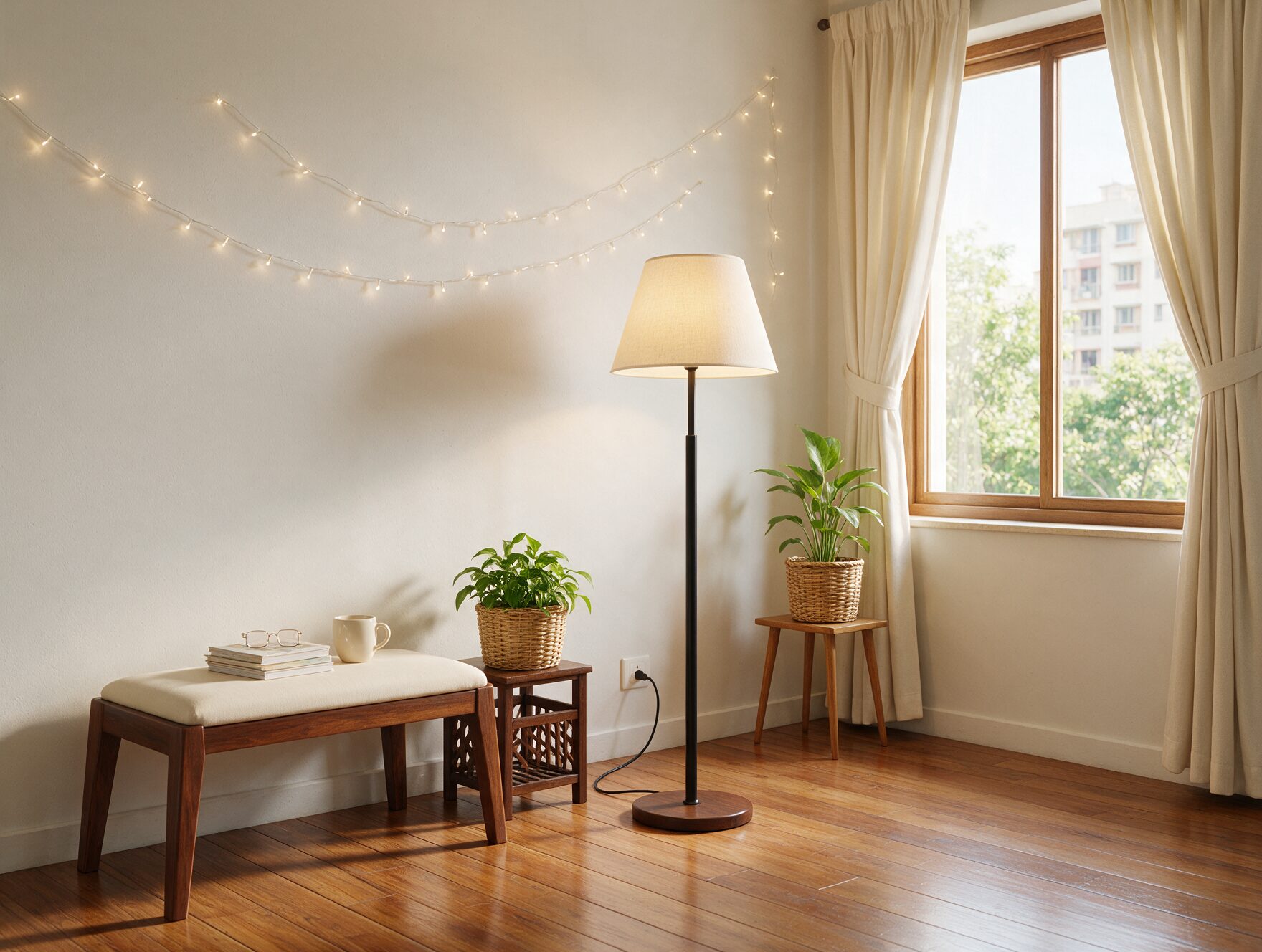
Freestanding Storage and Furniture
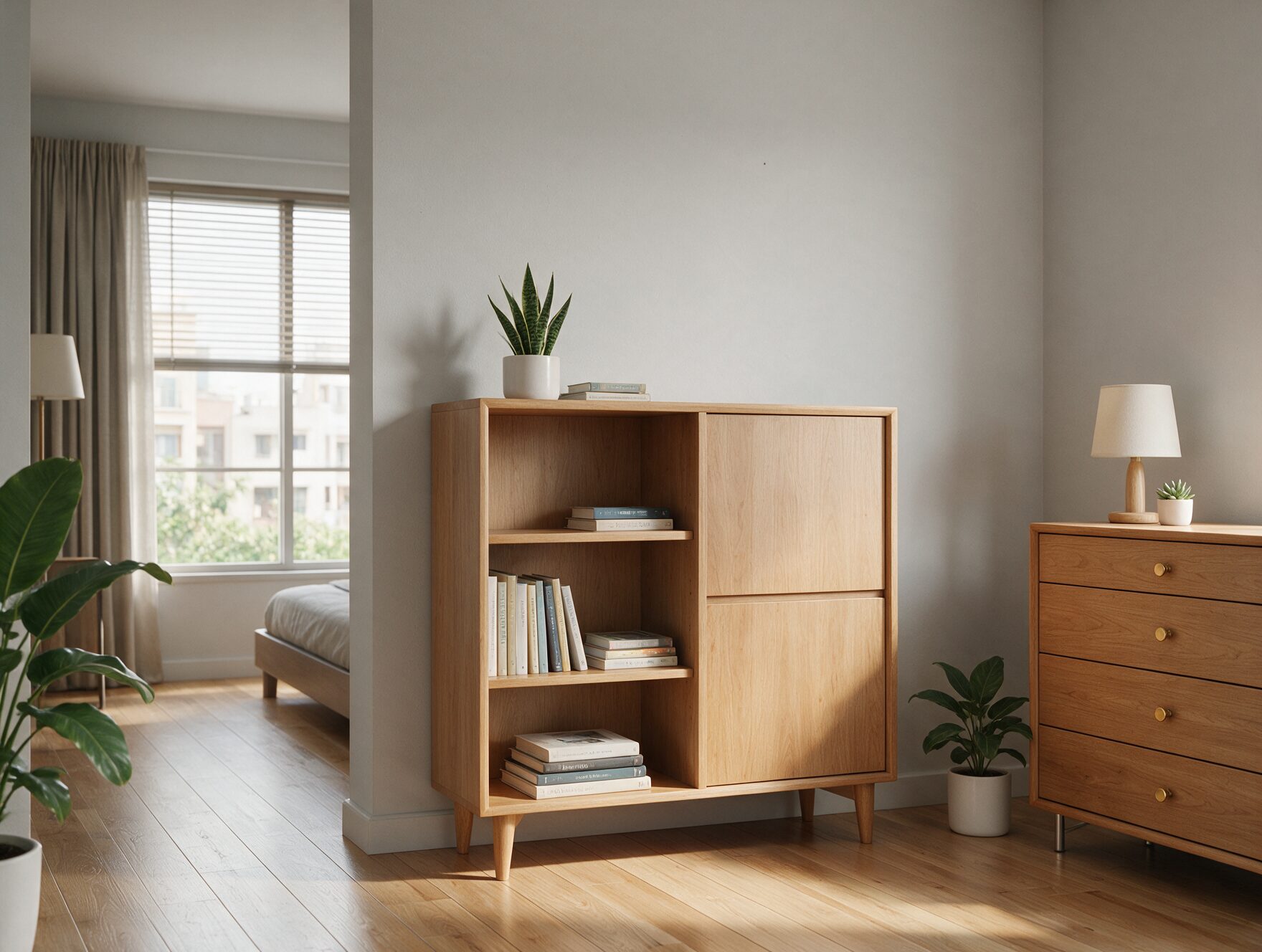
Freestanding furniture can be moved between homes, but some pieces still require wall anchoring. Check the assembly instructions before treating a cabinet, shelving unit, or chest of drawers as a no-drill option. IKEA’s furniture-safety guidance explains that chests of drawers and similar furniture can tip over if drawers are opened or climbed on, and requires anchoring according to its own product instructions (IKEA: creating safer homes together). If required anchoring isn’t permitted in your rental, choose a different product rather than leaving the restraint unused. If you’re planning storage for a specific room, our guides to small bedroom storage and small kitchen storage cover no-drill and lightly fitted options in more depth, and our small living room guide covers freestanding seating and storage arrangements.
Curtains and Window Treatments
Using the existing curtain fittings is usually the most relevant option in a rental, and it’s worth checking before buying anything new: a fresh set of curtains or a different fabric on the rod you already have can change a room without any installation decision at all. If you want a different look, a suitable tension rod may support curtains inside a compatible window recess without drilling; check the opening dimensions, the contact surfaces, the curtain weight, and the rod’s own installation instructions, and confirm it doesn’t obstruct opening the window. A wider or higher-mounted rod for a different look typically needs wall fixing. Check our curtain colour combinations guide for rod placement and fabric considerations once you’ve decided which approach suits your rental.
Changes to Check in Your Agreement
Check how your agreement addresses drilling, painting, adhesive coverings, and changes to supplied fittings. Where permission is needed or the wording is unclear, describe the proposed change to your landlord and agree on the installation and restoration arrangements in writing before you proceed.
Being Realistic About Restoration
Any change you make, even a removable one, may need some restoration before you move out. What that looks like depends on what you changed: an adhesive product can leave residue or affect the paint underneath, a drilled fitting leaves a hole that needs filling, and a replaced fixture needs reinstating to its original condition if you agreed to put it back. Factor this into your decision rather than assuming removable automatically means no work at the end of the tenancy. Keep the original fixtures and hardware you remove, such as an old light fitting or a curtain rod, somewhere safe rather than discarding them, so you can put them back.
What to Check Before Making Any Change
| Check | Why it matters |
|---|---|
| Your rental agreement’s specific wording on alterations | Avoids disputes over what was actually permitted |
| Photographic record of the property’s original condition | Creates a dated record of existing condition for comparison at move-out |
| Product instructions for surface compatibility and weight limits | “Removable” products still vary by surface and load |
| Whether furniture requires anchoring, and whether that’s permitted | Some freestanding pieces still need to be secured to the wall |
| Whether you’re keeping removed original fixtures | Needed to restore the property before moving out |
| Landlord communication for anything ambiguous | Cheaper to agree in writing first than to dispute later |
Related Guides
Frequently Asked Questions
How can I decorate a rental without drilling?
Start with textiles, tabletop decor, portable lamps, and existing curtain fittings. Adhesive products and tension rods still need checks for their specific surface, dimensions, and load before you install them.
Are removable hooks and wallpaper damage-free?
Not on every surface. Check the product’s approved finishes, preparation, application, and removal instructions. Weak paint or an unsuitable surface can still be damaged even with a product described as removable.
Does freestanding furniture need wall anchoring?
Some does. Follow the manufacturer’s instructions even though the furniture itself is movable. If required anchoring isn’t permitted in your rental, choose a different product rather than leaving it unsecured.
Can I change the lighting without rewiring?
Suitable plug-in or battery-powered lighting can avoid changes to fixed wiring. Position lamps securely and keep cables out of walking routes. Treat replacement of a fixed light fitting as a separate task that needs landlord permission and a qualified electrician.
What should I record before decorating a rental?
Photograph existing walls and fixtures, keep any relevant permission messages from your landlord, and store original hardware or fittings you agreed to reinstall somewhere safe.
Will I need to restore the room before moving out?
Check the agreed requirements for each alteration. Removable decor can still leave marks or residue, and a replaced fixture may need to be reinstated to its original condition.
Sources & Notes
This guide reflects general, practical rental-decor considerations and isn’t legal advice; specific rights and restrictions depend on your agreement and local law. Adhesive product guidance references Command Brand’s product FAQs. Removable wallpaper guidance references WallPops’ frequently asked questions, one manufacturer’s example rather than a standard for every brand. Furniture-anchoring guidance references IKEA’s furniture-safety guidance. Images in this guide are AI-generated design concepts, not photographs of a real, completed setup.