
Quick answer: Small bedroom storage works best when organized by location, under-bed, wall, and furniture, matched to what you’re actually storing and how often you need it. Start by identifying what’s actually hard to store (clothes, bedding, luggage, everyday items), then compare specific options against your own measurements rather than buying generic organizers.
This guide uses original, AI-generated room visuals to illustrate storage concepts. They are conceptual references, not photographs of any real, installed room, a tested fit for your space, or a verified installation.
Start With What You’re Storing, Not a Product List
Generic “bedroom storage ideas” lists often start with products rather than needs. A more useful starting point is listing what actually needs storing in the room: everyday clothes, occasional-use clothing, bedding and linens, luggage, and anything else that currently has no fixed place. Measure or estimate the volume of each category before deciding what kind of storage solves it, since under-bed storage solves a different problem than a tall narrow cabinet does.
What Needs a Home: Options to Assess
| What needs a home | Option to assess | Trade-off to check |
|---|---|---|
| Spare bedding | Under-bed container or existing wardrobe shelf | Container size and retrieval |
| Daily bedside items | Bedside drawer or shallow shelf | Reach, projection, and access to sockets |
| Suitcases | Existing cupboard space or suitable under-bed clearance | Handles, wheels, and lifting |
| Occasional lightweight belongings | Higher shelf or cupboard | Safe access and mounting requirements |
| Seating plus storage | Purpose-designed storage bench or ottoman | Seat rating, opening space, and remaining walkway |
| Clothes awaiting washing | A dedicated basket in an existing usable gap | Ventilation, cleaning, and obstruction |
These are options to assess against your own room, not a claim that every small bedroom needs all six.
Under-Bed Storage
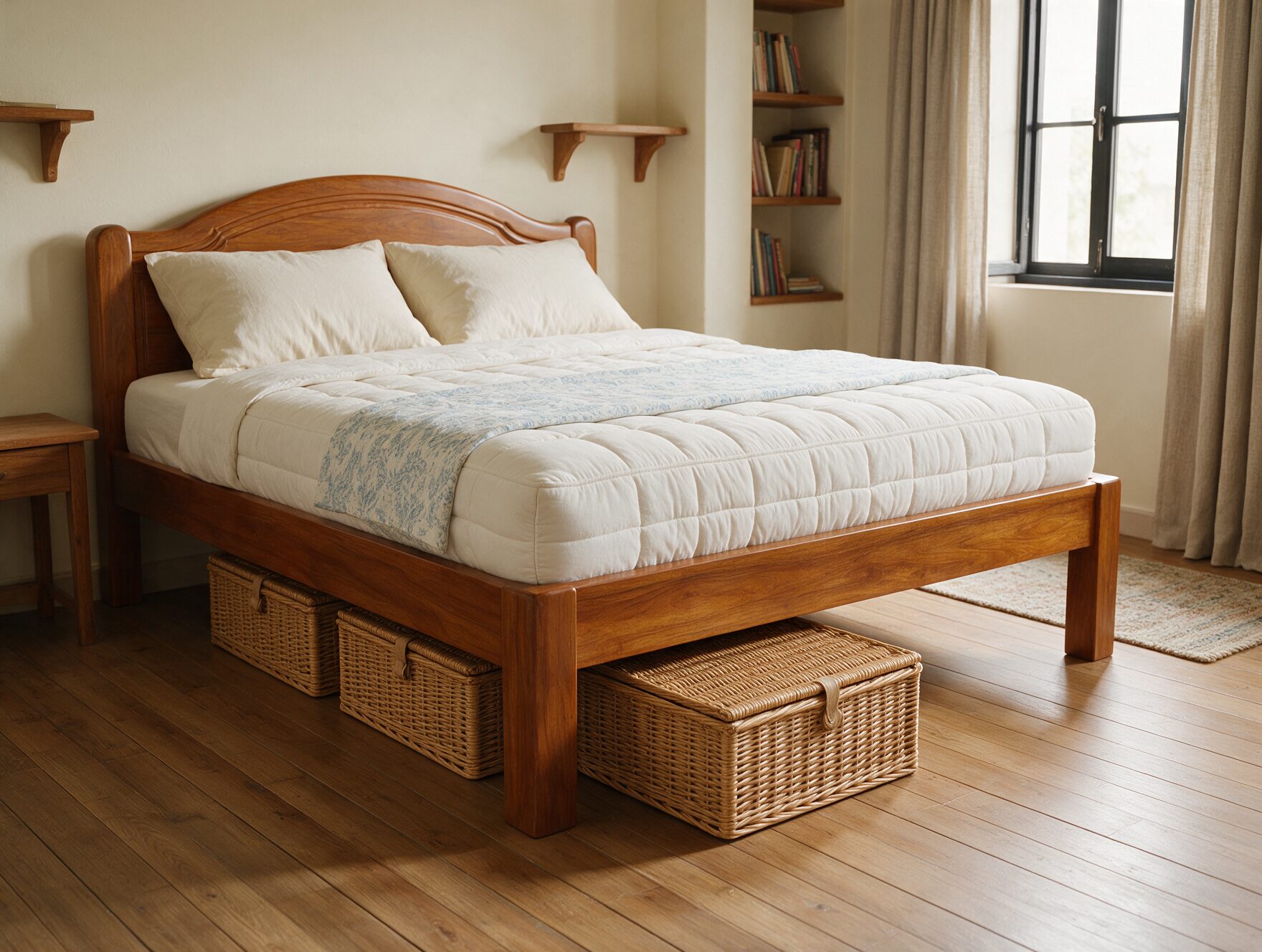
The space under a bed is often unused, particularly with a bed frame that has clearance beneath it. Different under-bed systems suit different access needs:
| Storage arrangement | Main measurement or check |
|---|---|
| Loose containers | Container’s external dimensions, clearance beneath the frame, and obstructions from support legs |
| Built-in drawers | Drawer opening distance and interference from bedside furniture |
| Lift-up storage bed | Manufacturer’s opening-space, mattress, and mechanism requirements |
| Luggage beneath an existing bed | Actual suitcase dimensions, handles or wheels, and ability to retrieve it |
Match access frequency to the mechanism: an easy-opening drawer may suit daily use, while a deep container behind another box is better reserved for occasional access. Check the actual clearance height under your bed frame before buying storage boxes, since this varies a lot between bed designs, and confirm the boxes can be pulled out fully without hitting other furniture.
Using Wall Height
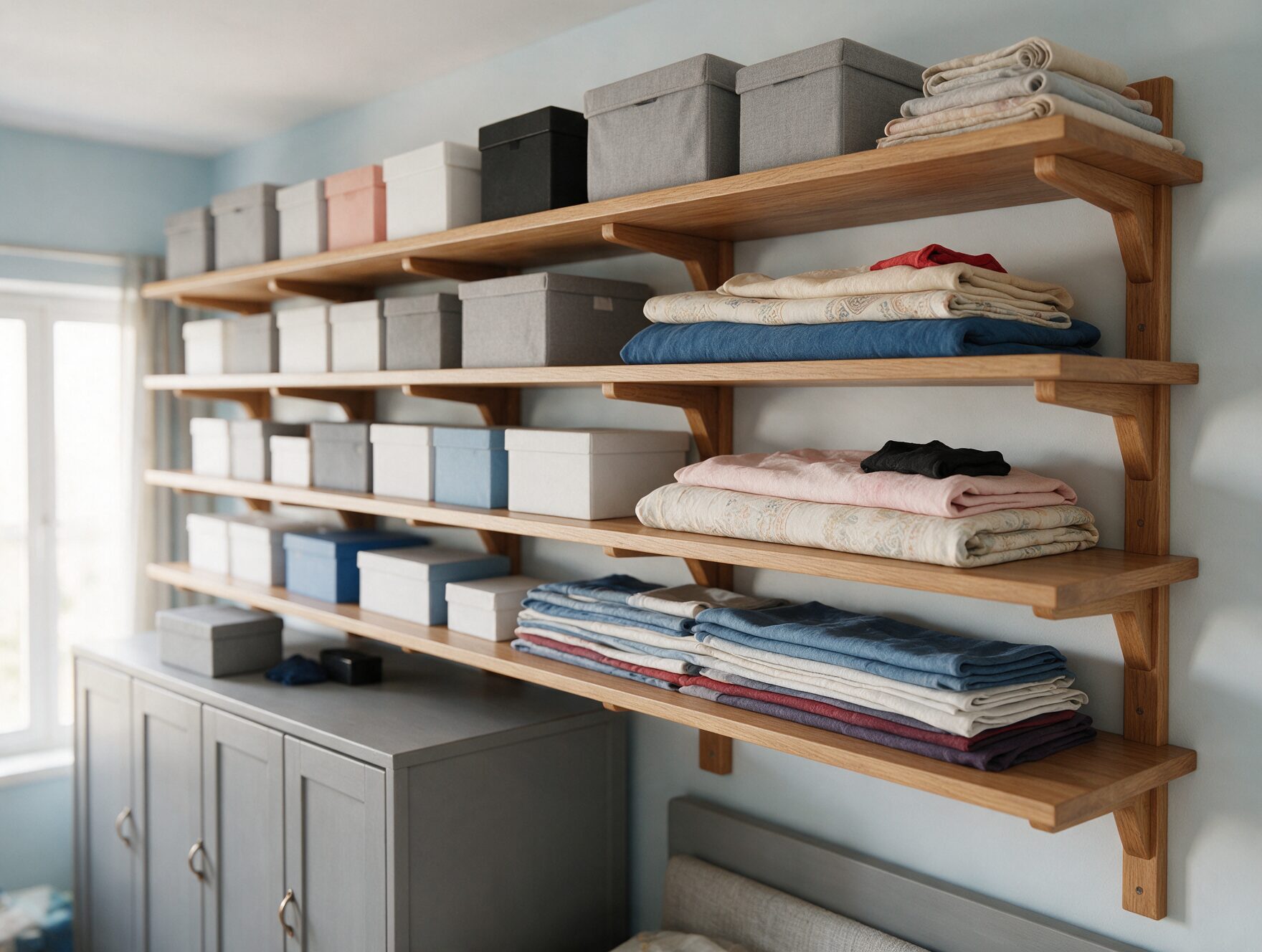
Using wall height can add storage without introducing another floor-standing unit, but shelf depth, head clearance, and access still matter. A tall freestanding cabinet has its own footprint regardless of how it’s arranged. Check how each option affects movement, nearby doors, and the furniture below it before assuming any particular arrangement saves space. Check what you’re planning to store up high: frequently used items belong within easy reach, while off-season or rarely used items suit a higher shelf that needs a step stool to access.
Multi-Function Furniture
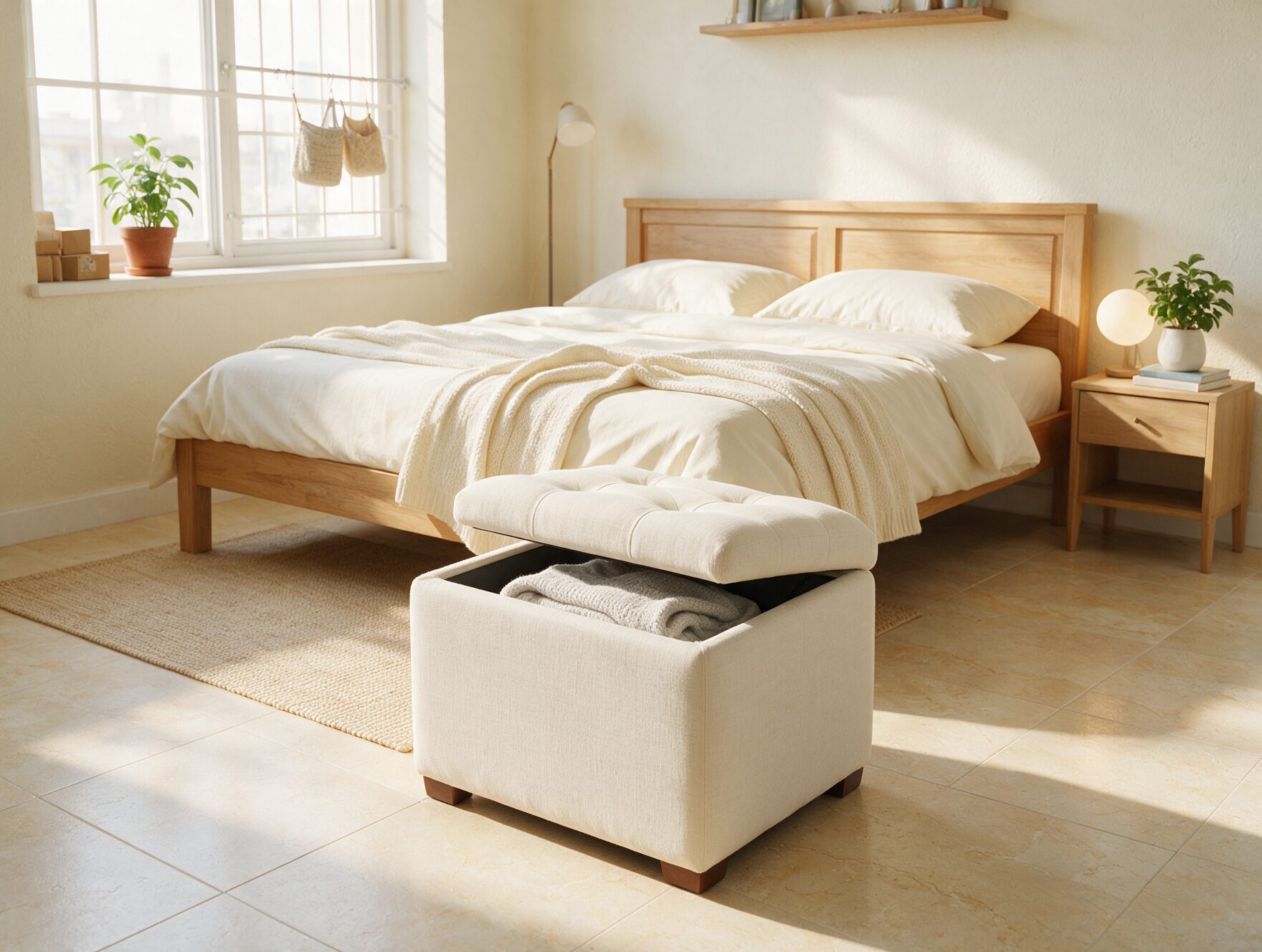
A storage ottoman, a bed with built-in drawers, or a bench with a lift-up seat each combine an everyday function with storage. A storage bench or ottoman is most useful when it replaces seating you already need; adding one solely for storage can reduce the usable space in an already crowded bedroom. Check that the specific product is actually designed for the dual use you want, such as a bench rated to be sat on regularly, not just a decorative box, and allow space to open lids or drawers in their actual position.
Organizing Inside the Wardrobe First
Check the existing wardrobe first. Reorganizing it may reveal unused capacity and help you decide whether additional storage furniture is actually necessary. Our guide to wardrobe designs for small bedrooms covers interior organization, door-type trade-offs, and measuring your largest stored items against shelf and rail dimensions in more depth; this article focuses on choosing storage locations across the rest of the bedroom, not wardrobe configuration itself.
Installation and Anchoring
Follow the manufacturer’s load limits and installation instructions for the complete storage system, including shelves, brackets, and fixings. Secure freestanding furniture where its own instructions require anchoring, not just wall-mounted pieces. Store heavier belongings lower down, and don’t climb on beds, chairs, or drawers to reach high storage. IKEA’s furniture-safety guidance explains that climbing, opening drawers, and placing heavy objects on top can all contribute to tip-over risk, and its instructions require securing chests of drawers and similar furniture to the wall (IKEA: creating safer homes together); treat this as manufacturer safety guidance illustrating the general principle, not a universal specification for every product.
In a rented home, check permission before drilling. If a product’s instructions require anchoring and you can’t install it correctly in your specific home, choose a different storage arrangement rather than leaving it unsecured.
Indian Apartments: Practical Context
Plan for your household’s actual mix of bedding, seasonal clothing, luggage, and shared storage, rather than assuming a generic layout fits your situation. In a rented home, check installation permissions before any drilling-based option. Where a room has damp patches or condensation, investigate the moisture problem itself before placing stored textiles against the affected surface; a storage container alone doesn’t resolve an underlying damp issue.
What to Measure Before Choosing
| Check | Why it matters |
|---|---|
| What you’re actually storing, by category and rough volume | Determines which storage type actually solves the problem |
| External versus internal dimensions | A unit may fit the room while its usable compartment doesn’t fit your belongings |
| Under-bed clearance height, bed legs, and crossbars | Clear height alone doesn’t establish usable under-bed space |
| Drawers, lids, and doors fully open | Closed dimensions don’t show what access actually requires |
| Walking route with storage in use | Retrieval shouldn’t require repeatedly moving essential furniture |
| Reach and lifting needs | High or low storage may be inconvenient for the person actually using it |
| Cleaning access | Containers and units shouldn’t prevent routine cleaning |
| Delivery and assembly access | Check doorways and the space needed to assemble the chosen unit |
Frequently Asked Questions
What storage works best in a small bedroom?
Choose according to what you store, how often you need it, and the space available for access. Under-bed containers, wall storage, and furniture with built-in storage have different clearance and installation requirements.
What should I measure before buying under-bed storage?
Measure the available height, width, and depth, including obstructions from bed legs or supports. Check the container’s external dimensions and the space needed to withdraw it.
Does vertical storage save floor space?
Wall-mounted storage can avoid adding another floor-standing unit, but it still projects into the room. Tall freestanding storage occupies floor area. Check depth, head clearance, access, and anchoring requirements.
What should I check before buying a storage bench or ottoman?
Confirm that it’s designed for seating if you intend to sit on it. Check its load limits, opening mechanism, and the space left for walking when positioned in the room.
Should I organize my wardrobe before adding furniture?
Yes, assess its existing capacity first. Reorganizing belongings may reveal unused space and clarify what additional storage, if any, is needed.
Can I add storage without drilling in a rented bedroom?
Loose under-bed containers and reorganizing existing storage may avoid drilling. Don’t omit required anchoring from furniture simply because the home is rented; check permission or choose a different arrangement.
Planning Notes and Safety References
Installation and anchoring guidance references IKEA’s furniture-safety guidance, which recommends anchoring chests of drawers and similar tall furniture to the wall; this illustrates the general principle, and product-specific assembly instructions and load limits govern the actual installation for whichever unit you choose. The layouts in this guide are illustrative, not measured or tested installations. Images in this guide are AI-generated design concepts, not photographs of a real, completed room; confirm dimensions, clearances, and wall construction for your own space before purchasing or installing storage.