
Quick answer: Small kitchen storage works best when organized by location, drawers, cabinets, counters, walls and under the sink, rather than bought as a random set of products. Start by identifying what’s actually hard to store (spices, pots and pans, dry goods, cleaning supplies), then match each category to a storage type and check what its installation actually requires before buying it.
This guide uses original, AI-generated room visuals to illustrate storage concepts. They are conceptual references, not photographs of any real, installed kitchen or a tested fit for your space.
Start With What’s Actually Hard to Store
Generic kitchen organizing lists often start with products rather than problems. A more useful starting point is identifying which categories are genuinely hard to store in your specific kitchen: spices that end up in a jumbled pile, pots and pans that don’t stack well, dry goods bought in bulk, or cleaning supplies competing for under-sink space. Match the storage type to the actual problem rather than buying organizers that look appealing but don’t solve what’s cluttering your counter.
Loose Organizers Versus Installed Fittings
“Without a full renovation” doesn’t mean every option here avoids drilling or screws entirely; it means avoiding structural changes. Some of the choices below sit loose inside existing storage, and some are small fitted additions. Knowing which is which before you buy avoids assuming a product is removable when it isn’t.
| Option | Installation distinction |
|---|---|
| Loose drawer divider | Usually sits inside an existing drawer, no fixing |
| Freestanding tray organizer | Stands within a cabinet; check stability and fit |
| Shelf insert | Check shelf dimensions and load limits |
| Clip-on under-shelf basket | Check shelf thickness, door clearance and supported load |
| Pull-out mechanism | May require screws, runners and cabinet modification |
| Wall rail or shelf | Requires the specified mounting system for your wall |
| Trolley | Needs usable floor space and product-specific stability checks |
Inside Drawers
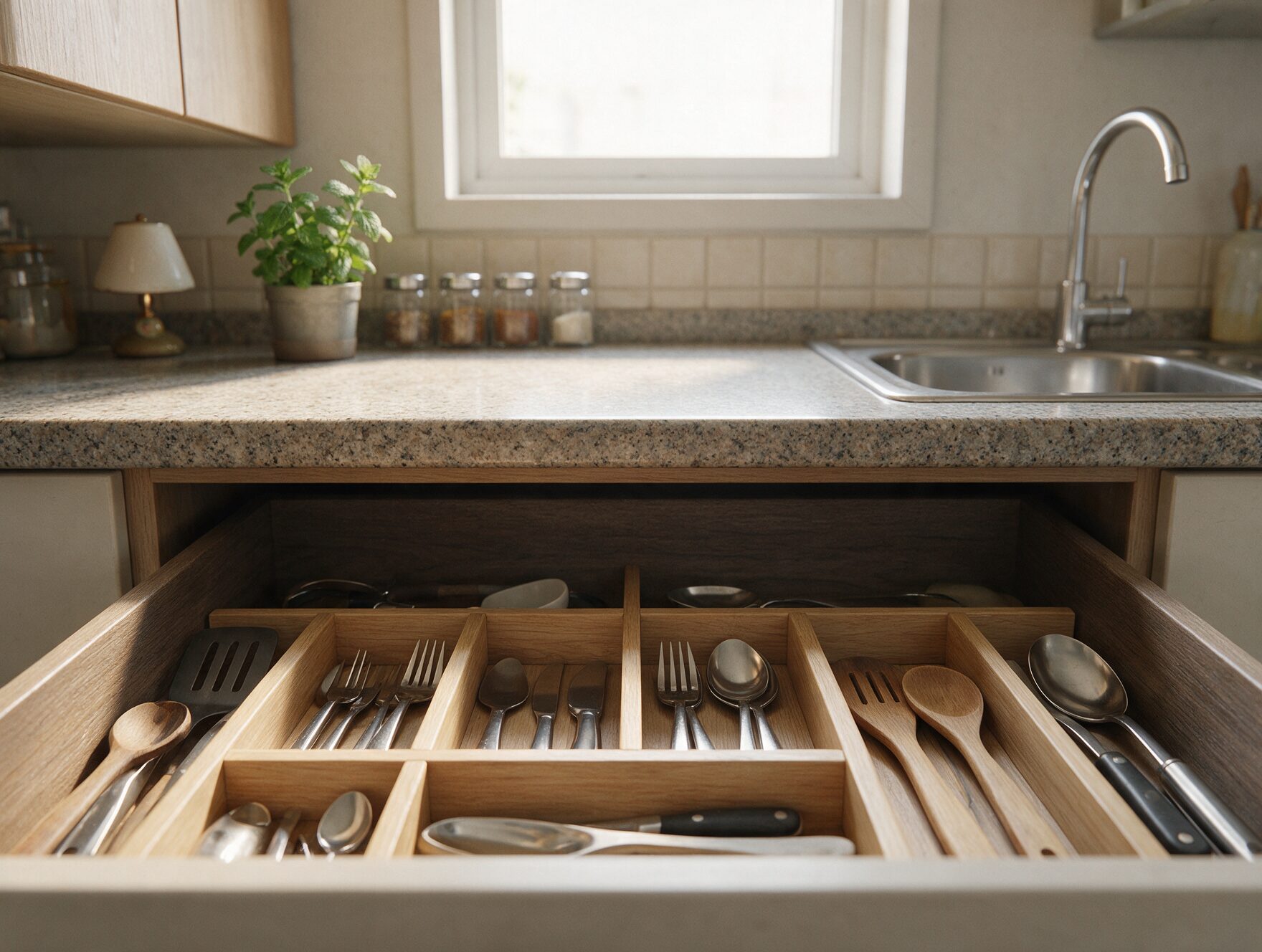
Drawer dividers and expandable organizers keep utensils, small tools, and loose items from becoming a jumbled mess, and adjustable versions fit a range of drawer widths without custom cutting. Deep drawers suit stacked plates or pot lids better than shallow ones. Before buying a specific organizer, measure:
- Internal width and front-to-back depth of the drawer, not the outer cabinet dimensions.
- Usable internal height, especially under any existing runners or stops.
- Clearance needed to fully extend the drawer once the organizer is inside it.
- The organizer’s own usable compartments, not just its external footprint; a divider can fit the drawer while still leaving awkward gaps for your actual utensils.
Inside Cabinets and Shelves
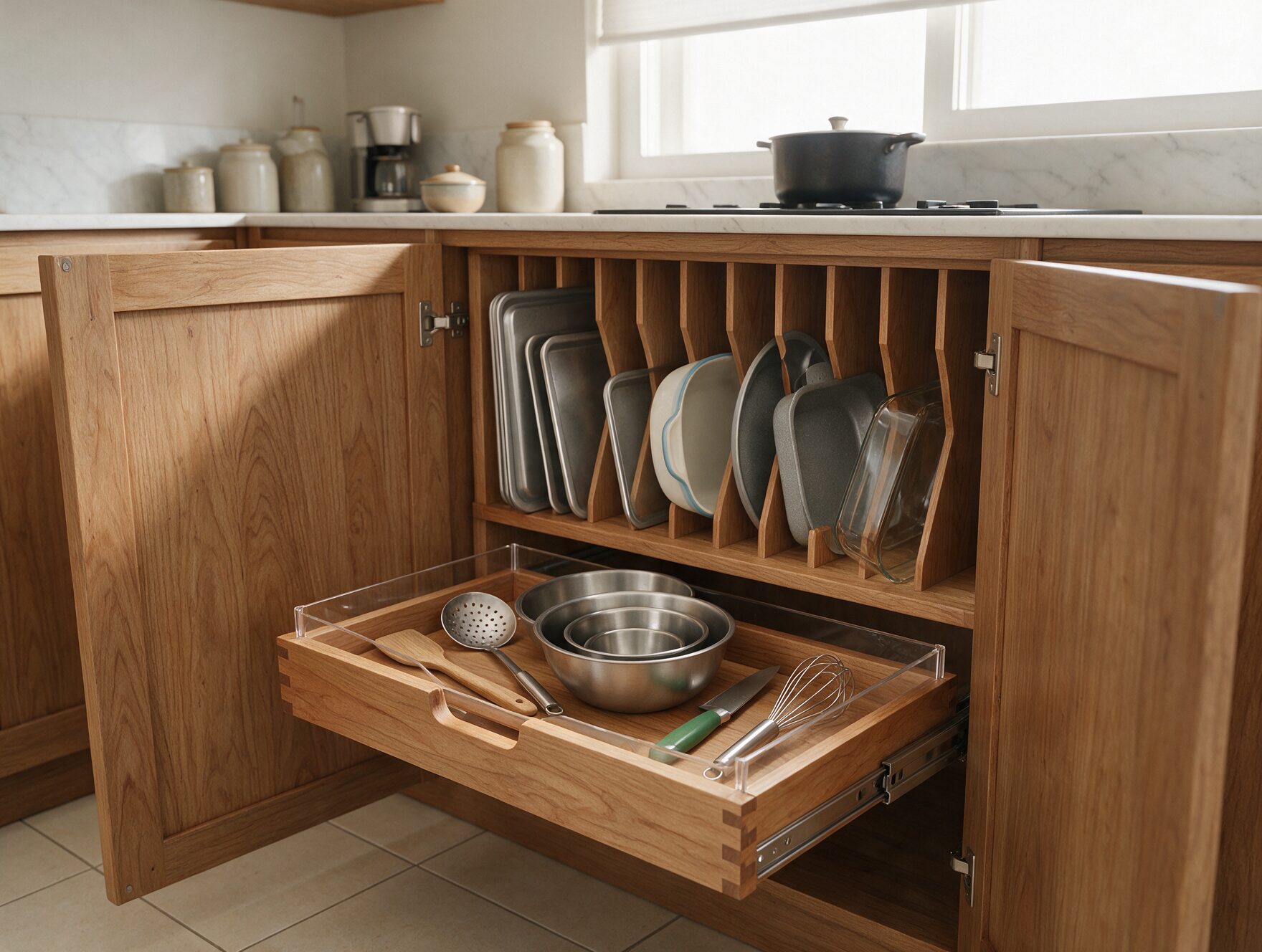
Vertical dividers turn a cabinet shelf into separate slots for baking sheets, cutting boards, and trays that would otherwise stack awkwardly on top of each other. Pull-out organizers bring items at the back of a deep cabinet within reach without needing to unload everything in front first, but fitting one may involve screws, runners and some modification to the cabinet, not just placing a product inside. An under-shelf basket hangs beneath an existing shelf and can use the space above the contents of the compartment below; check the shelf thickness, basket height, door clearance and the load it’s rated to carry before adding one. Check the weight any of these additions can actually hold before loading them with heavier items like cast-iron pans, and compare the organizer’s usable capacity against what the empty space already held, since an added organizer can reduce as well as increase what actually fits.
On the Counter
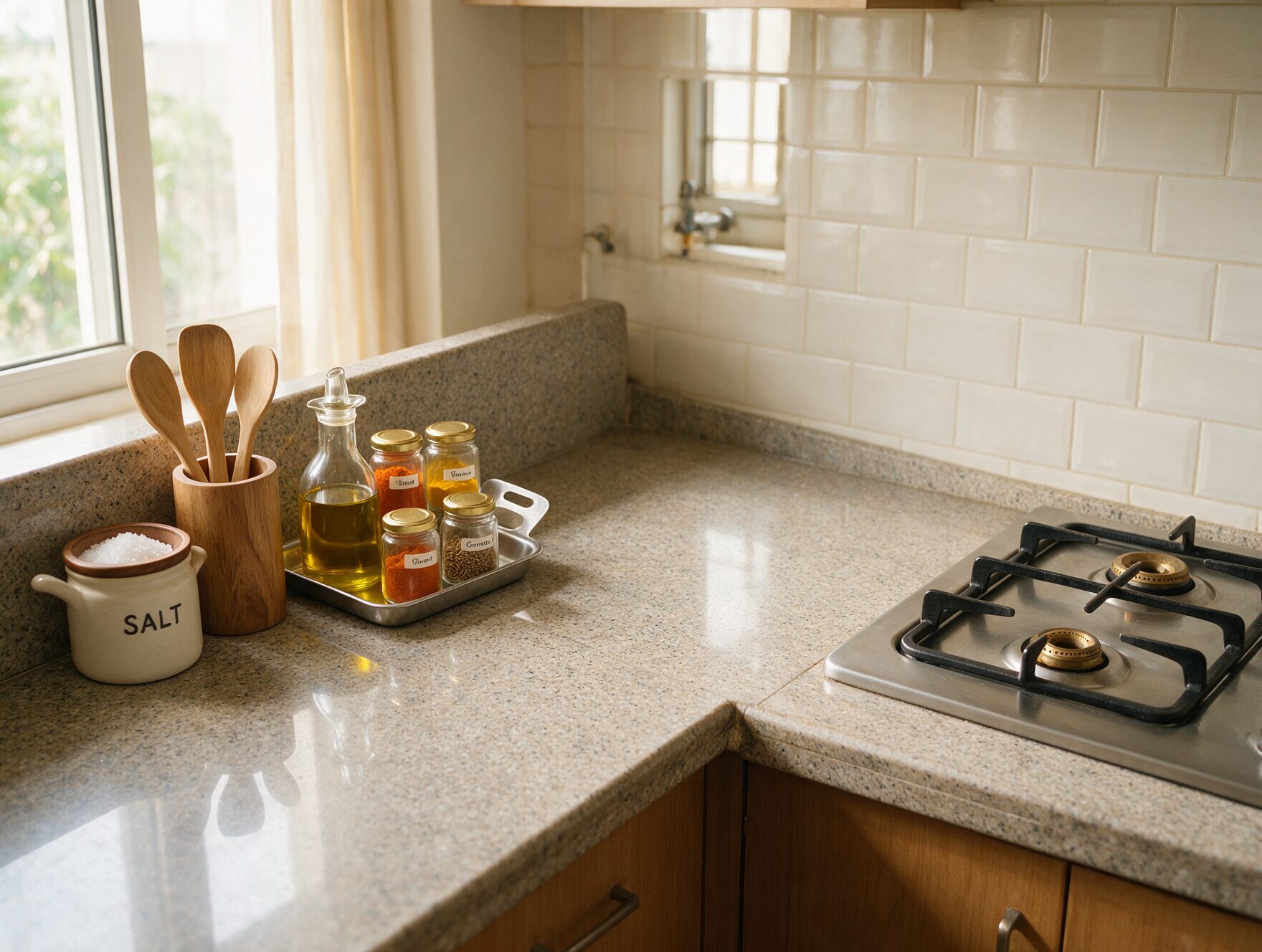
Counter space in a small kitchen is usually at a premium. A tray can help group frequently used items, such as cooking oils or everyday spices, provided it still leaves enough preparation space and sits away from cooking heat; items used daily don’t automatically need to live on the counter permanently. Keep combustible and heat-sensitive belongings away from the cooktop, including kitchen linens, paper products, and plastic or wooden utensils, and follow your stove or range’s own manufacturer instructions for clearance requirements, including any restrictions on what can sit on shelves above or beside it. NFPA’s cooking safety guidance is direct on the category of items to keep clear, without specifying an exact distance: “Keep anything that can catch fire, oven mitts, wooden utensils, food packaging, towels or curtains, away from your stovetop” (NFPA: safety with cooking equipment). Where a storage appliance needs its own operating space, such as a toaster or kettle, that space is part of using it safely, not just a place to keep it.
On the Walls
A rail system with hooks, a magnetic knife strip, or wall-mounted shelving can add storage without using cabinet or counter space, but most of these need drilling into the wall and mounting hardware suited to it. Check your wall’s construction, use fixings suited to it, and confirm you have permission before drilling in a rented kitchen. Keep anything wall-mounted near the stove within the same no-store consideration as counter items, since a hanging utensil or cloth near an open flame carries the same risk as one sitting on the counter. An over-sink shelf that hooks over an existing fixture rather than being drilled in can work for some sinks, but check the product’s support and load requirements, your sink and tap dimensions, window operation if there’s a window above, and drainage and cleaning access before assuming it fits; a shelf of this kind over the stove is a different, less-established arrangement and isn’t covered by the same guidance, so treat it as its own decision with its own product documentation rather than a generic no-drill option.
Renter-Friendly, No-Drill Options
- A purpose-designed tray rack or shelf insert fitted inside a cabinet can hold flat items like trays or cutting boards without fixing to the cabinet itself; check that the specific product is intended to carry the weight and shape of what you plan to store, rather than improvising a holder from unrelated parts.
- Removable adhesive hooks can hold lightweight items, but check the specific product’s instructions for suitable surfaces and weight limits. Command’s own guidance notes that its strips aren’t recommended for heavily textured surfaces because the adhesive may not make full contact, and that a hook falling is commonly caused by a dirty or oily surface, the wrong surface type, humidity, or temperature changes (Command Brand: product FAQs). Kitchen heat, grease and humidity near the stove make these factors more relevant there than in a drier room.
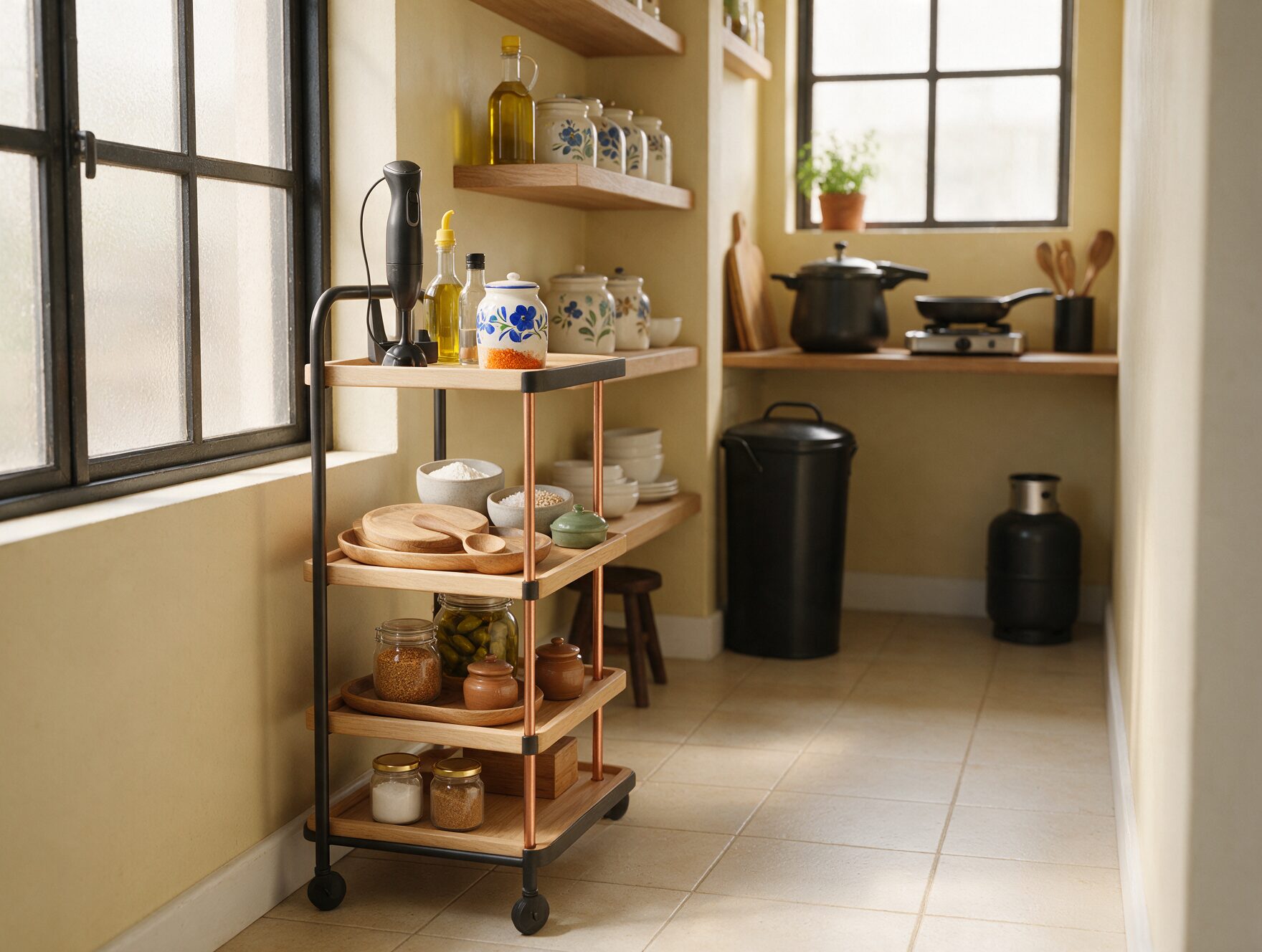
- A trolley can add movable storage where there’s enough clear floor space to use it without blocking a walkway; check the specific product’s stability and any manufacturer anchoring recommendation rather than assuming every wheeled unit is maintenance-free.
- Freestanding shelving moves with you if you relocate, but unlike a trolley it may still need wall anchoring depending on its height and the manufacturer’s instructions; check the product documentation rather than treating all freestanding units the same way.
Under the Sink
Cleaning supplies are often mentioned as a kitchen clutter problem but left without a practical plan. The under-sink cabinet usually isn’t an empty rectangle, so measure around the pipes and trap rather than around the cabinet’s outer dimensions, and leave the plumbing itself reachable in case you ever need to check for a leak. Address any existing leak or damp smell before adding organizers, since trapped moisture under stored items can make a small problem worse. Store cleaning products according to their own label instructions, keep them separated from food and food storage containers, and never decant a cleaning chemical into a container that previously held food. Where children can access the cabinet, factor that into where and how these products are stored.
Organizing in a Rented Kitchen
Many of the choices above involve drilling, wall anchoring, or at least checking a landlord’s permission before installing anything. Our guide to rental home decor covers checking your agreement, photographing existing condition, and what “removable” products still require before installation in more depth, if you’re furnishing the rest of the home under the same constraints.
What to Check Before Adding Storage
| Check | Why it matters |
|---|---|
| What’s actually cluttering your kitchen, by category | Determines which storage type solves the real problem |
| Internal drawer and cabinet dimensions, not outer size | Organizer fit varies a lot between products; measure before buying |
| Weight rating of pull-out or under-shelf additions | Avoids overloading a fitting not designed for heavier items |
| Manufacturer clearance requirements for your stove or range | Reduces fire risk from items placed too close to the appliance |
| Wall construction, for any wall-mounted storage | Confirms suitable fixings before drilling |
| Rental agreement and landlord permission | Relevant before any drilling or permanent installation |
| Plumbing access under the sink | Storage shouldn’t block the ability to check for or fix a leak |
For larger changes, see interior design costs in Navi Mumbai.
Frequently Asked Questions
How can I improve kitchen storage without replacing cabinets?
Add drawer dividers, vertical cabinet dividers, pull-out organizers, and under-shelf baskets within your existing cabinets and drawers, and extend further with a trolley or freestanding shelving. Measure first, since fit and usable capacity vary a lot between products.
Do pull-out organizers require drilling?
Often, yes. Many pull-out mechanisms need screws and runners fitted to the cabinet, which is a small modification even though it doesn’t touch the wall. Check the specific product’s installation requirements before assuming it’s a drop-in option.
What should I measure before buying a cabinet organizer?
Measure the cabinet or drawer’s internal width, depth and usable height, not its outer dimensions, and check the clearance needed to fully open a drawer or pull-out once the organizer is inside it. Compare the organizer’s own usable capacity against what the space already held.
Can I add storage above or beside the stove?
Follow your stove or range manufacturer’s clearance instructions first. Keep combustible or heat-sensitive items, including kitchen linens and plastic or wooden utensils, away from the cooktop, and treat an over-stove shelf as a separate decision with its own product documentation rather than a generic no-drill option.
Are adhesive hooks suitable for kitchen use?
Check the specific product’s instructions for suitable surfaces and weight limits. Heat, grease and humidity near a stove can all affect adhesive performance, so don’t assume a hook rated for a dry living-room wall will perform the same way in a kitchen.
Is freestanding kitchen storage always a no-drill option?
Not always. A trolley with suitable floor space generally avoids fixing to anything, but taller freestanding shelving may still need wall anchoring depending on its height and the manufacturer’s instructions. Check the specific product rather than assuming every freestanding unit is maintenance-free.
Sources & Notes
Stove-area storage references NFPA’s guidance on cooking safety. Adhesive product guidance references Command Brand’s product FAQs on surfaces, weight limits and common causes of a hook falling. Images in this guide are AI-generated design concepts, not photographs of a real, completed kitchen; confirm dimensions, weight ratings, and wall construction for your own space before purchasing or installing storage.