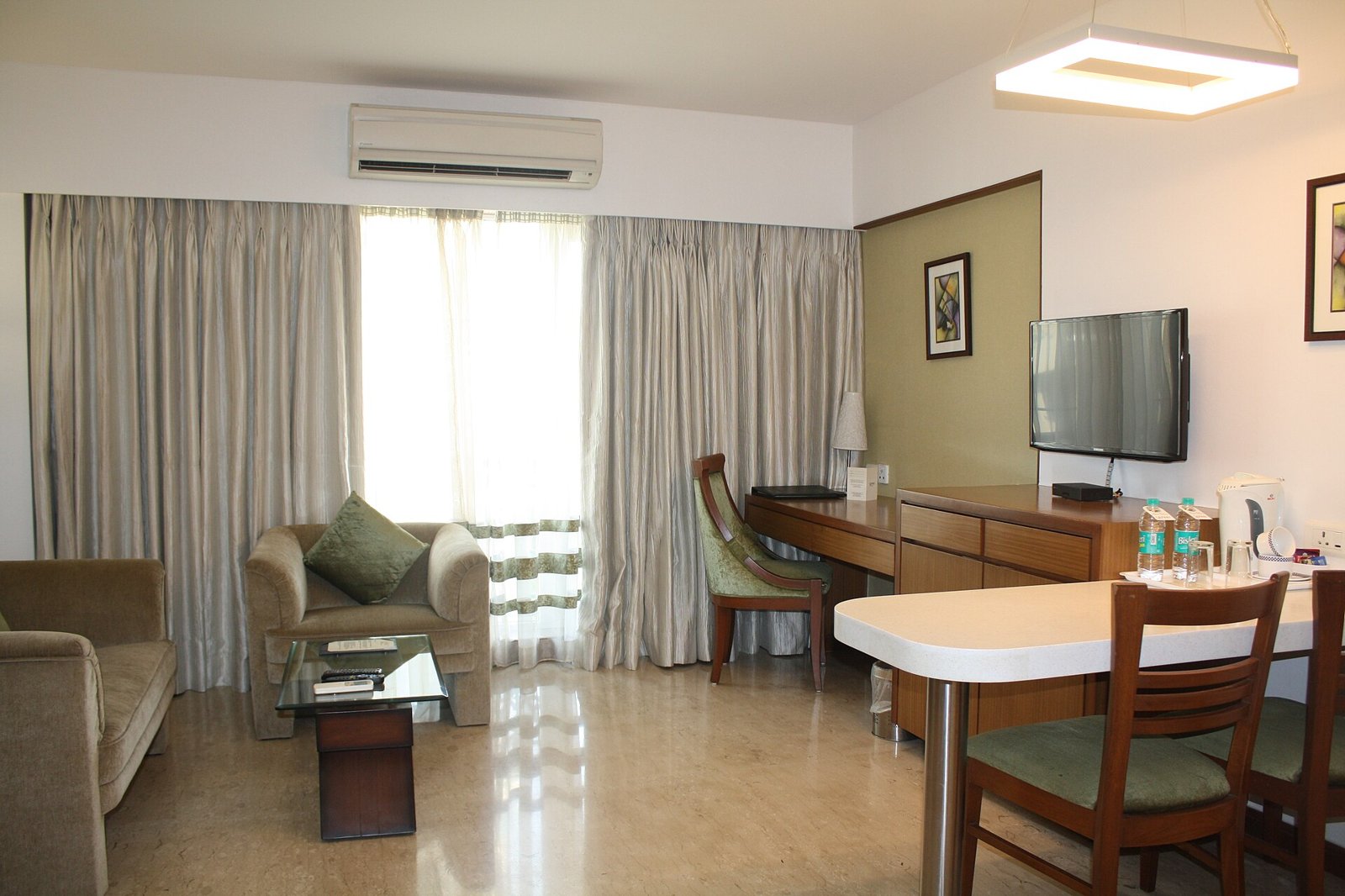
Photo: Arpitset, Wikimedia Commons, CC BY-SA 4.0. A furnished serviced apartment in Mumbai. This is an illustrative photo of a furnished flat and not a listing.
Quick answer: Neither option is always cheaper. Compare similar flats in the same locality. A furnished flat may charge a monthly premium, while an unfurnished flat may need furniture, appliances and installation spending. Your length of stay, the belongings you already own and the likely resale value decide which is the better deal. With the example figures below (not real listing prices), furnished costs less over 6 and 12 months and unfurnished costs less over 36 months, with a break-even near 22 months. Put your own listing prices into the same sums, and keep move-in cash separate from total cost. Whatever you choose, get the inventory written into the rent agreement. Maharashtra’s e-registration page for leave and licence agreements is at igrmaharashtra.gov.in.
This is a researched guide and not an official notice. This site is not affiliated with the Maharashtra Department of Registration and Stamps. Rules, fees and procedures change, so confirm with the Department of Registration and Stamps.
What furnished, semi-furnished and unfurnished mean
There is no single definition that every owner and listing follows. One owner’s “semi-furnished” is another’s “furnished”. Treat the label as a starting point and write the actual list into the agreement. Here is what to confirm in the specific flat.
| Label (as listings often use it) | Check what is actually included |
|---|---|
| Unfurnished | Often walls and fixtures only. Ask about light fittings, fans, geysers, kitchen fittings, wardrobes and curtain rods, because owners differ. |
| Semi-furnished | Often some fixed items such as wardrobes, kitchen cabinets, fans and lights. Ask whether the fridge, washing machine, AC or beds are in or out. |
| Furnished | Often beds, sofa, wardrobes and appliances. Ask for the full list, and the make and condition of each major item. |
For each item, ask these questions:
- Is it on the written inventory, with a count (for example 2 fans, 1 geyser, 3 beds)?
- Does it work today? Test it while you are there.
- Who repairs it if it breaks, and who pays? Ask before you sign and write the answer into the agreement
- Can you remove or replace it, for example a mattress you would rather change?
- Does it have a warranty, and whose name is it in?
Worked example: furnished vs unfurnished over a year or more
Example figures, replace with your own listing prices. These numbers are round placeholders to show the arithmetic. They are not measured Navi Mumbai prices and not market data. Rents, furniture prices and deposits vary a lot by area, building and owner.
| Assumption (example) | Amount |
|---|---|
| Unfurnished flat rent per month | Rs 25,000 |
| Furnished flat rent per month, same size and area | Rs 31,000 |
| Rent difference (X) | Rs 6,000 per month |
| One-time furniture and appliances you would buy (Y) | Rs 1,20,000 |
| Additional furniture delivery and installation, only under the unfurnished option (Z) | Rs 10,000 |
| Additional setup cost of the unfurnished route (Y + Z) | Rs 1,30,000 |
Moving your own belongings costs about the same whichever flat you pick, so it is left out of both sides. Count only the costs that exist under one option and not the other. Other recurring costs are assumed equal in both flats.
Total rent over the stay for each option, with the setup cost added to the unfurnished route:
| Stay | Furnished: total rent | Unfurnished: total rent plus Rs 1,30,000 setup | Lower in this example |
|---|---|---|---|
| 6 months | 31,000 x 6 = Rs 1,86,000 | 25,000 x 6 = Rs 1,50,000, plus 1,30,000 = Rs 2,80,000 | Furnished, by Rs 94,000 |
| 12 months | 31,000 x 12 = Rs 3,72,000 | 25,000 x 12 = Rs 3,00,000, plus 1,30,000 = Rs 4,30,000 | Furnished, by Rs 58,000 |
| 36 months | 31,000 x 36 = Rs 11,16,000 | 25,000 x 36 = Rs 9,00,000, plus 1,30,000 = Rs 10,30,000 | Unfurnished, by Rs 86,000 |
The 36 month figure leaves out rent increases and any repair or replacement spending on furniture and appliances, which would change the result.
Break-even: additional net setup cost divided by the additional monthly recurring cost of the furnished option. Here that is Rs 1,30,000 divided by Rs 6,000, which is about 21.7 months. The formula works only when the furnished flat has a monthly premium, other recurring costs are equal, rents stay unchanged and the setup figure is additional spending. Recurring costs can include tenant paid maintenance, furniture rental or other charges that differ between the two flats. If the furnished flat has no monthly premium, this break-even does not apply in the same way.
What the example leaves out. If you sell the furniture when you leave, your real setup cost is lower. Say you resell for Rs 40,000 (another example figure). The net cost is then Rs 90,000, and the break-even becomes Rs 90,000 divided by Rs 6,000, which is 15 months. Resale proceeds are uncertain and depend on when you leave, so estimate them separately for your expected departure date, and include any selling or removal costs. If you plan to keep the furniture for your next home, its reuse value may improve the unfurnished case, but the next property may need transport, storage or different furniture.
If you already own furniture, your relevant costs are transport, installation and any replacement purchases, not a complete new set.
Deposit is cash you lock up, not an expense
A security deposit is money you hand over and, under the agreement, expect back. It is not a running cost in the comparison above, but it matters for cash flow. As an example only, take a deposit of two months of rent. Move-in cash then looks like this:
| Move in requirement (example) | Furnished | Unfurnished |
|---|---|---|
| First month’s rent | Rs 31,000 | Rs 25,000 |
| Refundable deposit (two months, example only) | Rs 62,000 | Rs 50,000 |
| Setup spending | Rs 0, assuming no extra purchases | Rs 1,30,000 |
| Cash needed at move in | Rs 93,000 | Rs 2,05,000 |
Both totals leave out other charges, such as brokerage if agreed, agreement charges and moving. This is why someone might pick a furnished flat even when a longer stay favours unfurnished on total cost. A furnished flat does not always carry a larger deposit. The listing or the agreement states it, so check how much is held, what deductions are allowed, and when it comes back after you return the keys.
What to calculate for your situation
| Situation | What to calculate |
|---|---|
| Short stay | The furnished premium against setup, selling and exit costs for the months you will actually stay |
| Longer stay | The cumulative premium, likely rent increases, repair costs and the reuse value of furniture |
| You already own furniture | Transport, installation and replacement purchases only |
| Not sure how long you will stay | An early exit scenario and the minimum commitment in the agreement. A semi-furnished flat, where you add only a few items, may reduce setup spending. Compare it with the same method |
Comparing flats in Navi Mumbai
Furnishing is only one reason two flats differ in rent. Compare flats in the same sector and in similar buildings, so that you are not crediting furniture for a difference that comes from the location. For example, do not compare a furnished flat in a Kharghar tower with an unfurnished flat in Kamothe and put the whole difference down to furniture. Our Kharghar vs Kamothe renting guide shows how the two areas differ.
For each flat on your shortlist, write down:
- Sector, building and floor, and the date you saw the listing.
- Carpet area, and whether the listing gives carpet, built-up or super built-up.
- The furnishing inventory, listed item by item.
- Whether maintenance is included in the rent or paid on top.
- Parking, lift and the walking distance to the station you would use.
- The deposit, and the rent for the first month.
Your area and budget matter as much as the formula. See our guide to where to rent in Navi Mumbai and the cost of living comparison for context, and PG and shared flats if a shared setup is cheaper for a short stay. If you are weighing a much longer commitment, read rent vs buy in Navi Mumbai.
Handover checklist
- Walk through with the inventory list in hand and tick every item against what is physically there. For appliances, note the make and model number.
- Test every appliance, fan, light, tap, geyser and AC. Note anything that does not work.
- Photograph each room and each item with the date visible, and send copies to the owner by message so both sides hold the same record.
- Note the electricity meter reading, and water or gas readings if they apply, on the day you take the keys.
- Agree who repairs what, and who pays for wear on appliances. Put it in writing, and distinguish ordinary wear from damage in the agreed terms.
- Record any existing defects, and have both sides acknowledge the dated list.
- Repeat the same walk-through at exit and compare it with your photographs.
For the tenant verification step, our police verification guide explains the process. Decorating without drilling is covered in rental home decor ideas.
What the rent agreement should record
See our rent agreement guide for the process. The Department of Registration and Stamps describes its e-registration facility for leave and licence agreements, where citizens can prepare an agreement, view the draft, modify it, sign it and submit it for registration online (IGR e-registration page). The citizen portal is at leaveandlicense.igrmaharashtra.gov.in. For what the rules require in your case, including registration, stamp duty and fees, use the official pages and confirm with the Department of Registration and Stamps.
A furnished or semi-furnished agreement should also include:
- An inventory schedule attached to the agreement, listing every item, its count and its condition, signed by both sides.
- Who maintains and repairs appliances and furniture, and who bears the cost of normal wear.
- The deposit amount, the deductions allowed, and the return date.
- What happens if an item is damaged, lost or replaced.
- Who pays for electricity, water, maintenance and any society charges, and how rent can change at renewal.
- The notice period and the lock-in period for both sides.
Frequently Asked Questions
Is a furnished flat always more expensive?
No. A furnished flat may charge a monthly premium, but you avoid buying furniture and appliances. For a short stay the total can be lower. Over a longer stay the monthly difference may add up to more. Compare similar flats using your own figures.
How do I work out the break-even?
Divide the additional net setup cost of the unfurnished route by the additional monthly recurring cost of the furnished flat. The result is the number of months after which unfurnished becomes cheaper. It applies only when the furnished flat has a monthly premium, other recurring costs are equal and rents stay unchanged.
Are the numbers in this guide real prices?
No. They are round example figures to show the method. Replace them with the rents and prices from the listings you are comparing.
How this guide was checked
- The description of Maharashtra’s e-registration facility comes from the Department of Registration and Stamps page for e-registration, read on 18 November 2026.
- The figures in the worked example are illustrative placeholders and are not drawn from any source.
- Registration, stamp duty and fee rules are not stated here. Use the official pages for them.
Sources
| Point | Source |
|---|---|
| Online registration of leave and licence agreements | IGR Maharashtra e-registration page |
| Leave and Licence citizen portal | Leave and License 2.0 citizen login |
Checked 18 November 2026. Rules and procedures change, so confirm with the Department of Registration and Stamps.
NaviMumbai.com is an independent information site and is not affiliated with any government body.