Quick answer: There’s no single best indoor plant for every apartment. The right choice depends on the actual light at the specific spot you have in mind, how much regular care you can realistically give it, and whether pets or young children are in the home. Match the plant to those conditions rather than copying a generic “easy plants” list.
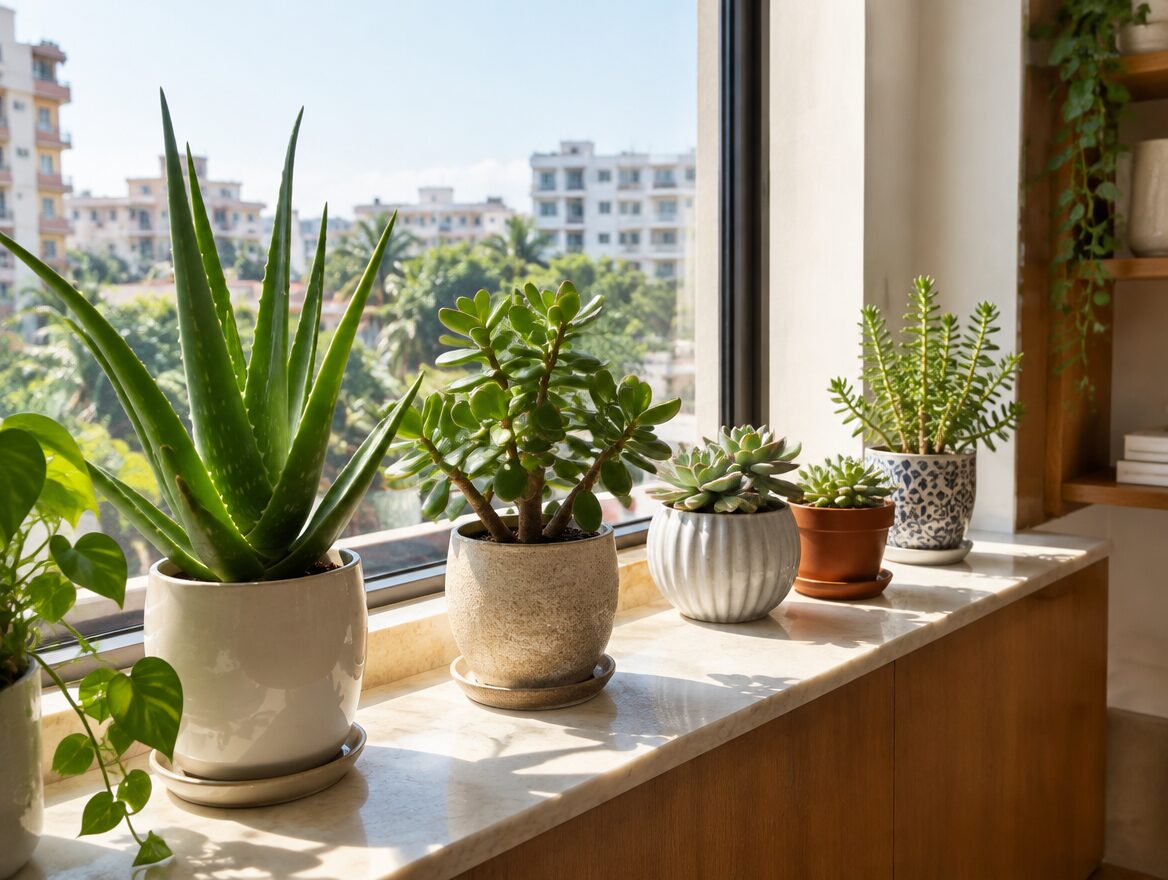
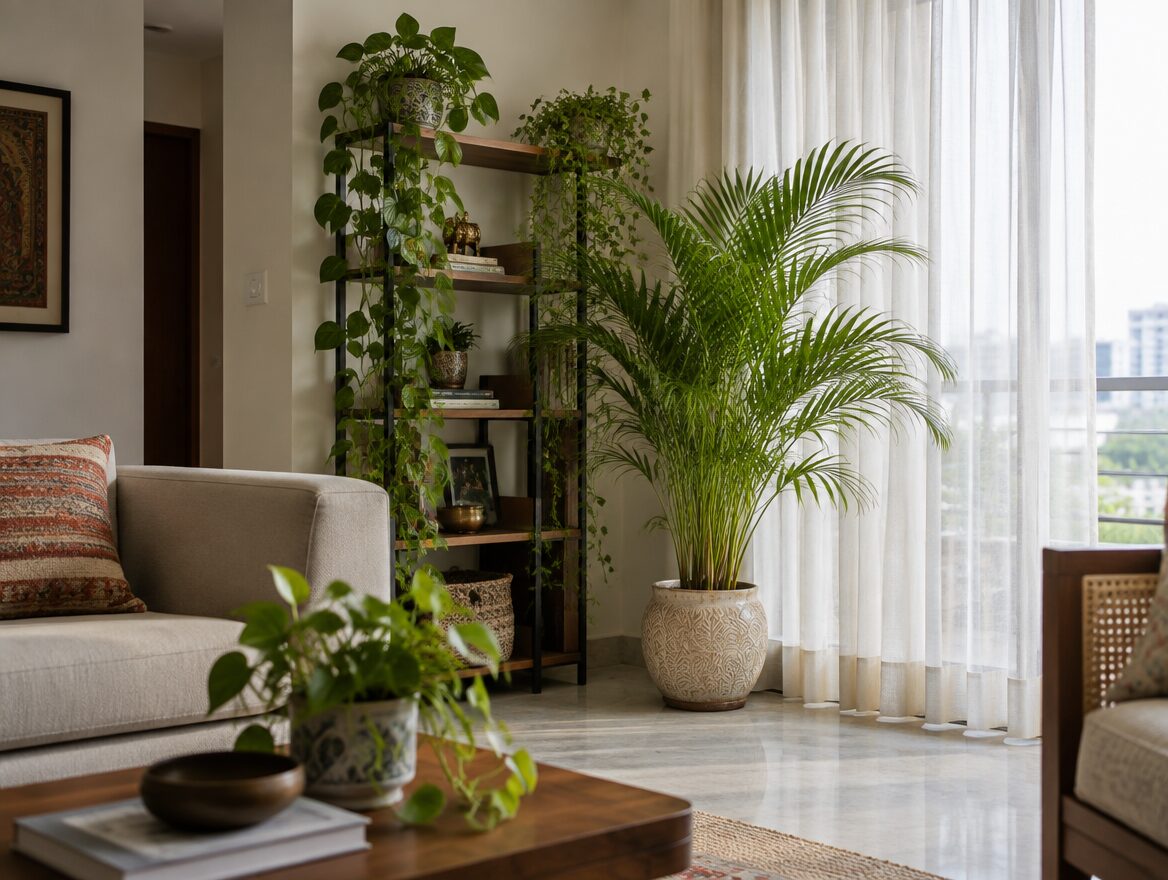
This guide uses original, AI-generated room visuals to illustrate plant groupings by light condition. They are conceptual references, not photographs of any real, installed setup or a tested safe arrangement for your home.
Start With Light, Not a Popularity List
Many plant lists are organised by how easy or popular a plant is, without saying what light it actually needs. A plant that thrives in bright direct sun will usually struggle in a dim interior room, and the reverse is just as true. Before picking a plant, observe the actual spot: does direct sunlight reach it for part of the day, is it bright but shaded, or does it stay dim even during the day? That observation matters more than any general “best indoor plants” ranking.
Plants by Light Condition
Bright, Direct Sun
Spots that get several hours of direct sunlight, typically near an unshaded south or west-facing window. Aloe vera and jade plant (Crassula) are common choices for this kind of spot and tolerate infrequent watering well, but both are toxic to cats and dogs if ingested, according to the ASPCA’s plant database (ASPCA: toxic and non-toxic plants). If you have pets, check a specific plant against that database before buying rather than assuming a popular succulent is safe.
Bright, Indirect Light
Spots that are well-lit through the day but don’t get direct sun hitting the leaves, such as a few feet back from a window or near a window with a sheer curtain. Areca palm and spider plant both do well here and are listed as non-toxic to cats and dogs by the ASPCA. Pothos, widely sold in India as “money plant,” is also common in this kind of spot; it’s an easy, fast-growing vine, but the ASPCA lists it as mildly toxic to cats and dogs, so check its specific listing if pets are in the home.
Low Light
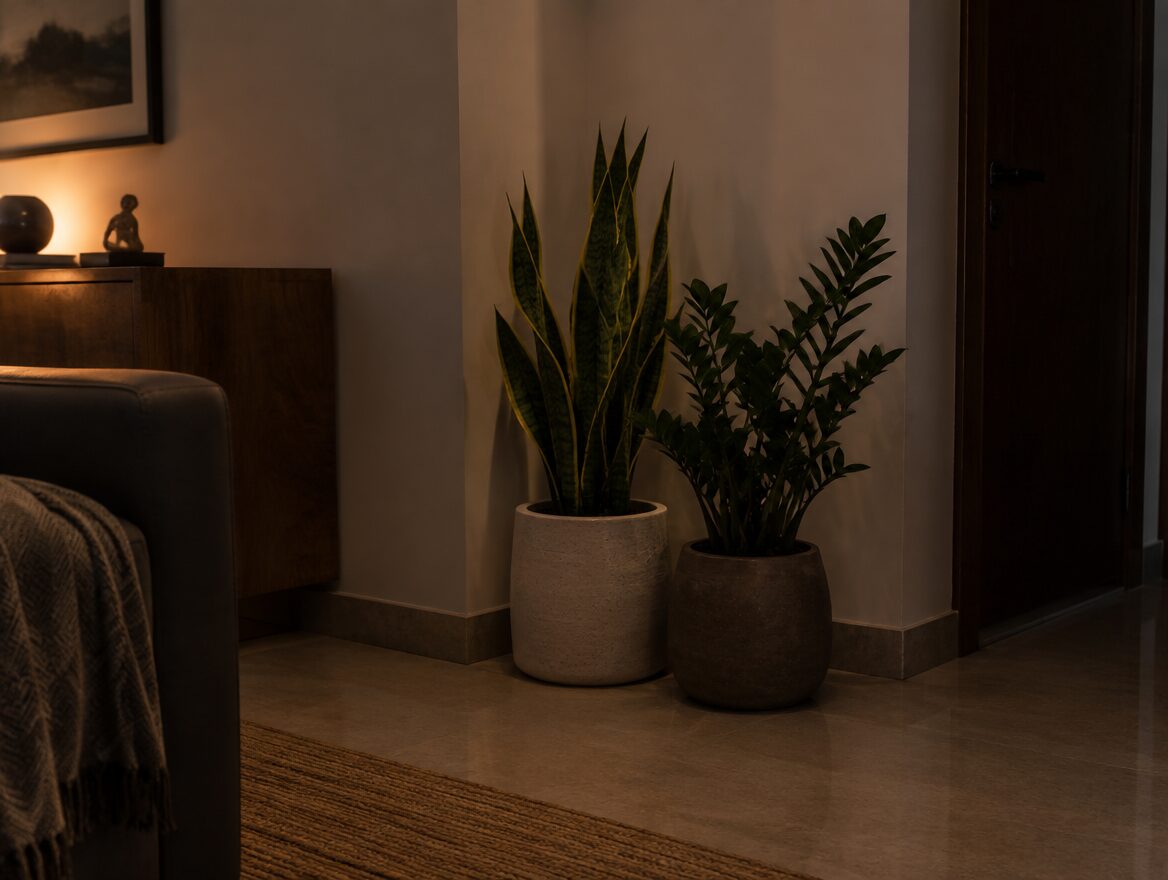
Interior spots that stay dim even during the day, such as a corner away from any window. Snake plant and ZZ plant both tolerate low light and infrequent watering better than most houseplants, which is why they’re common choices for these spots, but the ASPCA lists both as toxic to cats and dogs. There’s no widely available low-light plant that’s both highly tolerant of neglect and confirmed non-toxic for every situation, so if you have pets and a genuinely dim spot, weigh that trade-off directly rather than assuming a “low-light plant” recommendation is automatically pet-safe.
What to Check Before Choosing a Plant
| Check | Why it matters |
|---|---|
| Direct sunlight at different times of day | A spot that looks bright in the morning may be dim by afternoon, or the reverse |
| Who will do the regular care | Determines how much neglect-tolerance you actually need |
| Pets and young children in the home | Some popular, easy-care plants are toxic if chewed or eaten; check the specific plant, not just its general reputation |
| Pot drainage | A pot without drainage holes needs a different watering approach to avoid root rot |
| Expected mature size | A small plant at purchase can outgrow the spot within a year or two |
| Humidity and airflow | Closed, poorly ventilated rooms suit different plants than an airy balcony-adjacent room |
Do Houseplants Actually Purify the Air?
A frequently repeated claim is that houseplants meaningfully clean indoor air, usually traced back to a 1989 NASA-funded study. That study tested plants in sealed chambers designed to model spacecraft life-support conditions, not a ventilated home or apartment. The American Lung Association states plainly that houseplants don’t meaningfully clean indoor air under normal home conditions, and a 2019 study modelling real-world air exchange rates found you’d need somewhere between ten and 1,000 plants per square metre of floor space to match what ordinary ventilation already achieves (American Lung Association: houseplants don’t clean the air). Choose plants for how they look and the care they need, not as a substitute for ventilation or an air purifier.
Watering That Actually Works
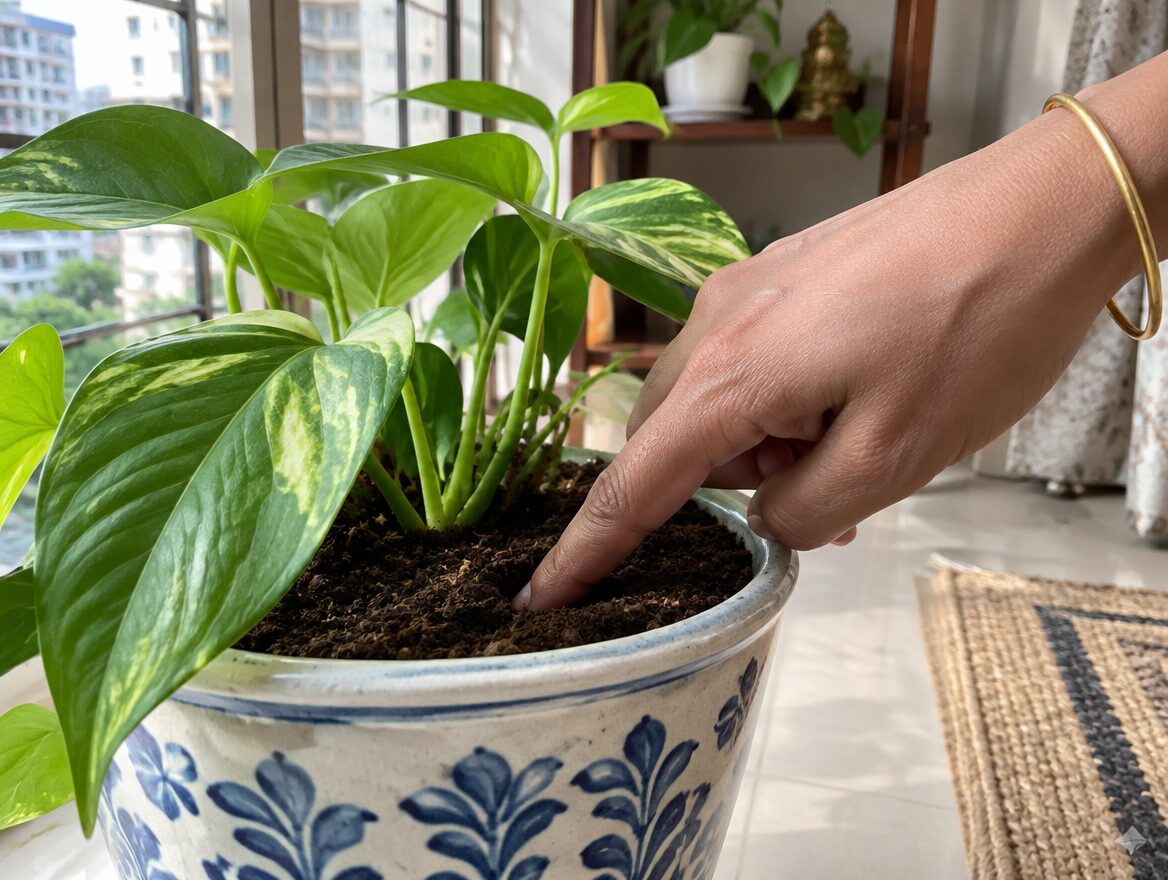
Most houseplant deaths come from overwatering, not underwatering. Rather than following a fixed weekly schedule, check the top inch or two of soil with a finger before watering, and water again only once it’s dried out to a degree appropriate for that specific plant; succulents and snake plants tolerate drying out completely between waterings, while ferns generally don’t. How often that happens will vary with the season, the room’s light and humidity, and the pot’s material, so a calendar reminder is a rough starting point at best, not a rule.
Where to Source Plants Locally
Once you’ve worked out which light conditions and care level suit your home, a local nursery can help you pick healthy, appropriately sized plants and advise on pot and soil choices in person. Our guide to nurseries and plant shops in Navi Mumbai covers options across the area.
Frequently Asked Questions
What’s the single best indoor plant for a small apartment?
There isn’t one. The right plant depends on the light at your specific spot, how much care you can realistically give it, and whether pets or children are in the home. Match the plant to those conditions rather than a generic list.
Do houseplants actually clean the air in my home?
Not meaningfully. The NASA study often cited for this was conducted in sealed chambers for spacecraft research, not ventilated homes. The American Lung Association states houseplants don’t meaningfully purify indoor air under normal conditions; ordinary ventilation does far more.
Is the “money plant” safe to have around cats and dogs?
The plant sold as “money plant” in India is usually pothos (Epipremnum aureum), which the ASPCA lists as mildly toxic to cats and dogs. Check the specific plant against the ASPCA’s database before assuming it’s pet-safe.
How often should I water my houseplants?
Check the soil with a finger rather than following a fixed schedule. Water once it’s dried out to a degree appropriate for that plant; succulents and snake plants can dry out fully between waterings, while ferns generally need more consistent moisture. Season, light, and pot material all affect how often that happens.
Which low-light plants are safe for homes with pets?
This is a genuine trade-off. Snake plant and ZZ plant tolerate low light and neglect well but are listed as toxic to cats and dogs by the ASPCA. Check a specific plant’s listing before buying, and consider placement out of reach if you choose one that’s toxic.
What should I check before buying any houseplant?
The actual light at the spot through the day, who will care for it regularly, pet and child safety for that specific plant, pot drainage, expected mature size, and the room’s humidity and airflow.
Sources & Notes
Pet-toxicity information in this guide references the ASPCA’s toxic and non-toxic plants database; check the specific plant you’re considering, since this guide only covers a limited selection. The air-purification correction references the American Lung Association. Images in this guide are AI-generated design concepts, not photographs of a real, completed setup.