
Old jars, packaging and fabric can become useful decorative pieces when the materials are clean, sound and suitable for the job. This guide focuses on simple projects for indoor display and light storage. Choose something you will actually use, check any paint or adhesive instructions, and include the cost of extra materials before starting. If an item is cracked, loose or damaged rather than simply old, check our DIY home repair guide for whether it is worth repairing before you repurpose it.
These are project ideas, not a claim that every design has been built or tested by NaviMumbai.com. Electrical work, load-bearing shelves and protective kitchen equipment are outside this guide’s scope.
Choosing Materials
- Use clean, dry materials with a known previous use.
- Reject cracked glass, exposed sharp edges, corrosion, mould or contamination.
- Avoid containers that previously held hazardous chemicals.
- Do not repair chipped glass for crafting; discard it instead.
- Keep paper and cardboard projects for dry indoor locations.
- Follow the selected paint or adhesive’s own surface-preparation and curing instructions.
Glass Bottle Vases
Clean an intact glass bottle or jar with regular dish soap and water. Once fully dry, paint the exterior with a glass-compatible craft paint, following that product’s coat count and curing time. Use for cut or dried flowers only; check the paint’s water resistance before adding fresh-cut stems with water inside.
Decorative Outer Planters
Use a clean tin, jar or bottle as a decorative outer pot around a proper nursery pot with its own drainage hole. Keep the inner pot removable so you can water the plant separately and return it once it has drained, rather than watering directly into a container with no drainage.
Flameless Candle Display
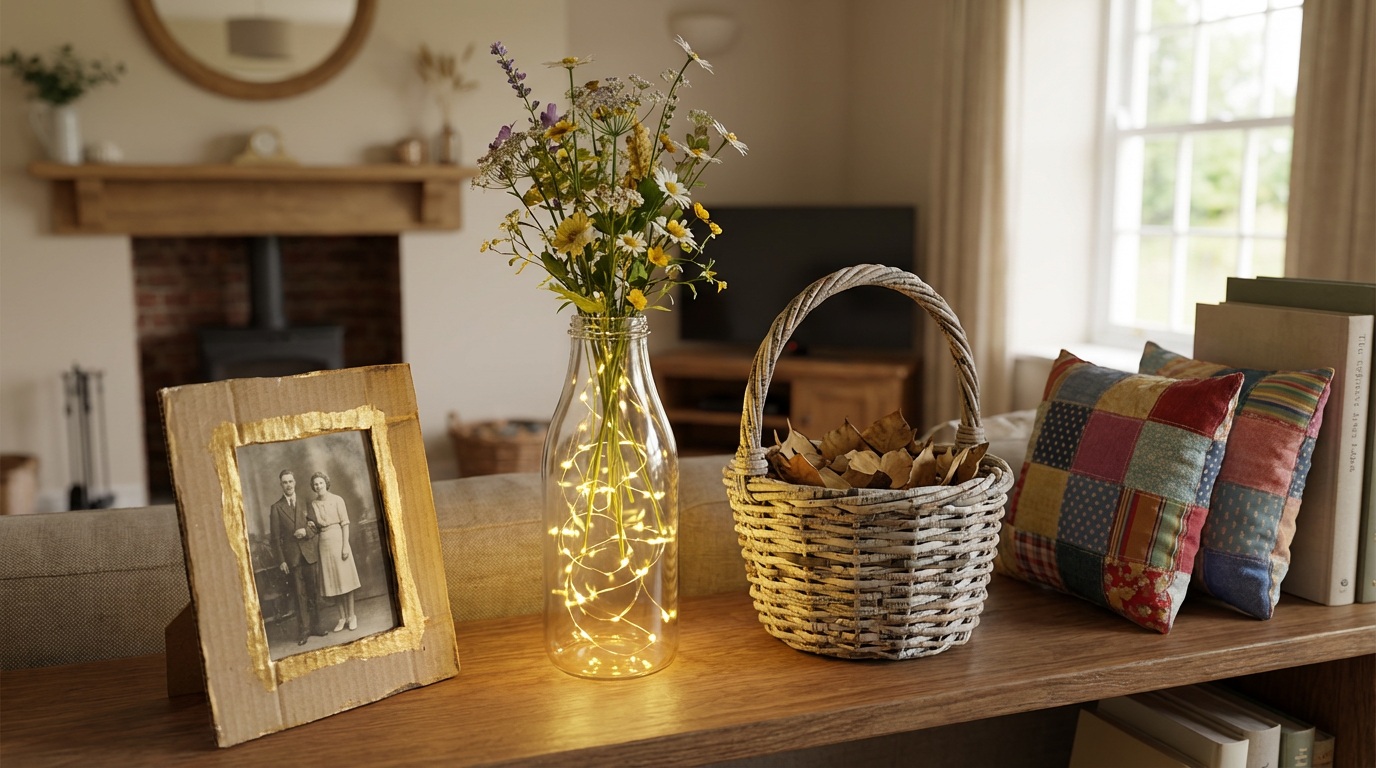
Arrange a battery-operated flameless candle inside a decorated jar or bottle for a similar look without an open flame. Follow the flameless candle’s own instructions. This guide does not recommend placing a real candle inside a decorated container.
Rolled Newspaper Wall Art
Roll strips of newspaper tightly around a thin skewer, glue the ends, then arrange the rolled pieces into a pattern on stiff card backing. Suitable as lightweight wall art in a dry room; it is not weight-bearing and should not be used near open flame or damp walls.
Newspaper Baskets
Weave rolled newspaper tubes, coated in diluted craft glue for stiffness, into a small basket shape around a cardboard base. Suitable for light, dry contents such as letters or dried flowers; it has no tested weight limit, so do not use it for anything heavy.
Decorative Coaster Tiles
Cut and layer magazine pages onto a card base, then seal with a craft varnish, following that product’s own guidance on drying time and water resistance. Treat these as decorative tiles for display rather than everyday coasters unless the varnish you use is specifically rated for that use.
Drawer Organisers
Cut small, sturdy cardboard boxes down to size and arrange them inside a drawer to separate light items such as stationery or accessories. Suitable for light, dry household items only; it will not hold heavier tools or kitchenware.
Photo Frames
Cover a plain cardboard frame with fabric scraps, paper or a painted finish, then insert a photo directly without loose glass. Skip any glass front unless you use a frame designed to hold it securely.
Patchwork Cushion Covers
For a 40cm square cushion cover, cut fabric patches to a consistent size plus a 1.5cm seam allowance, arrange and sew them into two 43cm squares, then join the squares with a simple envelope back opening for easy washing. Press seams according to the fabric’s own care label.
Fabric Wall Hangings
Check the fabric’s condition and weight before hanging; a heavier textile needs a sturdier rod or bracket than a light scarf does. Mount using a rod pocket or clip hangers rated for the fabric’s actual weight, and avoid pressing fabric that its care label marks as unsuitable for ironing.
What This Actually Costs
Reusing an item can be worthwhile when the finished piece serves a purpose and requires few additional materials, but it is not automatically free. Use this worksheet before assuming a project saves money:
| Project spending check | Your amount or note |
|---|---|
| Materials already available | |
| Additional materials | |
| Tools purchased specifically for this project | |
| Delivery or travel | |
| Total cash spent | |
| Comparable finished item you would otherwise buy | |
| Intended use and expected limitations |
Only count this as a saving if you would genuinely have bought the comparable item. A decorative cardboard object is not automatically equivalent to a commercial shelf or organiser. If you are decluttering rather than decorating, see our guide to minimalist living for whether the item is worth keeping at all.
Working With Children
Children can help with selected paper and fabric decorating tasks using age-appropriate materials. Adults should handle cutting tools, hot equipment and any other step unsuitable for the child’s age or ability. Check product labels before choosing paints and adhesives for a project a child will help with.
Frequently Asked Questions
Which household items can I reuse for home decor?
Clean, dry jars, paper, cardboard and sound fabric can suit selected decorative projects. Check the material’s condition and previous use, and reject contaminated items, cracked glass or exposed sharp edges.
Are these projects suitable for beginners?
Start with simple paper, fabric or exterior-decorating projects that match your tools and experience. This guide does not cover electrical construction, load-bearing shelves or protective kitchen equipment.
Does non-toxic paint make a decorated item food-safe?
No. Do not treat a non-toxic label as approval for food contact. Keep craft coatings and adhesives away from food-contact surfaces unless the specific product explicitly permits the intended use.
Can I use real candles in decorated jars?
This guide recommends a ready-made flameless light instead. Do not assume an ordinary reused jar, its decorations or its coating is suitable for a burning candle.
Will making decor from waste always save money?
No. Include extra materials, tools and delivery costs. Compare only with an item you would otherwise buy, and consider whether the finished project will serve the same purpose.
Can painted or glued craft leftovers be recycled or composted?
Do not assume so. Coatings, adhesives and mixed materials can change how an item should be handled. Check the relevant product instructions and your local collection service’s requirements.
Sources & Verification Date
Sources checked on 28 September 2026: the US Fire Administration’s guidance recommending battery-operated flameless candles as an alternative to open flame; a craft-brand product page (Plaid) confirming that a common craft sealant, Mod Podge, is not considered food-safe and should not touch food or mouth-contact surfaces; and the US EPA’s composting guidance, which excludes treated or painted wood and specifies suitable, uncoated cardboard. This is a general decorating guide; local waste and recycling rules vary, and product-specific instructions on paints, adhesives and sealants should always take priority over general advice here.
Illustrative staged photograph. It does not document a specific project built or tested by this website.