
Quick answer: Start with what your balcony needs to accommodate: seating, plants, laundry drying, or a combination. Measure the usable space, door movement, and access to drains before choosing furniture. The five layouts below offer different starting points, with checks for rain exposure, installation, and everyday use.
This guide uses original, AI-generated room visuals to illustrate each layout. They are conceptual design references, not photographs of any real, completed installation. They cannot establish exact railing heights, structural compliance, fixing strength, or wind suitability for your own balcony.
Measure Before You Decorate
Many balcony design guides assume a space used purely for seating or display. In a lot of Indian apartments, the balcony also handles laundry drying, and sometimes houses existing equipment like a washing machine. The layouts below are built around sharing the space between these uses rather than ignoring them. Measure the balcony at its narrowest usable point, check the furniture footprint, the space needed to sit down, door movement, and the drying rack when fully extended with clothes hanging. Keep access to the drain and any existing equipment clear.
Five Balcony Layouts for Small Apartments
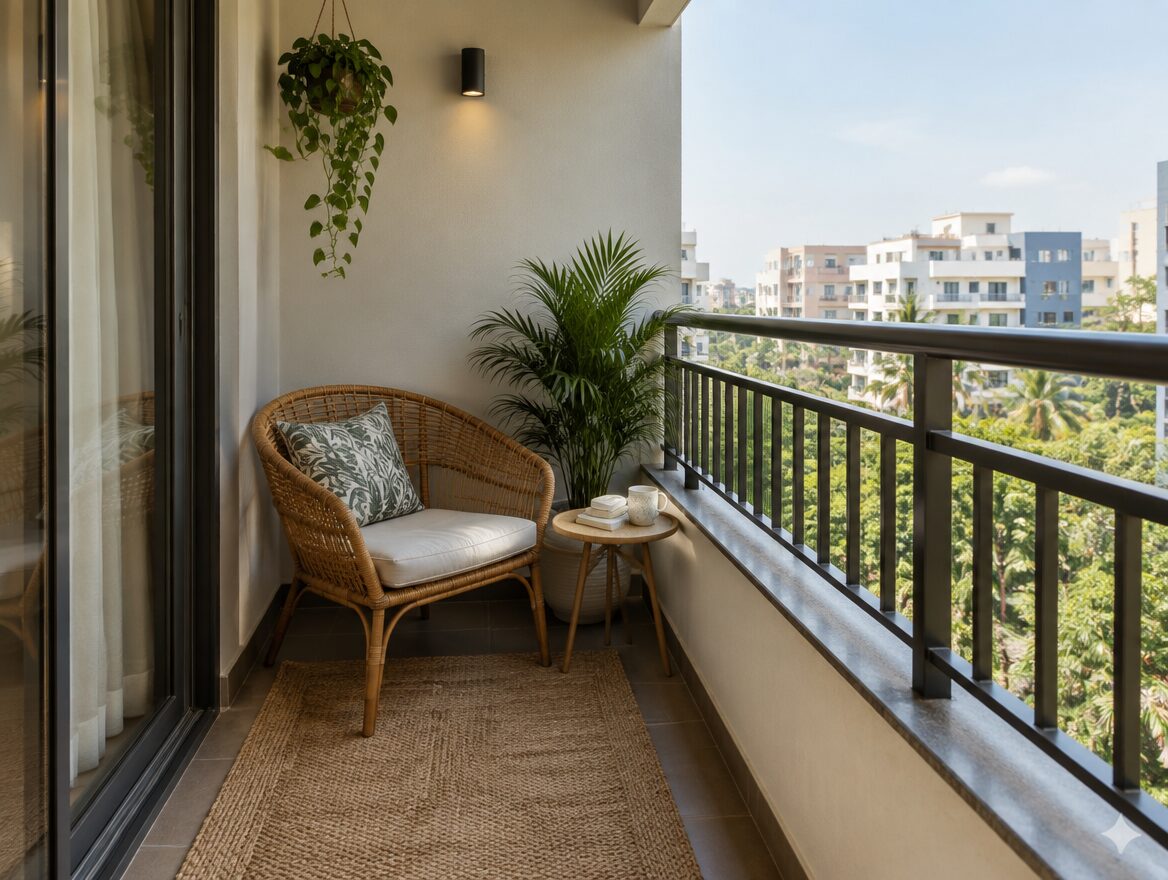
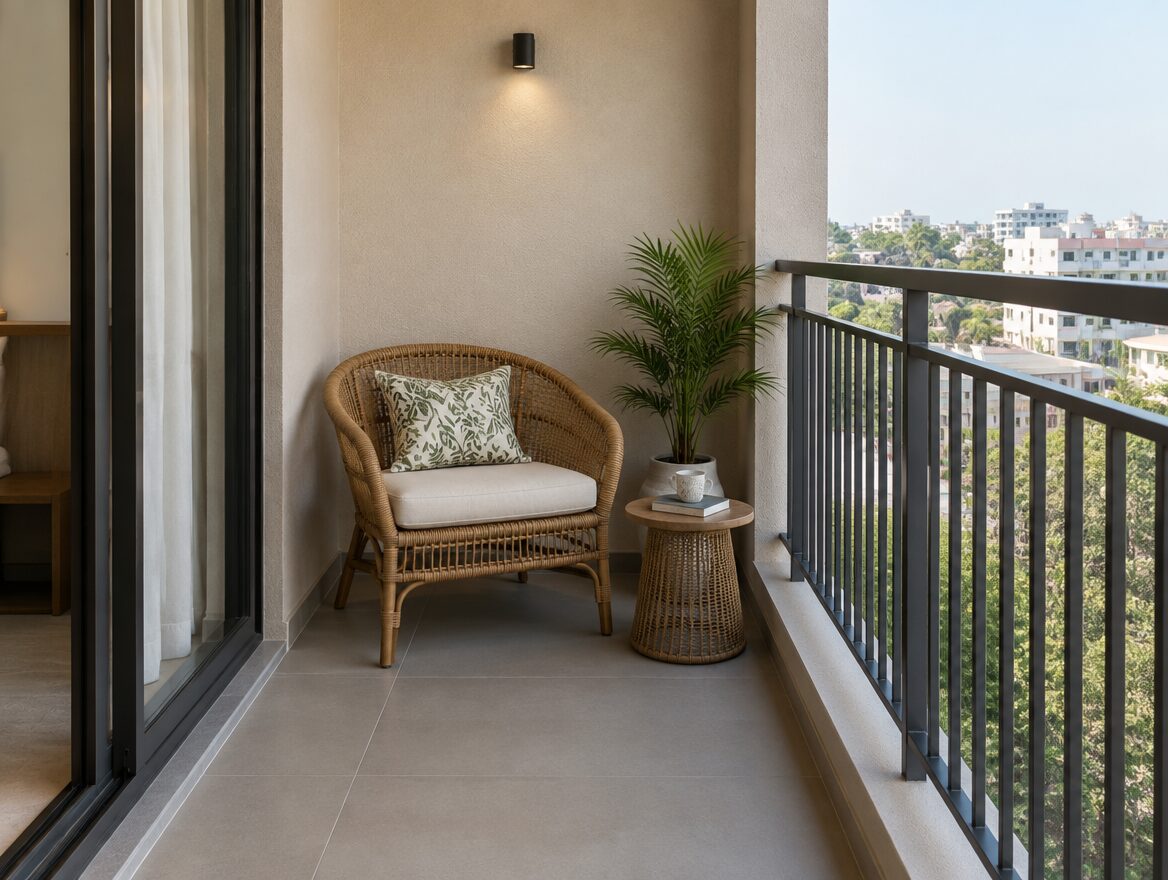
1. Seating-Focused Nook
A single chair, a pair of stools, or floor cushions, with the rest of the balcony left open. Measure the chair’s footprint, the space needed to sit down comfortably, and whether it blocks the walkway to the door before committing to a position. Best suited to balconies where laundry drying can happen on a different balcony or a wall-mounted rack elsewhere, since a seating area and a full drying setup can be difficult to fit comfortably into the same narrow space. Keep the seating and any side table away from the railing edge, particularly where young children use the home.
As a styling note: repeating one cushion colour across the chair and a nearby pot, and choosing textiles rated for outdoor exposure, gives the nook a finished look without adding clutter.
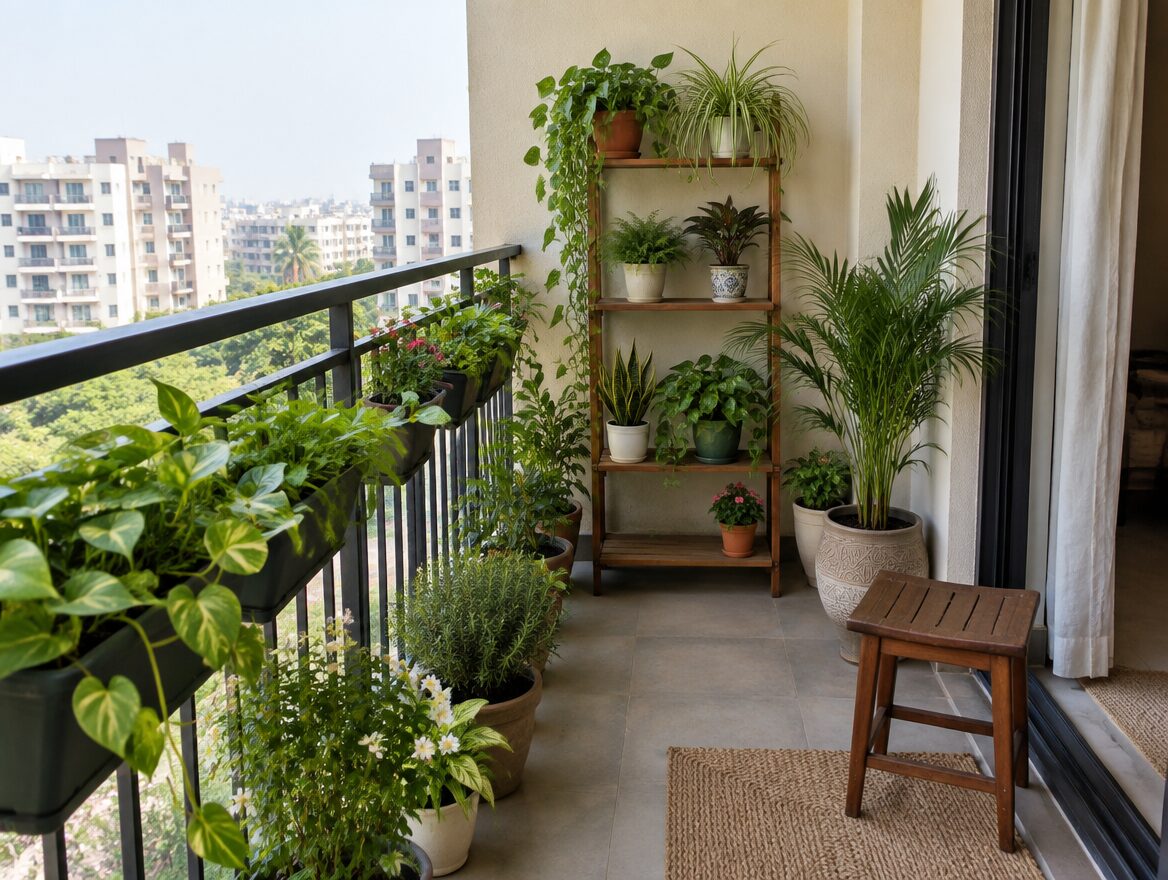
2. Plant-Focused Balcony
Pots and planters arranged along the railing, floor, or a tiered stand. Vertical planting can reduce the floor area occupied by pots, but measure how far the containers and foliage actually project into the balcony before assuming it’s effectively space-free. Check the mounting surface, the loaded weight of the container with wet growing medium, and watering access before choosing a railing-mounted or wall-mounted system. The Royal Horticultural Society’s balcony and roof-garden guidance covers these same considerations: weight, wind exposure, secure fixing for taller plants, and adequate container drainage (RHS: greening balconies and roof gardens). Check your society’s rules on railing-mounted planters before installing them.
When selecting plants for an exposed balcony rather than an indoor space, consider direct sunlight at different times of day, wind exposure, how much rain actually reaches the pots, how easily you can reach them to water, how large they’ll grow, and whether they’re safe to have around children or pets. There’s no single plant list or watering schedule that suits every Indian balcony; these vary with orientation, floor height, and season.
Styling note: a consistent pot material or a narrow colour palette across different pot sizes tends to read as more deliberate than a mix of unrelated styles.
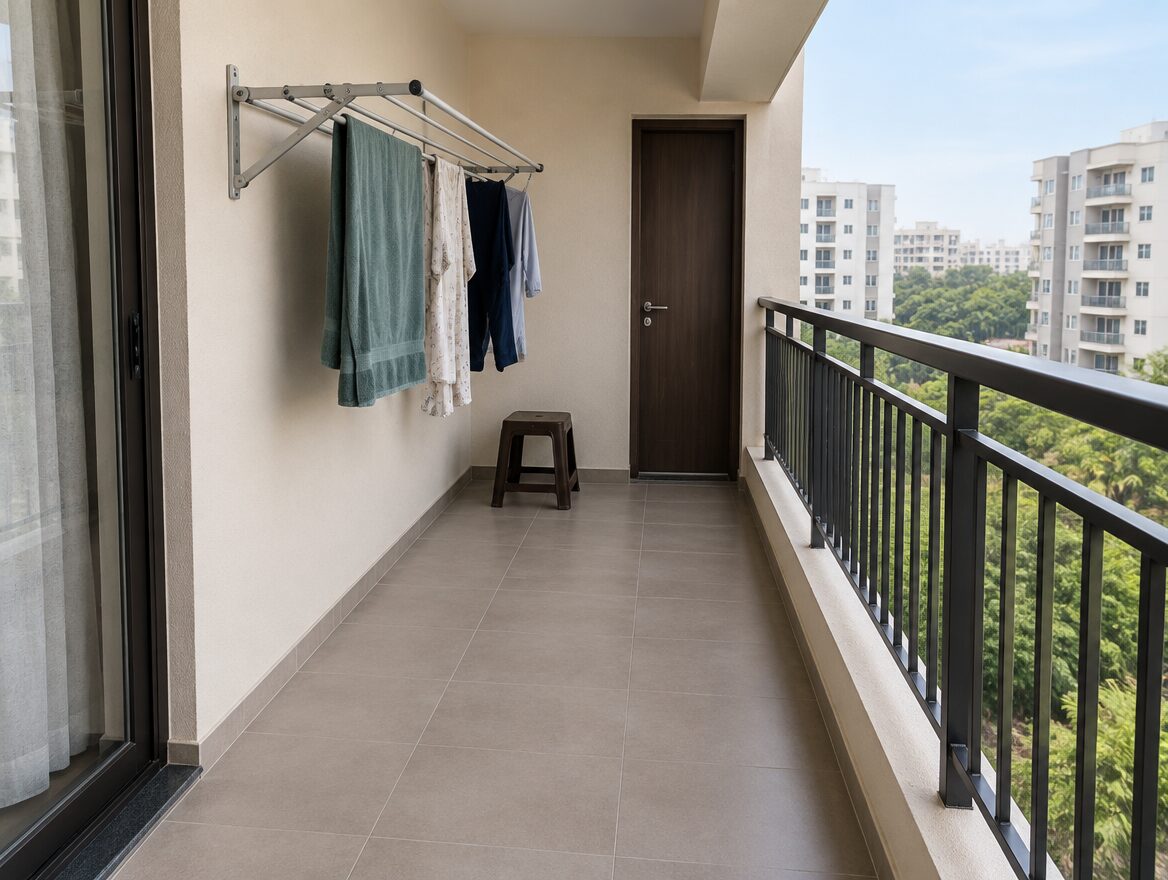
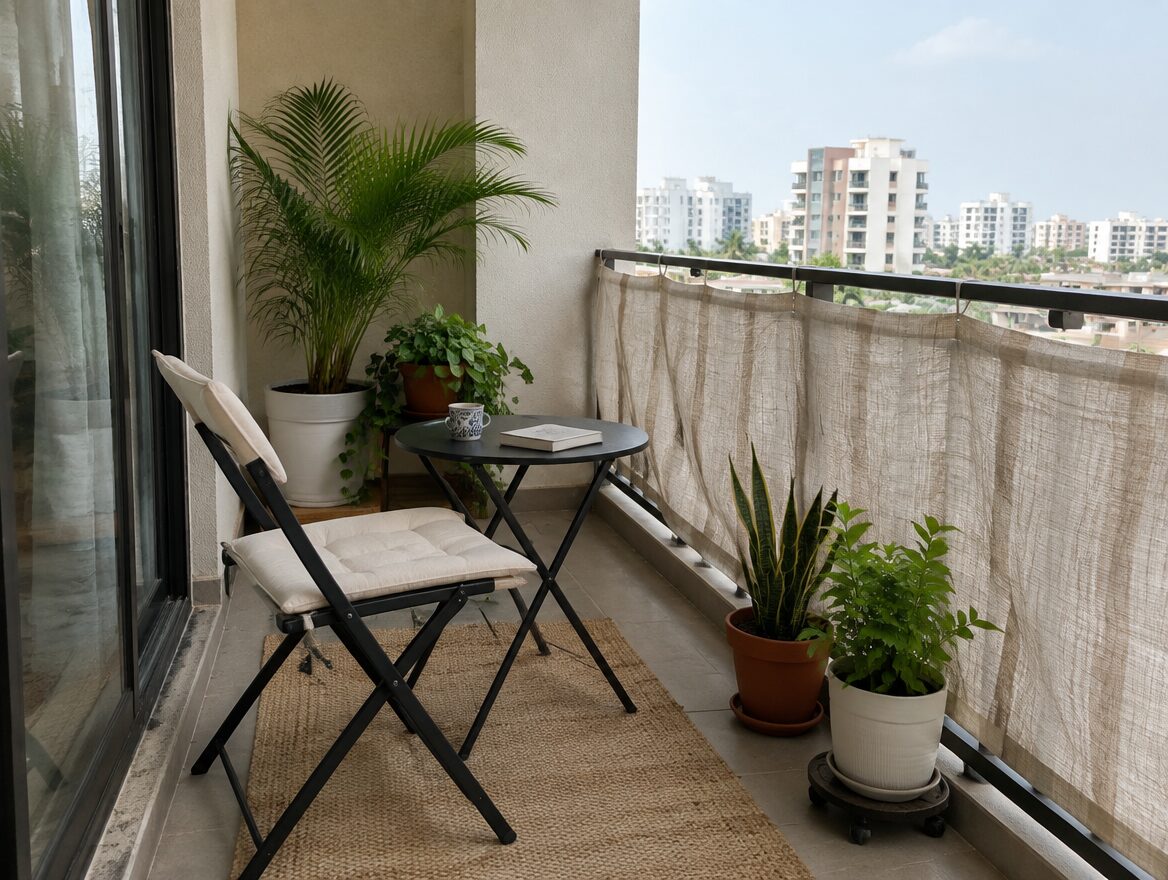
3. Combined Laundry and Seating Balcony
A fold-down or wall-mounted drying rack on one side, with a small stool or single chair on the other. Measure the rack both folded and fully extended with clothes hanging, and check the space needed to use the chair and move through the door; you may need to move the seating out of the way while laundry is drying. Check the manufacturer’s installation requirements before choosing a wall-mounted rack, since these vary by product and wall type. Keep seating positioned away from the railing edge rather than directly against it.
Styling note: a drying rack in a finish that matches the balcony’s other metalwork, and a stool that can be wiped down easily, keep this combined layout from looking makeshift.
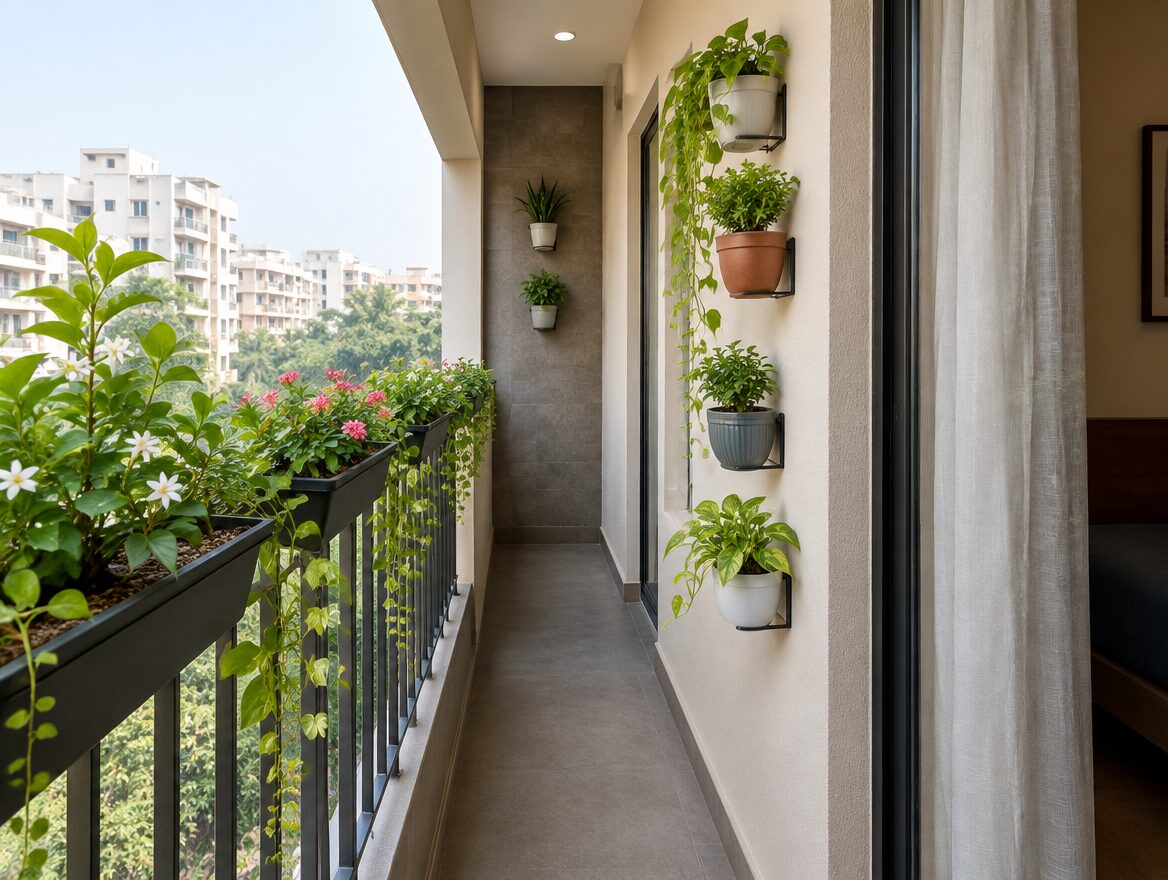
4. Vertical Planters for Very Narrow Balconies
Railing planters, wall-mounted pots, or a vertical garden panel, used when the balcony is too narrow for floor-standing furniture. This image is a useful reminder that vertical planting is not space-free: the pots and foliage still project into the passage, and you need enough clearance to walk past and to reach them for watering. Check the mounting surface’s suitability, the total loaded weight (container, growing medium, and water together), and whether the fixing is rated for that load before installing anything on a railing.
5. Privacy-Screened Balcony
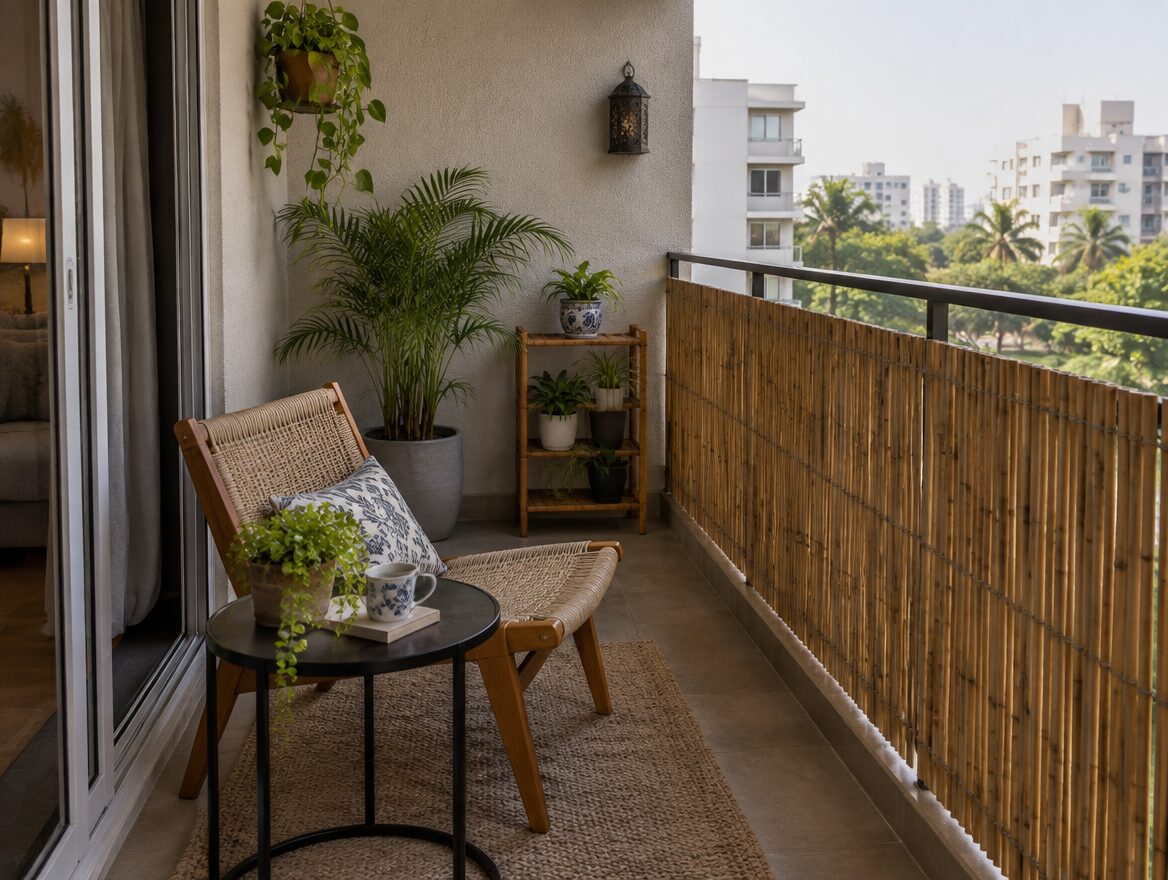
A bamboo, cane, or fabric screen along part of the railing, used to reduce visibility from neighbouring buildings or the street. Privacy screening can also be added alongside another layout rather than treated as a separate floor plan. Before installing a screen, check your building’s rules and, if you’re renting, your landlord’s requirements, and confirm whether the proposed work needs any further permission; a removable screen can still affect the building’s exterior or need attachment to railings or walls, so it isn’t automatically exempt from approval.
Follow the specific product’s installation and wind-use instructions. “Removable” doesn’t mean it can be left unsecured. As one example of what this looks like in practice, IKEA’s YTTERSKÄR outdoor privacy screen must be secured to the ground or to a railing according to its assembly instructions, and its care guidance warns against use in strong winds (IKEA YTTERSKÄR privacy screen). That’s a product-specific example, not a universal specification for every screen; check the instructions for the specific product you’re considering, and don’t improvise attachments to railings or exterior walls.
Comparing the Five Layouts
| Layout | Measure or check first | Main trade-off |
|---|---|---|
| Seating nook | Chair footprint, sitting space, and door movement | Can reduce laundry or plant space |
| Plant-focused | Pot and stand footprint, exposure, and watering access | Requires space for maintenance and drainage |
| Laundry and seating | Rack folded and extended, hanging clothes, and chair position | Seating may need moving while drying |
| Vertical planting | Projection into the passage, mounting surface, and loaded weight | Saves some floor space but needs suitable installation |
| Privacy screening | Fixing method, wind exposure, ventilation, and permissions | Can change light, airflow, and maintenance needs |
These are starting points for your own measuring, not fixed dimensions. Measure your own balcony and check your society’s specific restrictions before finalising any layout.
What to Check Before Choosing a Layout
- Railing and furniture placement. Check the condition of the railing and any openings in it. Keep climbable furniture and plant stands away from the railing, and supervise young children on the balcony. If the barrier’s safety is uncertain, have it assessed before arranging the space. General guidance along these lines, including keeping furniture and pot plants away from balcony edges, is published by Sydney Children’s Hospitals Network; its specific railing-height and gap figures are Australian building standards and shouldn’t be read as Indian requirements (Sydney Children’s Hospitals Network: balcony and railing safety).
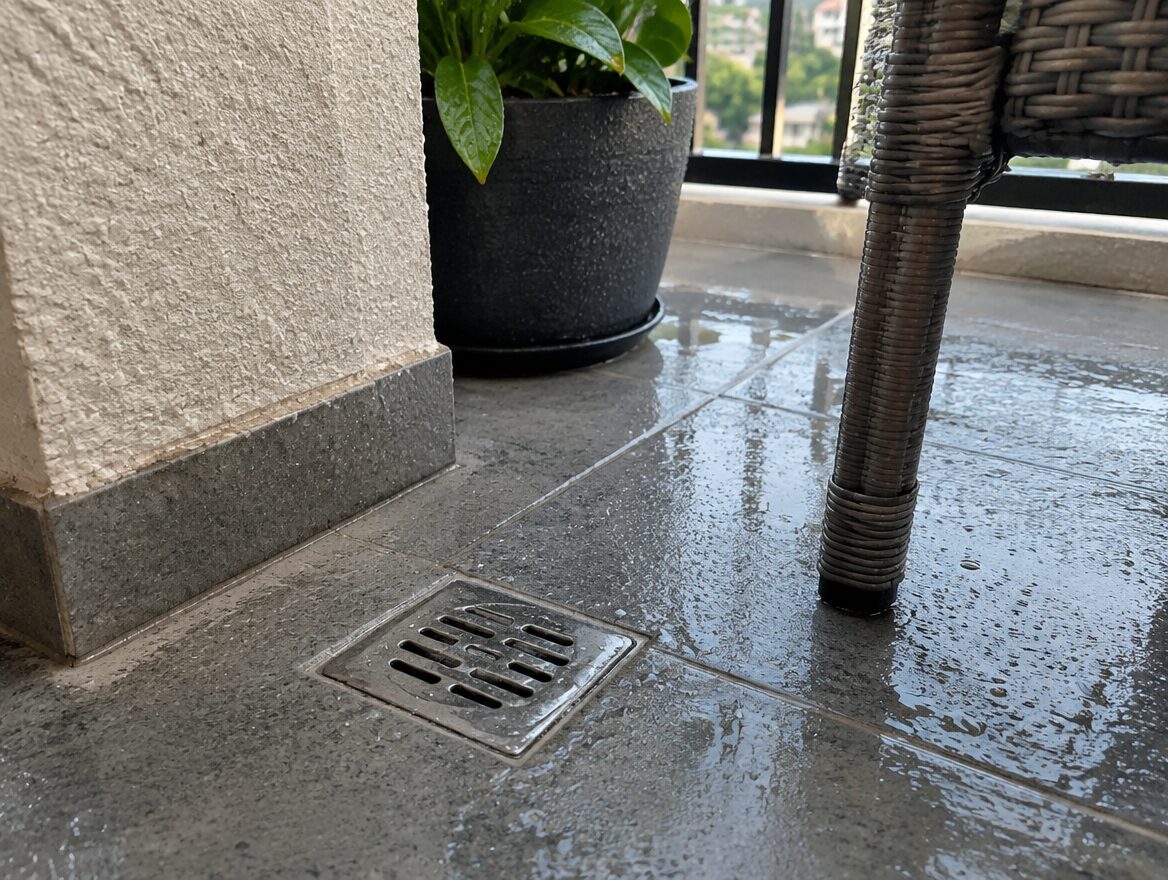
- Drainage. Keep the balcony floor drain accessible for inspection and cleaning, and don’t conceal it beneath pots, rugs, or storage. Check planter drainage separately from the floor drain, and check where runoff from pots actually goes. Investigate any persistent pooling or leakage before adding furniture or finishes; drilling into balcony floors or waterproofing isn’t a casual decor task and needs a qualified person.
- Society rules. Many housing societies have specific rules on balcony enclosures, external grills, railing-mounted items, and what’s visible from outside the building. Check these before buying or installing anything.
- Furniture suitability. Choose furniture whose manufacturer specifies it as suitable for your balcony’s exposure, and check the care requirements for the frame, cushions, and any other components separately. Outdoor-rated furniture may still need covering, drying, or indoor storage during monsoon; the material name alone (wood, metal, plastic, wicker) doesn’t establish how it performs in your specific conditions, and appearance alone doesn’t demonstrate outdoor suitability.
- What you’re giving up. Be realistic about whether choosing one layout means losing another use of the space, such as outdoor drying, before committing to furniture or built-in elements.
If you’re dealing with water staining, peeling paint, or other wear from monsoon exposure on an existing balcony, our DIY home repair and restoration guide covers general repair approaches. For low-cost decor made from household materials, see our out-of-waste home decor ideas guide.
Frequently Asked Questions
Can I combine seating and laundry drying on a small balcony?
Sometimes. Measure the drying rack when extended, including hanging clothes, and check the space needed to use the chair and door. You may need to move seating while laundry dries. Check installation requirements before choosing a wall-mounted rack.
How can I decorate a very narrow balcony?
Start with options that leave access available. Vertical planting may reduce floor use, but pots and foliage still project into the space and need suitable support. Measure the actual arrangement rather than relying on a universal minimum balcony width.
Do balcony privacy screens need permission?
Check your building’s rules and, if renting, your landlord’s requirements before installation. Removable screens can still affect the exterior and need secure fixings. Confirm whether any additional permission applies to the proposed work.
Which furniture should I choose for an exposed balcony?
Choose products specified for the conditions on your balcony. Check the manufacturer’s care instructions for the frame and cushions separately, including any covering or storage requirements. Material names alone don’t establish weather resistance.
How should I prepare balcony decor for monsoon rain?
Keep drains accessible, check for pooling, and move or protect items according to their care instructions. Check wind-use instructions for screens, awnings, and hanging items. Persistent leaks or drainage problems need attention before decorative work.
What balcony changes can renters make?
Movable furniture and containers can be a starting point, subject to available space and building rules. Screens and mounted items may still require permission and secure installation. Check the agreement before drilling or attaching anything to the building.
Sources & Notes
This guide reflects general space-planning principles for small balconies in Indian apartments. Planting considerations reference the RHS’s balcony and roof-garden guidance. General child-safety precautions reference Sydney Children’s Hospitals Network’s balcony safety guidance, without importing its Australian dimensional standards as Indian requirements. The privacy-screen example references IKEA’s YTTERSKÄR product instructions as one illustration of fixing and wind-use requirements, not a universal specification. The images in this guide are AI-generated design concepts, not photographs of completed installations. Check the dimensions, exposure, installation requirements, and permissions for your own balcony before acting on any of the above.