
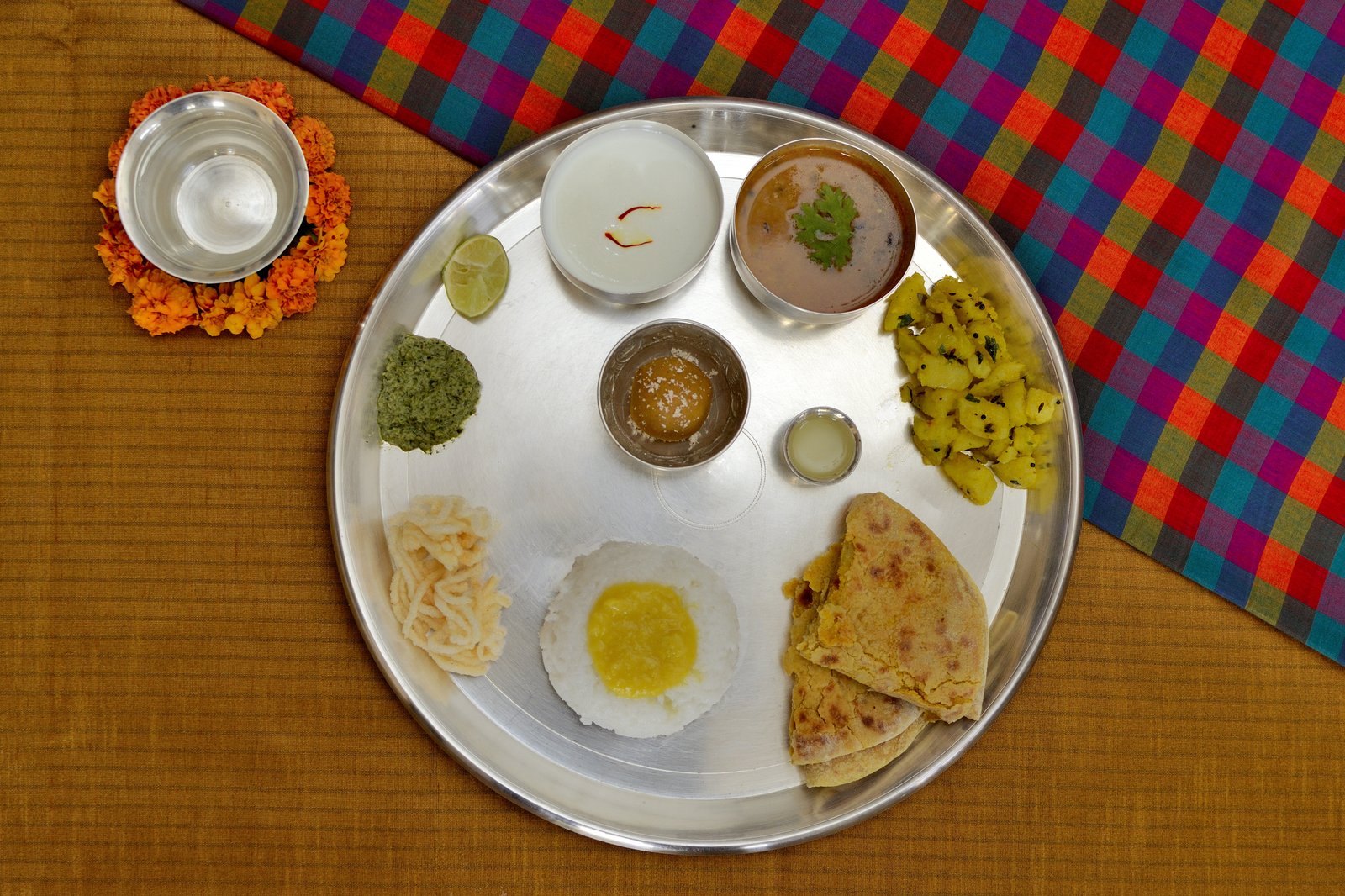
Before booking a wedding caterer in Navi Mumbai, verify the business, identify the kitchen, and agree the menu, the billable headcount, the service arrangements and the total price in writing. This guide covers those checks, from the food safety licence and the tasting to allergies, the quotation worksheet and the payment terms. It does not rank caterers or quote prices, because rates differ by menu, guest count and season. Use it with any caterer you are considering, and with your venue’s own rules from the wedding venues guide. For the whole sequence of steps, see our wedding planning guide.
Quick answer: the Food Safety and Standards Authority of India (FSSAI) says caterers for marriages and parties must hold an FSSAI licence or registration. Ask for the number with the quotation, check its current official record, find out who will cook your food and in which kitchen, taste the menu, and get the menu, headcount terms, tax position and payment terms in writing before you pay an advance.
Start with the FSSAI licence or registration
FSSAI’s licensing FAQ says caterers for marriages and parties must obtain an FSSAI licence or registration, as the eligibility rules require. Which one applies depends on the business and on turnover thresholds that FSSAI revised with effect from 1 April 2026 (see its order of 13 March 2026), so older figures you may see online can be out of date. For you as a customer, the useful step is to check the caterer’s official record, and you do not need to work out which category should apply.
- Ask for the number with the quotation. This lets you verify the business before you book.
- Check the official record. FSSAI’s FAQ says anyone can verify a licensed or registered food business through the Food Safety Connect app and through the FBO search on its FoSCoS portal. Licences and registrations are also issued with a QR code, which shows the details held in FSSAI’s database when scanned.
- Read the record, not just the number. Check the business name, the premises, the activities recorded and the current status. Do not rely on the first digit of the number to tell you the category, because FSSAI’s March 2026 FAQ says a number does not change when a business moves between categories.
- Check the current status, not just an expiry date printed on a certificate. The same FAQ says licences and registrations issued on or after 1 April 2026 are valid until they are suspended, cancelled or surrendered, so there may be no renewal date to look for.
- Ask which kitchen cooks your food. A licence is tied to a premises, so do not assume one certificate covers every kitchen used for your event. If the caterer will use another kitchen or a subcontractor for any part of the menu, ask who that is and where the food is prepared.
- Check the bill when it comes. FSSAI’s order of 2021 requires food businesses to print their licence or registration number on bills, invoices, cash receipts and cash memos. A number missing from a quotation does not prove that a caterer is unlicensed, but check that it appears on the food sale documents you receive.
Questions about food handling
A certificate does not tell you how food is handled at a large event. These are questions to put to the caterer. A visit by you does not certify a kitchen as safe, and a good tasting does not show that large batches will be handled safely.
- How is the temperature of hot and cold food controlled during transport and at the buffet, and what is refrigerated?
- Where do the cooking water, the drinking water and the ice come from, and are they potable?
- How are raw food and ready to eat food kept separate in the kitchen and in transport?
- How are equipment, utensils and serving areas kept clean, and where do the staff wash their hands?
- Are food covered or protected at the serving counters, and are the transport and packing containers food grade?
- Who supervises the cooking and the serving on the day, and how many staff will there be for your guest count?
- What happens to leftover food and waste after the event?
Allergies need their own plan
A vegetarian, Jain or separately plated meal is not automatically safe for someone with a food allergy. If a guest has an allergy, ask for written answers to these questions:
- Which exact ingredient must be avoided?
- Do the dishes share preparation equipment or serving utensils with other food?
- What controls prevent cross contact between dishes?
- Can ingredients be substituted, and which substitutes will be used?
- Who will pass the requirement to the kitchen staff and the service staff on the day?
The tasting
Book a tasting before you decide, and treat it as a test of the menu you will be served rather than a showcase.
- Taste the dishes that are in your menu, and ask whether the tasting portion is prepared the way a large batch will be.
- Bring the people who will decide, and note the spice level, the oil and the sweetness together, so you can compare caterers fairly.
- Say plainly what your guests need, such as vegetarian, Jain or no onion and garlic menus, and ask how those dishes are kept separate.
- Ask whether the tasting has a fee, and whether it counts towards your booking.
Menu, headcount and quantity
Vague words cause disputes, so ask for the menu, the quantities and the guest count terms in writing. These are recommended contract checks, not rules every caterer follows.
- The menu: every dish by name, with the number of items in each course, and what happens if a dish is unavailable.
- What one plate includes: drinks, water, desserts, live counters, crockery and tableware, and service staff. Do not assume they are included.
- Service hours and set up time: when the caterer arrives, when service starts and stops, and the charge if the event runs over.
- Buffet or plated service, and the number of serving points, so that queues stay manageable.
| Headcount issue | What to agree in writing |
|---|---|
| Billable count | Whether you pay for a guaranteed minimum, the actual attendance, or another defined basis |
| Children | Whether a separate rate or an age rule applies |
| Vendor and staff meals | Whether they are included or counted separately |
| Extra meals | The rate, and who may authorise them |
| Final count | The deadline for increases and reductions |
| Counting method | How both sides will reconcile the final bill |
| Service capacity | How the caterer will serve your agreed peak attendance |
Leftovers need more than an owner. Agree whether any food can be packed safely, who decides that, what containers will be used and what handling instructions come with it. Do not assume every dish left after a buffet is suitable to take home.
Confirm service at your exact venue
Venues differ, so do not assume yours has the same conditions as another. Confirm these with both the caterer and the venue.
- The kitchen address and the venue address, and the delivery and set up access
- Whether the venue allows an outside caterer, and any charge for it
- The water, power and preparation space the venue provides
- Any restriction on live counters or cooking at the venue
- The transport cost, and the plan if a vehicle is delayed
- A named event supervisor and a backup contact
Quotation worksheet
Fill this in for each caterer. Leave a row blank until you have a real answer.
| Item | Caterer 1 | Caterer 2 | Caterer 3 |
|---|---|---|---|
| FSSAI number, and what the official record showed | |||
| Where the food is cooked, and any subcontractor | |||
| Menu, with the number of items in each course | |||
| Rate per plate, and exactly what it includes | |||
| Billable count basis, and the final count date | |||
| Rate for extra plates, and who may authorise them | |||
| Staff for my guest count | |||
| Live counters, crockery, tables, power and gas | |||
| Transport, venue kitchen, equipment and overtime charges | |||
| Packing for leftovers, if any | |||
| Tasting date and fee | |||
| Total of the above, before tax | |||
| Advance, and the payment schedule | |||
| Cancellation and date change terms |
To compare two caterers who include different things, use one total: agreed billable meals × agreed rate, plus separately charged items, plus applicable taxes, minus agreed discounts. Show the advance you have already paid separately when you work out the balance, because an advance is a part payment and not an extra cost.
Tax questions to settle in writing
Do not assume how tax applies. Ask the caterer to answer these in writing, and check current rules on the official GST portal if you want to verify a charge. Where GST is charged, check the supplier’s GSTIN and the invoice details.
| Tax question | Written answer to ask for |
|---|---|
| Does GST apply to this quotation? | The supplier’s explanation |
| Is the quoted price inclusive or exclusive of tax? | A clear statement of what is included |
| What is the final amount I will pay? | The total, with any applicable taxes |
| What billing document will I receive? | The appropriate invoice or bill |
Contract, payment and cancellation
- Sign a written agreement that carries the menu, the headcount terms, the dates and the total.
- Pay in stages and keep a receipt for each payment.
- Understand cancellation and date changes before you pay the advance: how much is refundable, up to what date, and what happens if the wedding date moves.
- Name one person who will manage the catering on the day, with a phone number.
- Check your venue’s terms. Some venues charge a fee for an outside caterer, or restrict the kitchen and open flame cooking, so confirm this before you book either one.
If something goes wrong
If guests fall ill after the meal, get medical care first. Then keep the invoice, the written menu, the caterer’s business details and the details of the event.
- A suspected food safety or hygiene problem: you can report it on the Maharashtra Food and Drug Administration’s complaint portal (see its grievance page) or on FSSAI’s consumer grievance portal. A food safety complaint does not by itself secure a refund.
- A billing, cancellation or service dispute: this is a matter between you and the caterer, so work from your written agreement and your receipts.
Planning the rest of the wedding
For the venue, see our wedding venues guide. The legal steps of the marriage itself are separate, and our marriage registration guide explains them.
Frequently Asked Questions
Do wedding caterers in India need an FSSAI licence or registration?
FSSAI’s licensing FAQ says caterers for marriages and parties must obtain an FSSAI licence or registration, as the eligibility rules require. Registration and licensing are not interchangeable choices, so check the caterer’s current official record.
How do I check a caterer’s FSSAI licence or registration?
Ask for the number with the quotation, then verify it through FSSAI’s Food Safety Connect app or the FBO search on its FoSCoS portal. Check the current official status, not just a certificate printed with a date.
What should I check in the FSSAI record?
Check the business identity, the premises, the recorded activities and the current status. Read the current certificate or official record rather than relying only on the number’s first digit, because FSSAI says a number does not change when a business moves between categories.
Should the caterer’s bill show the FSSAI number?
Yes. FSSAI’s 2021 order requires food businesses to print their licence or registration number on bills, invoices, cash receipts and cash memos, so check that it appears on the food sale documents you receive. Ask for the number with the quotation so you can verify the business before booking, though its absence from a quotation alone does not prove that a caterer is unlicensed.
How should I handle a guest’s food allergy?
Do not treat a vegetarian, Jain or separate meal as automatically safe. Ask for written answers on the ingredient to avoid, shared equipment and utensils, cross contact controls, substitutions, and who will tell the kitchen and service staff.
What if my guest count changes?
Agree in writing the basis on which you are billed, the deadline for changing the final count, the rate for extra meals and who may authorise them, and how both sides will reconcile the final bill.
Where can I complain about a food safety problem at a wedding?
You can report it on the Maharashtra Food and Drug Administration’s complaint portal or on FSSAI’s consumer grievance portal. A food safety complaint does not by itself secure a refund, so keep the invoice, the menu and the caterer’s details, and treat billing or cancellation disputes separately.
Sources and a note on accuracy
Sources checked on 15 October 2026. Revised turnover thresholds and their start date: FSSAI’s order of 13 March 2026. Number continuity on migration and validity: its FAQ of 27 March 2026. Caterers and verification: FSSAI’s licensing FAQ (2021), with the FoSCoS portal and Food Safety Connect. Number on bills: FSSAI’s order on printing the licence number. Complaints: the Maharashtra Food and Drug Administration’s grievance page and FSSAI’s consumer grievance portal. Tax: the GST portal. Featured photo: Maharashtrian Mejwani by Sharvarism, licensed CC BY-SA 4.0 via Wikimedia Commons, resized. Rules, thresholds and portals change, so confirm on the live FSSAI portal. This guide is general information, not legal advice, and it does not recommend any caterer. NaviMumbai.com is an independent information site and is not affiliated with FSSAI, the Maharashtra Food and Drug Administration or any caterer.