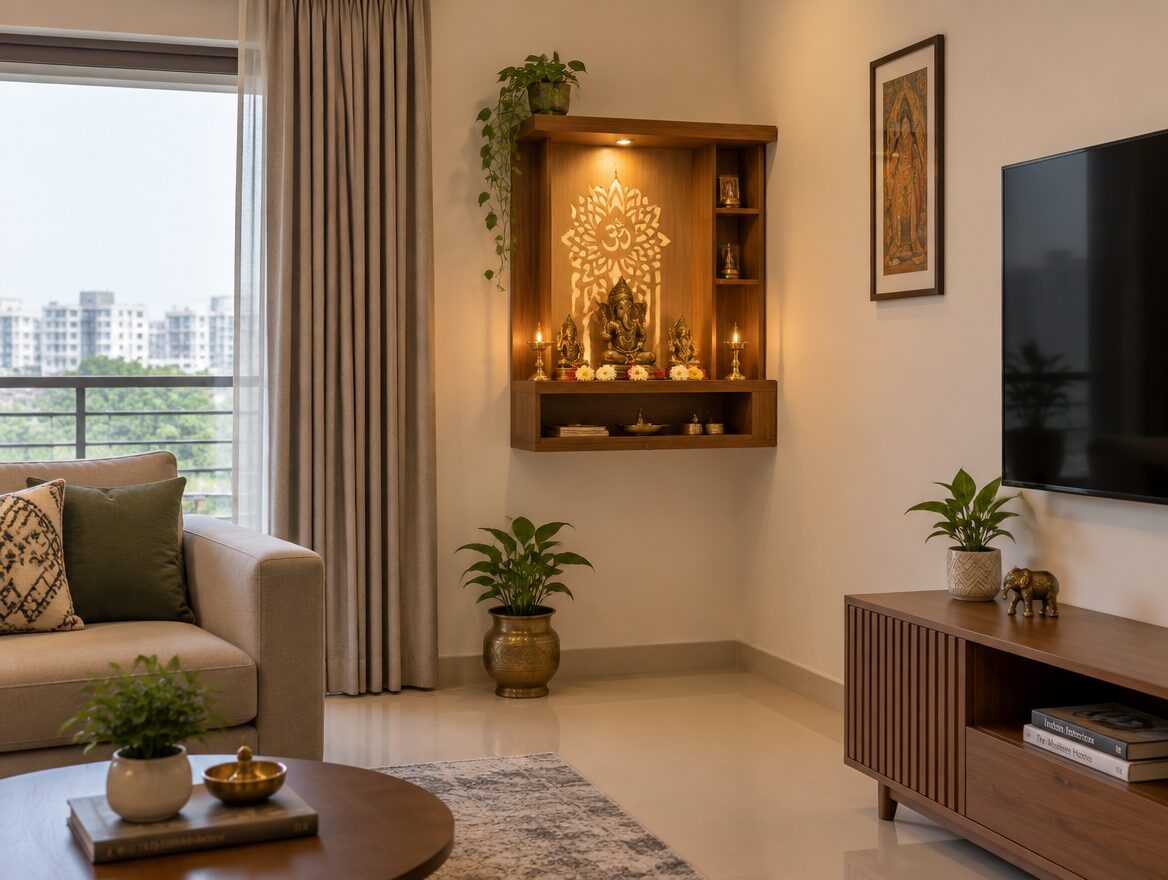
Quick answer: If your apartment does not have a separate pooja room, consider a wall-mounted unit, a cabinet with doors, a corner unit, or a screened nook. Compare the unit’s dimensions, the space needed to use it, storage, installation requirements, and how you plan to use lamps or incense before choosing.
This guide uses original, AI-generated room visuals to illustrate each layout. They are conceptual references for space planning, not photographs of any real, installed project or a tested safe arrangement for lamps and incense. These are editorial design concepts, not installation drawings or product specifications.
Why Apartment Pooja Spaces Need Different Thinking Than Houses
Traditional pooja room guidance often assumes a separate room with its own door, often in a specific direction. Many apartments, especially smaller ones, don’t have that option. The layouts below work within the real constraints of apartment living: limited wall space, shared rooms, and the need to keep the space clean and accessible without a dedicated exhaust. Directional preferences vary by tradition and household; if they matter to your family, include them in your planning alongside the practical checks below, such as access, installation, and safety.
Four Pooja Space Layouts for Apartments
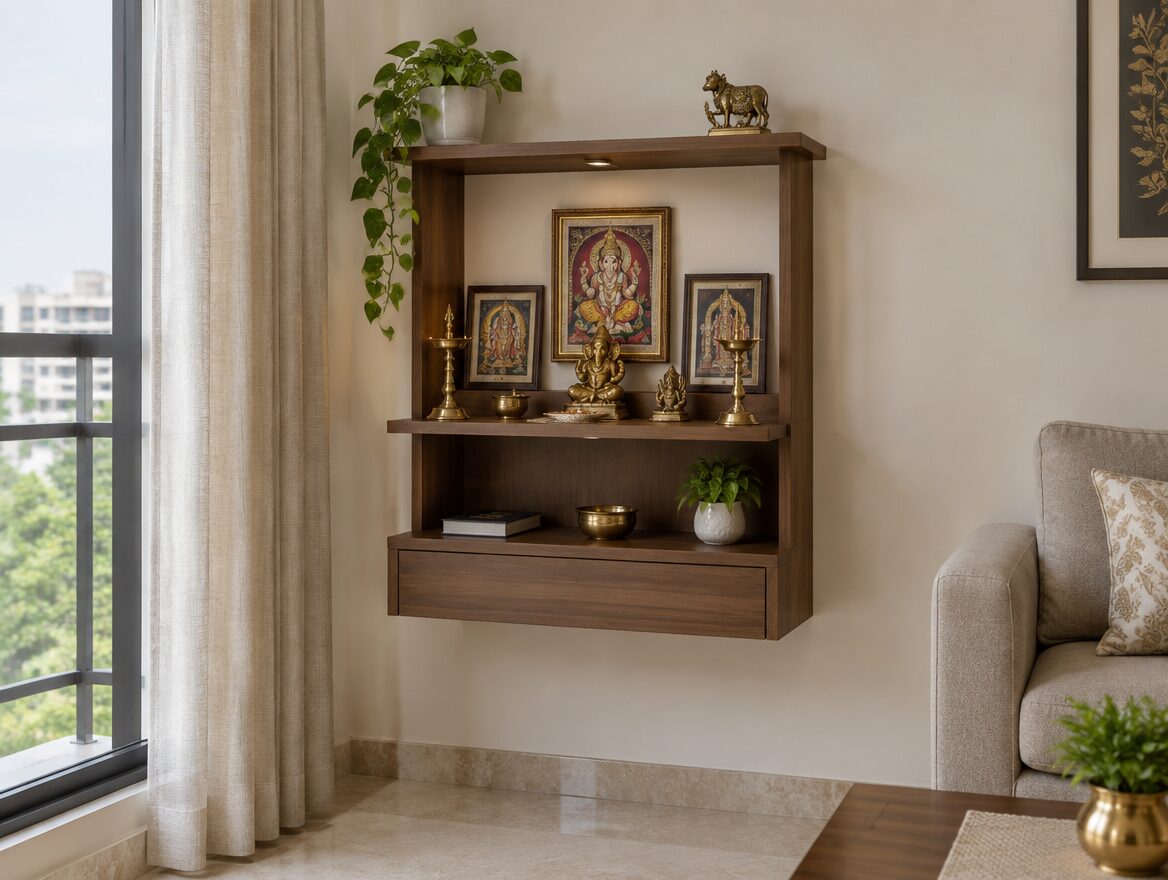
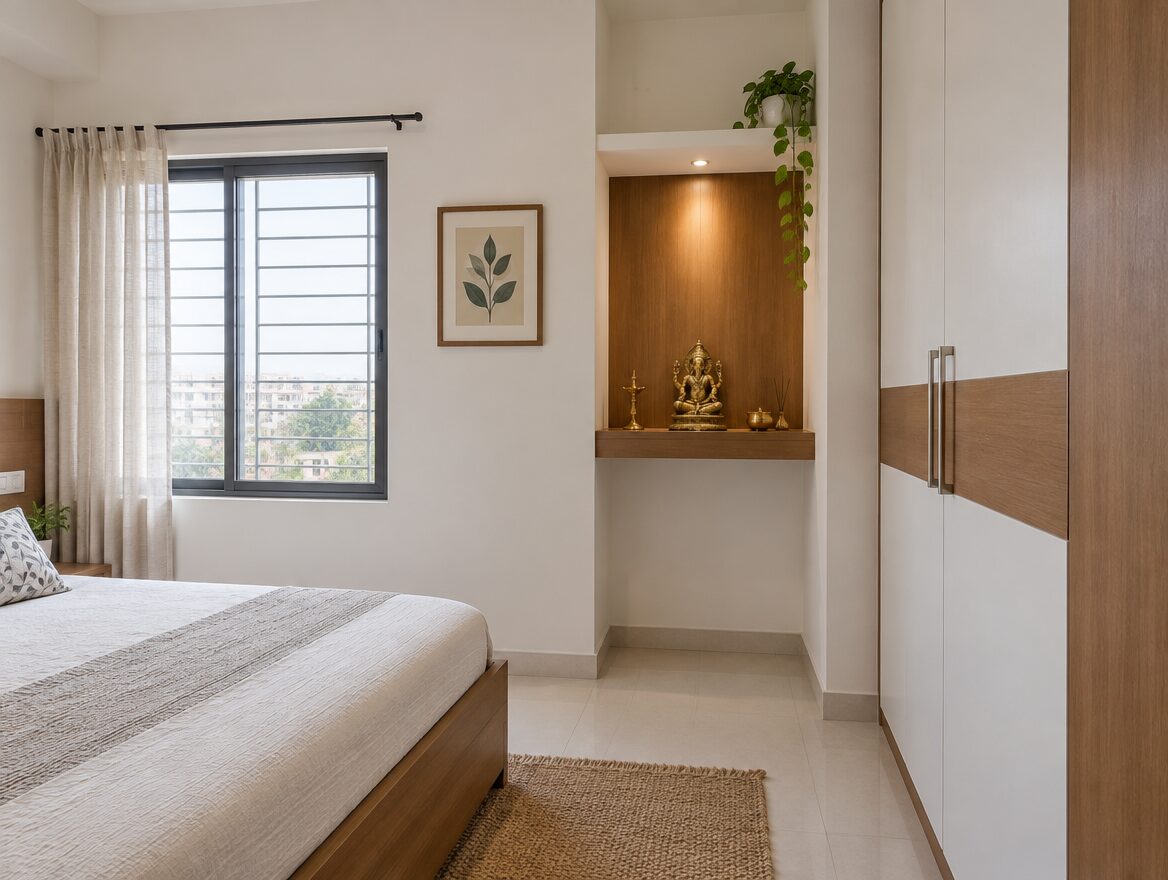
1. Open Wall-Mounted Unit
A shelf or small open cabinet mounted directly on the wall, usually at a height comfortable for standing or sitting on the floor in front of it. A wall-mounted unit leaves the floor beneath it free of a cabinet base, but you still need clear space in front to use and clean it comfortably, and the unit itself still projects into the room. Check that it doesn’t obstruct a doorway or a walking route. Works well in a corner of the living room or a hallway nook. The main limitation is storage: an open unit has little room for puja items like extra diyas, incense, or prasad plates, which need to be stored elsewhere.
Before fixing anything to the wall, confirm the wall construction, the unit’s loaded weight, and the manufacturer’s fixing requirements. Use anchors suited to the wall type and, where the load or wall type is uncertain, an installer who can assess the substrate and check for concealed services. IKEA’s general wall-anchoring guidance explains how the right fixing differs between drywall, masonry, and hollow walls; the principle applies here even though the specific products differ (IKEA wall anchoring guide). If you’re repairing an older wall’s surface before mounting anything, our DIY home repair and restoration guide covers patching and surface-prep basics, though it doesn’t establish whether a wall can safely support a cabinet.
2. Cabinet with Doors
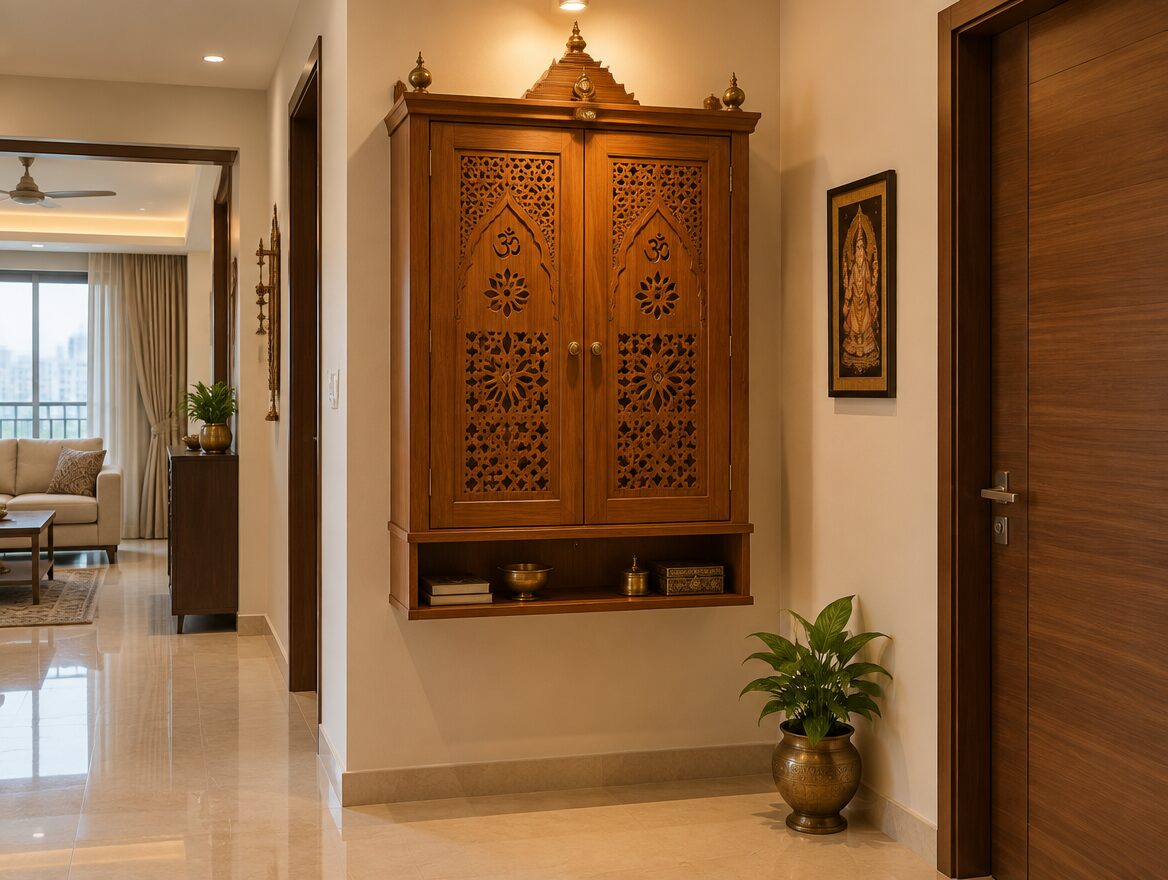
Cabinets with doors may be wall-mounted or floor-standing. Compare the mounting method, depth, door swing, and storage layout of the actual unit you’re considering, since these vary a lot between products. Doors provide visual separation, while dust protection depends on the door construction and openings; a jali (lattice) panel door, for example, looks enclosed but doesn’t seal the contents against dust the way a solid door does.
A cabinet’s doors must never be closed over a burning lamp or smouldering incense. An open door alone doesn’t establish safe clearances from fabric, paper, or other combustible material inside or around the cabinet.
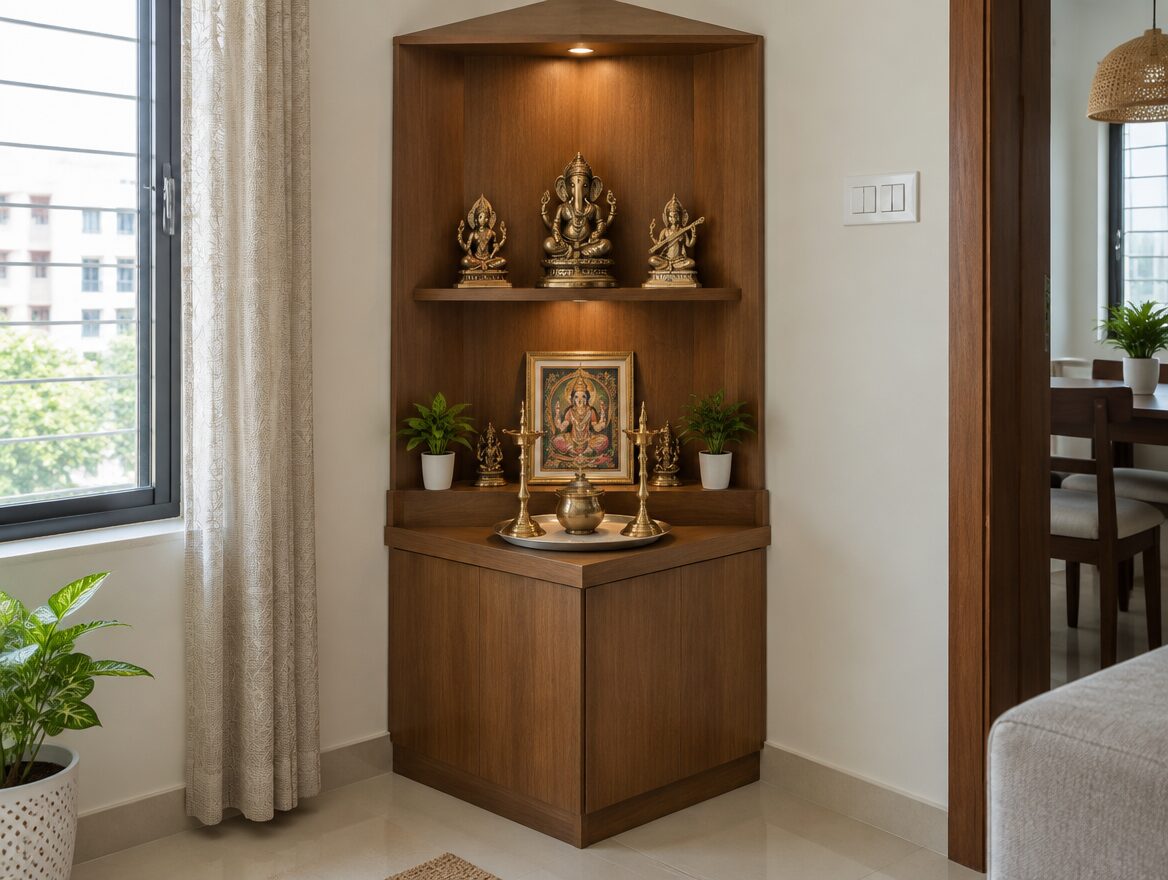
3. Corner Unit
A triangular or angled unit designed to fit into a room corner rather than along a flat wall. This can be a useful option when you don’t have enough blank wall space elsewhere, though check first that the corner isn’t already needed for circulation or a door swing before assuming it’s spare space. Corner units vary in shape; check usable shelf depth and access at the front and sides, especially for larger items and cleaning, rather than assuming a corner unit automatically uses less room than a flat wall-mounted one.
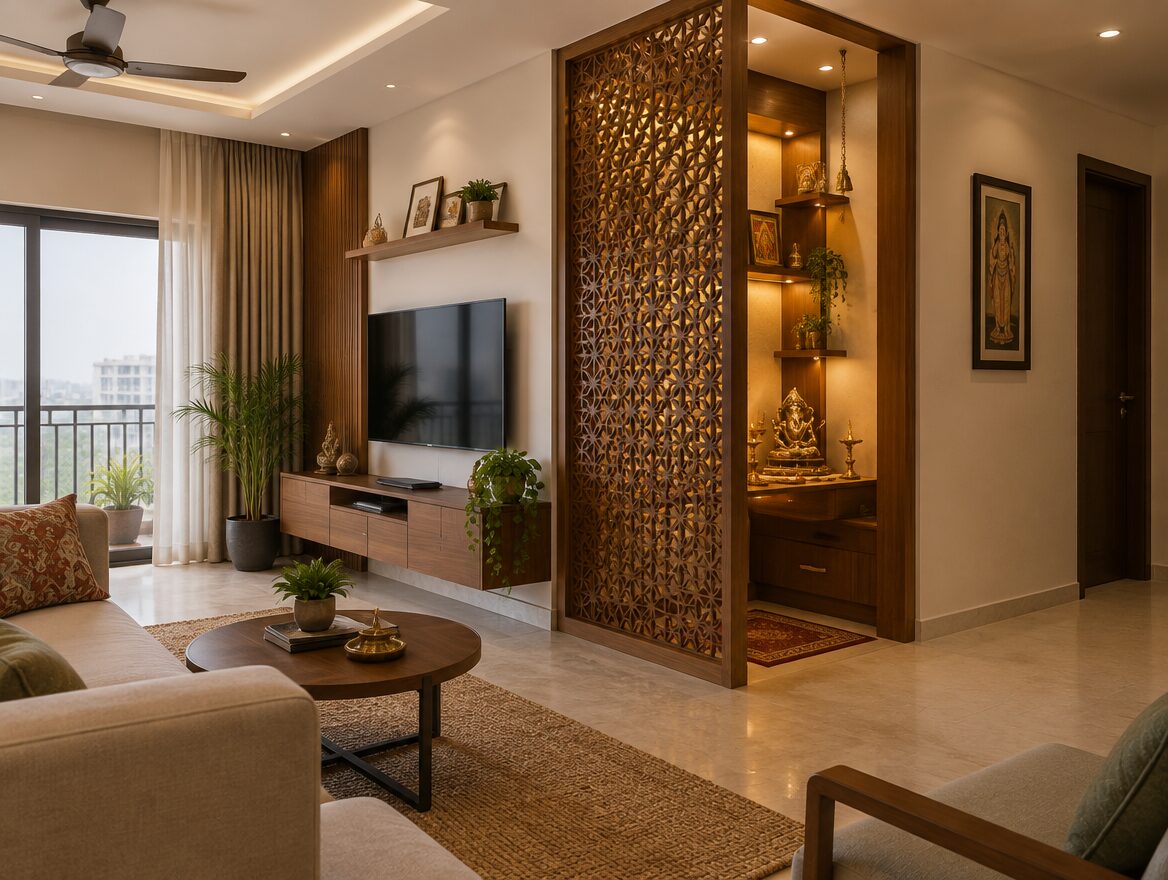
4. Partition or Room-Divider Nook
A small partition, often a jali (lattice) screen, wooden divider, or low wall, that carves out a dedicated pooja nook from a larger room, commonly the living room or an entryway. This is the most involved option since it usually needs some construction or a custom-built divider, but it creates a sense of separation without needing a full extra room. Check the partition’s own footprint against how much circulation space remains in the room, since a divider that’s generous inside can still leave the rest of the room cramped. Best suited to larger living rooms or entryways where you can give up a defined corner permanently.
What to Measure Before Choosing
Rather than working from generic size ranges, measure your own space and the specific unit against this checklist:
| Measure or check | Why it matters |
|---|---|
| Available width | Determines whether the unit fits between existing features |
| Unit depth | Shows how far it projects into the room |
| Installation height | Must suit the intended seated or standing use |
| Clear space in front | Allows worship, cleaning, and movement |
| Door and drawer opening | Prevents collisions with nearby furniture |
| Largest item’s dimensions | Checks shelf width, depth, and vertical clearance |
| Total installed weight | Informs support and fixing requirements |
| Existing switches and services | Helps identify installation conflicts |
If you later work from specific dimensions, tie them to a measured design or a manufacturer’s product rather than inferring sizes from the renders in this guide.
Comparing the Four Layouts
| Layout | Installation and space checks | Storage | Main trade-off |
|---|---|---|---|
| Open wall-mounted unit | Wall suitability, projection, and access | Depends on shelves/drawers | Open display and accessible cleaning |
| Cabinet with doors | Mounting type, depth, and door swing | Depends on internal layout | Visual enclosure requires additional opening space |
| Corner unit | Both wall dimensions and usable shelf depth | Product-dependent | Can suit a corner but may limit access |
| Screened nook | Divider footprint and remaining circulation | Depends on the unit inside | Separation uses additional room space |
Diya and Incense Safety
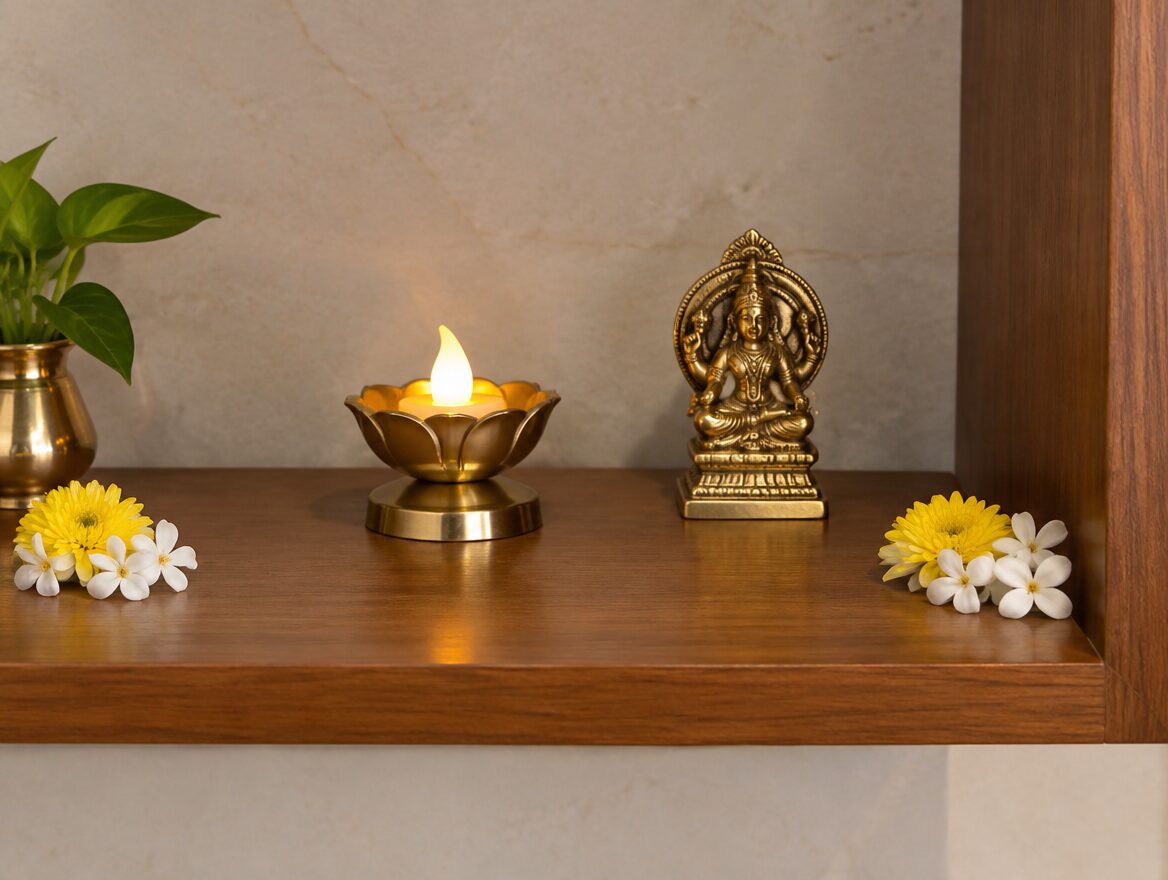
If you use a flame, choose a stable arrangement with suitable heat-resistant holders and keep it clear of combustible furnishings and decorations. Never leave diyas or incense burning unattended. Extinguish them before leaving the room or sleeping, and keep them out of children’s and pets’ reach. Where safe placement can’t be achieved, consider a flameless light if that suits your practice. The London Fire Brigade’s home fire safety guidance explicitly names diya lamps and incense sticks among the sources it warns against leaving unattended, as general fire-safety guidance rather than an India-specific rule (London Fire Brigade: candles and fire safety at home).
Ventilation doesn’t eliminate soot or make an enclosed combustible cabinet suitable for a flame. Keep the arrangement accessible for cleaning and follow the holder and unit instructions. A wipeable backing may help with maintenance, but it doesn’t replace safe placement, and it shouldn’t be treated as adequate protection on its own. Avoid directing airflow at a flame, and keep maintenance advice separate from fire safety in your own planning.
Other Practical Considerations
- Cleaning access. Check that you can comfortably reach every shelf and corner for regular cleaning, especially for wall-mounted units placed higher up.
- Lighting. Most units benefit from a small dedicated light, either built into the unit or a nearby fixture, rather than relying on the room’s general lighting.
- Decorative touches. For decorative accessories away from lamps and incense, see our out-of-waste home decor ideas guide. Keep paper, fabric, and other combustible decorations away from heat and flames; recycled craft materials aren’t suitable as lamp holders or protective surfaces.
- Rented apartments. A removable unit may be easier to relocate than custom joinery, but wall mounting can leave fixing holes and require making good. Check your rental agreement and get any required permission before installing anything. A freestanding option may reduce installation work, though its own anchoring instructions, where it needs any, still apply.
A Renovation Option: A Designed Niche
A niche can be incorporated into planned joinery or a suitably designed partition, usually at the construction or renovation stage rather than added afterward. Recessing an existing wall needs an assessment of its construction and any concealed services; don’t assume a wall can simply be cut back without checking. A surface-built surround can offer a similar look but adds depth to the room instead of recessing into it. Confirm the design and any necessary permissions before work begins; this suits households doing a fuller interior fit-out rather than a quick addition to an already-finished apartment.
Frequently Asked Questions
What is the smallest space I can fit a pooja unit into?
There is no universal minimum. Measure the unit’s width, depth, and height, plus the clear space needed to use it. A wall-mounted unit leaves the floor beneath it free of a cabinet base but still needs access in front.
Do I need a separate room for a pooja space?
No. A unit or nook within an existing room may suit your household. Choose a location that accommodates your practice without obstructing movement or creating installation and flame-safety problems.
How can I reduce soot marks around a pooja unit?
Keep the area accessible for cleaning, and don’t assume ventilation or a backing tile eliminates soot or fire risk. Follow the unit and lamp instructions. A flameless option avoids combustion soot from that light source.
Can I install a pooja unit in a rented apartment?
Check your agreement and obtain any required permission. Wall-mounted units can leave holes, while some freestanding furniture also needs anchoring. Confirm removal and repair arrangements before installation.
What direction should a pooja space face?
This depends on the tradition or family practice you follow. Treat it as part of your household brief alongside practical access, installation, and safety requirements.
How much storage do I need?
List the items you use daily and those stored between festivals. Check the actual shelf and drawer dimensions. Doors alone don’t establish how much usable storage a unit provides.
Sources & Notes
These layouts are editorial design concepts, not installation drawings or product specifications. Images are AI-generated. Confirm dimensions, fixings, materials, and lamp-use suitability for your actual unit and room before installation. Wall-mounting guidance references the IKEA wall anchoring guide, a general resource on matching fixings to wall construction. Flame-safety guidance references the London Fire Brigade’s home fire safety guidance, which explicitly covers diya lamps and incense.