
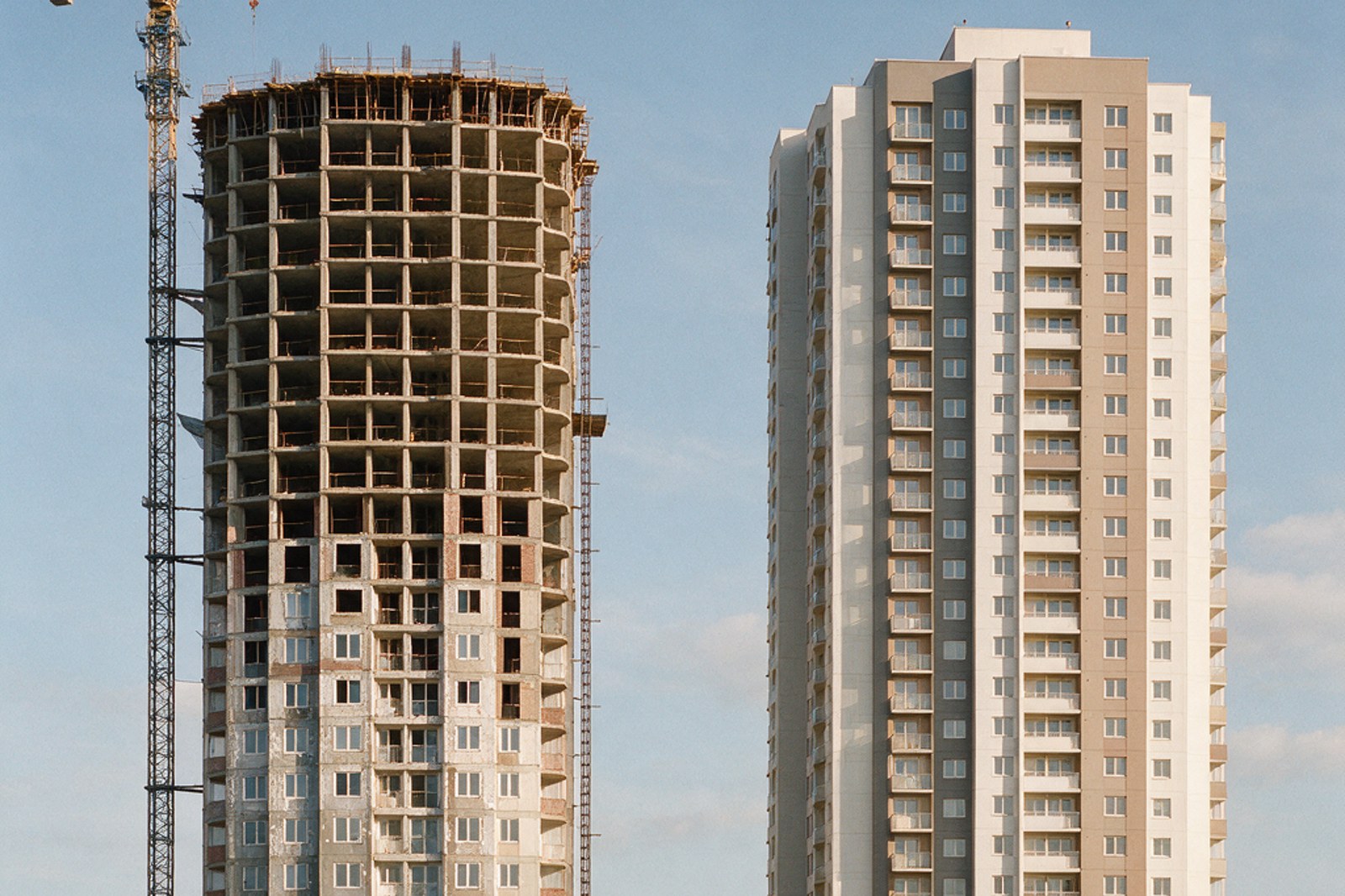
The image above is an AI generated illustration made for this guide. It does not show a real person or property.
An NRI buying in Maharashtra usually has three choices: a flat that is still being built, a new flat that is ready, or a resale flat. They differ in price structure, tax, protection, risk and how much you can check from abroad. This guide compares the three, explains the RERA and GST points that depend on the choice, and gives a checklist to complete before you pay a first instalment.
This is general information and not legal or tax advice. GST rates, RERA rules and stamp duty change, and several points below come from secondary sources, so confirm them with the primary text and your advisers. This guide is independent and has not been reviewed by a lawyer.
The three options side by side
| Under construction | Ready, from the builder | Resale | |
|---|---|---|---|
| Who sells | The developer | The developer | The current owner |
| You can inspect the flat | No. You see a sample or plans | Yes | Yes |
| Payment | In stages linked to construction | Usually most or all at once | Usually a part at agreement and the rest at registration |
| GST | Applies, at the reduced rates | Generally none, once the completion or occupancy certificate is in place | Generally none for a private resale |
| Main risk | Delay, change of plan, builder default | Title, defects, unpaid dues | Title, society dues, building age |
| RERA protection | Strongest, since the project is registered | Depends on the project | Limited, because it is a sale by an owner |
| Society and share papers | After the society forms | Present or being formed | Needs transfer and a no-objection from the society |
The GST points come from tax sites summarising official guidance (see CAclub and TaxGuru) and should be checked on the GST Council site for any change. They are described there as turning on whether the completion or occupancy certificate had been issued when the sale was made.
Under construction: what RERA is meant to protect
- Registration. Check that the project is registered with MahaRERA and that the number in your agreement matches. See the MahaRERA project search guide and the MahaRERA site.
- The ten per cent rule. A builder should not take more than 10% of the price before a written, registered agreement for sale, as described in a recent explainer. Be wary of an old figure of 20%, which came from an earlier law.
- The separate account. RERA requires 70% of money collected from buyers to be kept in a separate bank account for land and construction costs, with withdrawals tied to certified progress (see Business Today). Ask the builder for the project’s account details and the latest certificates.
- Possession date. The agreement should state the date. If it is missed, you can withdraw and get a refund with interest, or stay and receive interest for each month of delay. MahaRERA’s rules are reported to set the rate at SBI’s highest lending rate plus 2%. See the NRI flat possession checklist and the MahaRERA complaint guide.
Do not rely on the payment percentages in a builder’s brochure. Compare the stages with the model agreement and have an advocate check them. See the agreement for sale, sale deed and conveyance guide and the property lawyer checklist.
GST: what depends on the choice
- On an under-construction flat, GST was reported to be 5% without input credit, or 1% for affordable housing, on the value net of land, since 1 April 2019. The affordable category was described as a carpet area up to 60 square metres in metro cities and a value up to Rs 45 lakh. Check the current rate and the definition on the GST Council or CBIC site, because rates can change.
- A ready flat bought after the completion or occupancy certificate is issued is generally outside GST. If part of the price was paid before the certificate, that part can be taxable.
- A resale from an individual is generally not charged GST.
- Stamp duty and registration apply in all three cases. See the stamp duty and registration guide.
Ready and resale: what to check
- The occupancy certificate and whether it covers your flat. See the NRI flat possession checklist.
- The chain of title, the share certificate and society papers, and the society’s dues and transfer fee. See the society share certificate guide.
- The age and repair history of the building, and any pending redevelopment.
- For a resale, the seller’s loan closure and the original documents.
Loans and payment for an NRI
- Home loans for an under-construction flat are usually paid out in stages as the builder reaches milestones, and you pay interest only on the amount drawn. Ask the lender how it works. See the NRI home loan guide.
- Pay from an NRE, FCNR(B) or NRO account or by inward remittance. RBI’s FAQ says travellers cheques and foreign currency notes are not allowed (see the RBI FAQ). See the guide to opening an NRI bank account.
- Keep every receipt and bank statement, since they matter if you sell later.
Tax deduction when you pay
If the seller is a resident, including a builder, a buyer who pays Rs 50 lakh or more has to deduct 1% as tax at source under the property provisions, and a tax site gives an example of a buyer living abroad having to deduct as well (see TaxGuru). The Income-tax Act, 2025 moved these provisions and the forms from 1 April 2026, with a PAN based route for some individual buyers from 1 October 2026 (see TaxGuru). Being an NRI buyer does not by itself remove the buyer’s obligations. Reconcile every instalment with your accountant before you pay it. If the seller is an NRI, a different and higher deduction applies. See the NRI property buying guide.
Before you pay the first instalment
| Check | Done? |
|---|---|
| MahaRERA registration and the number in the agreement | |
| Registered agreement for sale before more than 10% is paid | |
| Payment stages compared with the model agreement | |
| Title, approvals and the land position checked by an advocate | |
| Possession date and the delay terms in the agreement | |
| GST and stamp duty in the total cost | |
| Tax deduction on each instalment settled with your accountant | |
| Payment route, from an NRE, NRO or FCNR(B) account or inward remittance | |
| Loan sanction and the disbursement stages agreed | |
| Who holds the power of attorney and what it allows |
See the guide to the documents NRIs need for Indian property for your own papers and the guide to areas and connectivity for the location.
Frequently Asked Questions
Is an under-construction flat or a ready flat better for an NRI?
It depends on your timing and risk. A ready flat lets you inspect and avoids construction delay and generally GST. An under-construction flat has stage payments and the protection of RERA registration. This guide does not advise.
Is GST charged on a ready flat?
Generally not, once the completion or occupancy certificate has been issued before the sale. Check the current rule on the GST Council site.
How much can a builder collect before the agreement is registered?
RERA is described as allowing no more than 10% before a written, registered agreement for sale. Have your advocate check it.
What is the 70% rule?
RERA requires 70% of money collected from buyers to be held in a separate bank account for land and construction costs.
What if possession is late?
You can withdraw with a refund and interest, or stay and receive interest for each month of delay. See the possession checklist.
Do I deduct tax when I pay a builder?
Possibly. Tax sites describe 1% at source for payments of Rs 50 lakh or more to a resident seller. Ask your accountant, because the rules changed in 2026.
Sources
| Point | Source |
|---|---|
| The 10% rule | Propnewz |
| The 70% separate account | Business Today |
| GST on flats | CAclub and TaxGuru |
| Tax deduction on purchase | TaxGuru and TaxGuru |
| How NRIs can pay | RBI FAQ |
Reviewed on 27 October 2026. The RERA percentages, the GST rates and the tax deduction rules come from commentary and should be checked against the Act, the Maharashtra Rules, the GST notifications and the Income-tax Act, 2025. This guide has not been reviewed by a lawyer.
The featured image is an AI generated illustration made for this guide, and not a photograph.
NaviMumbai.com is an independent information site and is not affiliated with any government body.