The usual way to reach the Elephanta Caves from Navi Mumbai is by train or bus to the Gateway of India in south Mumbai, then a ferry of about an hour across the harbour. The caves are on an island, and the monument is closed on Mondays. This guide covers the route, the ferry ticket, cave timings and fees, the climb on the island and a day plan.
Ferries are run by private operators and depend on the weather, so timings and fares change. This is an independent guide and is not run by any ferry operator or by the Archaeological Survey of India.
Elephanta Caves at a glance
| Question | Answer |
|---|---|
| Where are they? | On Elephanta Island, also called Gharapuri, in Mumbai Harbour, about 10 to 11 km east of the Gateway of India (Wikipedia). |
| Cave opening hours | 9 am to 5 pm, according to the Archaeological Survey of India (ASI). |
| Closed day | Monday. Do not plan a cave visit on a Monday. |
| Entry fee | See the fee table below. Children under 15 enter free. |
| Ferry | From the Gateway of India, about an hour each way. Operators set their own timings and fares. |
| Climb | About 120 steps from the ticket counter to Cave 1. |
| World Heritage status | Inscribed by UNESCO in 1987. |
Navi Mumbai to the Gateway of India
Decide this before you leave home. The ferries leave from the Gateway, so the journey is really a trip across Mumbai first. Pick the line that fits your starting point and check the live timetable in the railway app, because the interchange and the time depend on the day.
| Starting from | How to get to the Gateway side |
|---|---|
| Vashi, Sanpada | Harbour line towards CSMT (Chhatrapati Shivaji Maharaj Terminus). |
| Nerul, Seawoods, Belapur | Harbour line towards CSMT. |
| Kharghar, Panvel | Harbour line towards CSMT. |
| Airoli, Ghansoli | Trans-Harbour line, then a change at Thane or Vashi for a train to CSMT. |
| Ulwe | A train from Ulwe to Nerul or Belapur, then the Harbour line to CSMT. |
The Mumbai local train guide covers tickets and crowds. From CSMT, the Gateway of India is about 2.2 km, roughly 30 minutes on foot (route), so most people take a short taxi or bus. The other option is an NMMT AC shuttle across Atal Setu to Mantralaya, with the Gateway about 1.5 km on foot (route). Routes and stops are in the NMMT bus guide, and drivers should see the Atal Setu toll guide. Distances are OpenStreetMap estimates checked on 22 October 2026.
Ferry tickets and the return crossing
The ferry point is at the Gateway of India (Gateway of India on the map). The ferry information site elephanta.co.in lists a return fare of about ₹260 and first boats from around 9 am, Tuesday to Sunday. Operators change fares, so treat that as a guide, not a quote.
- Ask whether your ticket covers the return crossing, and which boats accept it. A ticket from one operator may not be valid on another operator’s boat.
- Ask for the last return departure when you buy the ticket, and plan to be back at the jetty well before it.
- The ferry ticket is separate from the monument entry ticket.
Can you travel directly from Belapur?
Boats between the Belapur jetty and Elephanta have run in the past, under different operators and fares. There is no confirmed current schedule and fare for a Belapur service, so plan your trip via the Gateway of India unless an operator confirms both your outward and your return booking. If you do use Belapur, see the Belapur CBD railway station guide for getting to the station.
Cave timings and entry fees
The ASI page for the caves gives the hours and entry fees below. The monument ticket is separate from the ferry ticket.
| Visitor | At the counter | Paying online |
|---|---|---|
| SAARC and BIMSTEC country visitors | ₹40 | ₹35 |
| Other foreign visitors | ₹600 | ₹550 |
| Children below 15 | Free | Free |
The ASI page does not show a separate line for Indian visitors in the part that is readable online. Travel guides in October 2026 give ₹40 for Indian visitors, so confirm the amount on the ASI booking page or at the counter. Some guides also mention a small island or village fee of about ₹10 a head, so keep a little cash for the jetty.
Opening hours are 9 am to 5 pm. Last admission is not stated on the ASI page, so do not plan to arrive close to 5 pm.
On the island
The boat lands at a long jetty, and the walk from the landing point to the foot of the climb takes a while. A toy train has run along the jetty for visitors who do not want to walk it, but it does not take you up the steps, so check whether it is running on the day. The climb to Cave 1 is about 120 steps, with uneven surfaces in places, so the visit is hard going for anyone with limited mobility or very young children.
Carry your own water, a cap and some snacks. There are food stalls near the steps, but the choice is limited. Wear shoes with a grip.
What to see in Cave 1
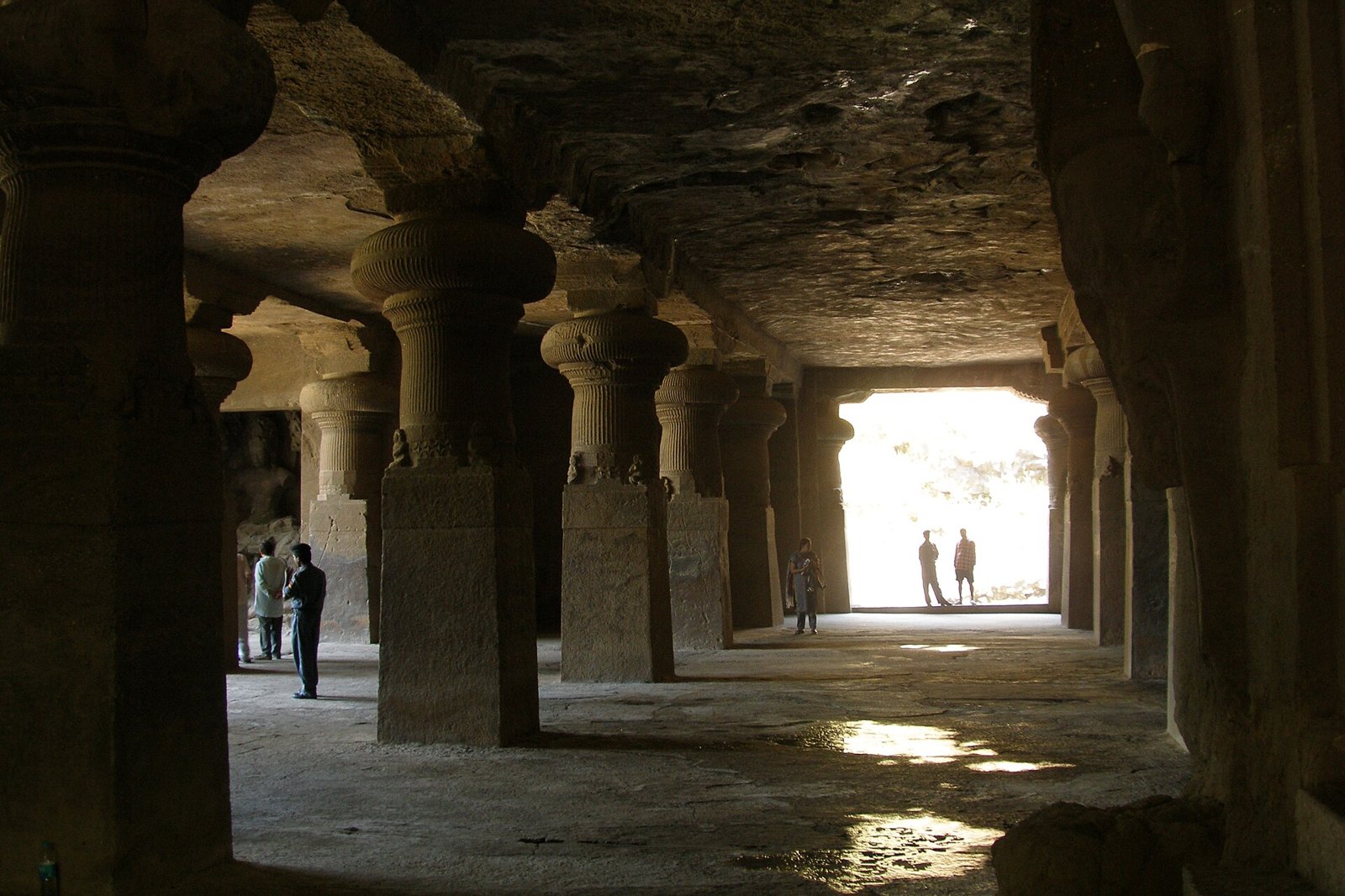
Cave 1, the Great Cave, is the one most people come for. UNESCO dates the rock-cut caves to about the mid 5th to 6th centuries AD, and names the main sculptures as the finest work on the site. Look for:
- The Trimurti (Sadashiva), the three-faced Shiva that fills the wall facing the entrance.
- Nataraja, Shiva as the lord of dance.
- Ardhanarishvara, the half male and half female form of Shiva.
- Yogishvara, Shiva as the lord of yoga, and other large relief panels along the walls.
The island has five Hindu rock-cut caves on the western hill and two Buddhist caves on the eastern hill, according to Wikipedia.
A suggested day plan
- Choose your route before you leave home, and book or confirm your return boat if you can.
- Leave early enough to reach the Gateway of India by about 9:30 am, which leaves time to queue for the ferry ticket.
- Board the outward boat, and allow about an hour for the crossing.
- Walk the jetty and climb to Cave 1. Allow two to three hours on the island, with a break.
- Start back to the jetty with a buffer before the last return departure you were told about.
- Cross back to the Gateway and plan the train or bus home, allowing for the evening rush.
The caves and the walk are not a good fit for a late start. If you reach the Gateway after about 11 am, think about going on another day.
What it costs
| Item | Cost |
|---|---|
| Ferry, return | About ₹260 per person on one ferry information site. Confirm at the booking point. |
| Monument entry | ₹40 (₹35 online) for SAARC and BIMSTEC visitors on the ASI page, and the same amount reported for Indian visitors. Free under 15. |
| Optional | Toy train on the jetty if running, small island fee, food and water. |
Weather and the monsoon
Ferry operations can be disrupted by rough weather, especially during the monsoon. Check the status of your departure before you travel, and have a second plan for the day.
More trips from Navi Mumbai
Other day trips are in the weekend getaways guide, and for a ferry from Navi Mumbai towards Alibaug, see the Navi Mumbai to Alibaug guide. Closer to home, the Belapur Fort guide covers the ruined fort near Belapur. For a hill station day, see the Matheran guide, and for caves on a short trek near Karjat, the Kondana Caves guide.
Frequently Asked Questions
Where are the Elephanta Caves?
On Elephanta Island, also called Gharapuri, in Mumbai Harbour, about 10 to 11 km east of the Gateway of India.
How do I get to Elephanta Caves from Navi Mumbai?
Travel to the Gateway of India by train to CSMT or by NMMT shuttle to Mantralaya, then take a ferry of about an hour. Decide the route before you leave home.
Is there a direct ferry from Belapur to Elephanta?
Boats from Belapur have run in the past, but there is no confirmed current schedule and fare. Plan via the Gateway of India unless an operator confirms both your outward and return bookings.
What are the Elephanta Caves timings?
The ASI lists 9 am to 5 pm. The caves are closed on Mondays.
What is the entry fee for the Elephanta Caves?
The ASI page lists ₹40 (₹35 online) for SAARC and BIMSTEC visitors and ₹600 (₹550 online) for other foreign visitors, and free entry for children below 15. For Indian visitors, guides in October 2026 give ₹40, so confirm it on the ASI booking page or at the counter.
Is the ferry ticket included in the entry fee?
No. The ferry ticket and the monument entry ticket are separate.
How much is the ferry to Elephanta?
One ferry information site lists about ₹260 return from the Gateway of India. Operators set their own fares, so confirm the price and whether it covers the return.
Do ferries run to Elephanta in the monsoon?
Ferry operations can be disrupted by rough weather, especially during the monsoon. Check the status of your departure before you travel.
How long should I allow for Elephanta?
Two to three hours on the island, plus about an hour each way on the ferry and the journey from Navi Mumbai. Start early and keep a buffer before the last return boat.
Sources and a note on accuracy
Checked on 22 October 2026: the ASI page for the Elephanta Caves for hours, closed day and entry fees; UNESCO’s World Heritage listing for the dating and the main sculptures; Wikipedia for the island and cave layout; and the elephanta.co.in ferry information page for the fare and first boats. Ferry fares and timings are set by operators and change, and the Indian visitor fee should be confirmed on the ASI booking page. Distances are OpenStreetMap estimates.
Featured photo: Elephanta Caves, India by Vyacheslav Argenberg, licensed CC BY 4.0 via Wikimedia Commons, cropped and resized.
NaviMumbai.com is an independent information site and is not affiliated with any ferry operator or heritage authority.